THE ADVENTURE COLLECTIVE® · Independent discovery and booking for outdoor travel

A three-day loop from Agadir to Erg Chegaga blends long desert drives, a camel ride to high dunes, and an overnight in a traditional nomadic tent. Expect dramatic sunsets, palm-lined oases in the Draa Valley, and clear, cold nights under the stars.
A three-day loop from Agadir to Erg Chegaga blends long desert drives, a camel ride to high dunes, and an overnight in a traditional nomadic tent. Expect dramatic sunsets, palm-lined oases in the Draa Valley, and clear, cold nights under the stars.
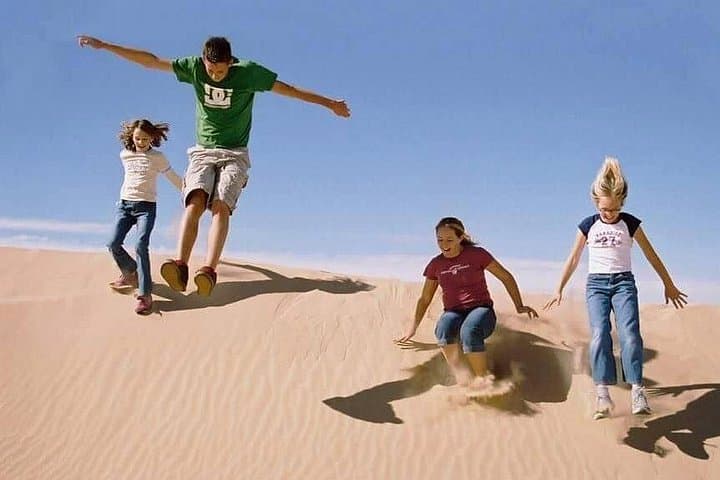
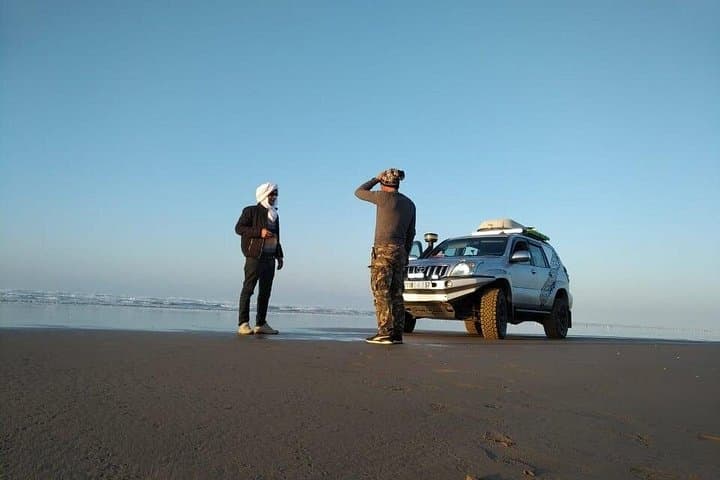
You leave Agadir before dawn and the highway peels away into ochre foothills, palms of the Draa Valley sliding past the windows like a slow film. By late afternoon you reach Zagora and, over the next day, the road narrows into tracks that run beside dried lakebeds and the old Paris–Dakar route. At Erg Chegaga the sand changes tone—broad, wind-sculpted ridges punctuated by scattered Tamarix trees—dunes that rise and shift as if nudging you forward.
Verified experiences and guided adventures in the surrounding area.
Operated by Zagora Desert Travel · Zagora, Drâa-Tafilalet
You leave Agadir before dawn and the highway peels away into ochre foothills, palms of the Draa Valley sliding past the windows like a slow film. By late afternoon you reach Zagora and, over the next day, the road narrows into tracks that run beside dried lakebeds and the old Paris–Dakar route. At Erg Chegaga the sand changes tone—broad, wind-sculpted ridges punctuated by scattered Tamarix trees—dunes that rise and shift as if nudging you forward.
This route threads history and geology: caravan trails once carried salt and dates along the Draa, kasbahs like Tamnougalte stand as fortified waypoints, and Taliouine’s saffron fields speak to the region’s agricultural past. The erg is a classic starved-basin dune system where prevailing winds pile sand into linear and crescent forms; living pockets of palm oases and nomadic camps mark rare sources of water and shade.
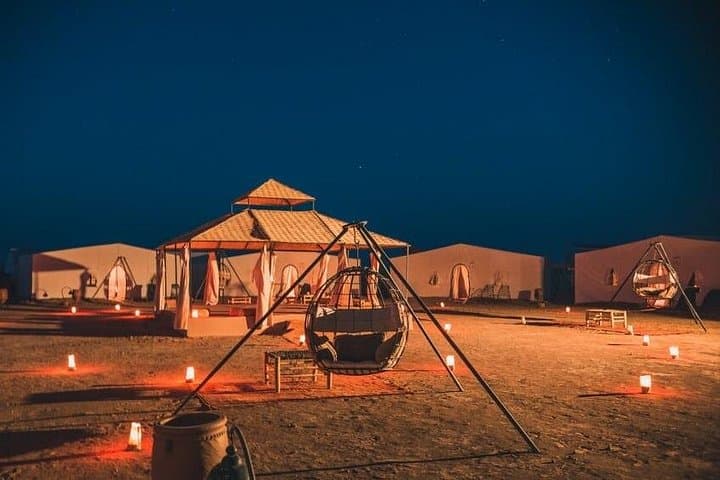
Culturally, the trip layers modern hospitality—hotels or riads in Zagora—with traditional experiences: camel treks, a night in a nomadic-style tent, and communal dinners under a vast sky. Expect long driving legs between stops, dramatic sunsets from dune crests, and clear night skies ideal for stargazing.
Practically: bring layered clothing for hot days and cold desert nights, carry at least 2–3 liters of water per person while touring, and plan activities around sunset and early morning to avoid peak heat. Footwear that sheds sand and sun protection are essential; cash and respect for local customs smooth exchanges in remote villages. The trip is equal parts scenic driving and slow, physical exploration of dunes—immersive but straightforward to prepare for.
Yes—this itinerary includes a camel trek to the high dunes at Erg Chegaga, typically timed for sunset; shorter rides may be available depending on the camp.
Nights are split between a hotel or riad in Zagora and an overnight in a traditional nomadic-style tent at the desert camp with basic sleeping facilities and communal meals.
The tour is marketed as suitable for all fitness levels; however, camel rides and dune walking require mobility—check with the operator about child age limits and any special assistance.
Expect long driving legs—the full loop covers several hundred kilometers over tarmac and unpaved tracks; plan for most travel time on day 1 and 3, with day 2 focused on the desert transfer and activities.
Zagora Desert Travel operates guided outdoor trips and adventures with an emphasis on safety, stewardship, and memorable experiences.

You leave Agadir before dawn and the highway peels away into ochre foothills, palms of the Draa Valley sliding past the windows like a slow film. By late afternoon you reach Zagora and, over the next day, the road narrows into tracks that run beside dried lakebeds and the old Paris–Dakar route. At Erg Chegaga the sand changes tone—broad, wind-sculpted ridges punctuated by scattered Tamarix trees—dunes that rise and shift as if nudging you forward.
You leave Agadir before dawn and the highway peels away into ochre foothills, palms of the Draa Valley sliding past the windows like a slow film. By late afternoon you reach Zagora and, over the next day, the road narrows into tracks that run beside dried lakebeds and the old Paris–Dakar route. At Erg Chegaga the sand changes tone—broad, wind-sculpted ridges punctuated by scattered Tamarix trees—dunes that rise and shift as if nudging you forward.
This route threads history and geology: caravan trails once carried salt and dates along the Draa, kasbahs like Tamnougalte stand as fortified waypoints, and Taliouine’s saffron fields speak to the region’s agricultural past. The erg is a classic starved-basin dune system where prevailing winds pile sand into linear and crescent forms; living pockets of palm oases and nomadic camps mark rare sources of water and shade.
Culturally, the trip layers modern hospitality—hotels or riads in Zagora—with traditional experiences: camel treks, a night in a nomadic-style tent, and communal dinners under a vast sky. Expect long driving legs between stops, dramatic sunsets from dune crests, and clear night skies ideal for stargazing.
Practically: bring layered clothing for hot days and cold desert nights, carry at least 2–3 liters of water per person while touring, and plan activities around sunset and early morning to avoid peak heat. Footwear that sheds sand and sun protection are essential; cash and respect for local customs smooth exchanges in remote villages. The trip is equal parts scenic driving and slow, physical exploration of dunes—immersive but straightforward to prepare for.