THE ADVENTURE COLLECTIVE® · Independent discovery and booking for outdoor travel

Three days in Amboseli place you under Kilimanjaro’s watch with close encounters with large elephant herds and an introduction to Maasai culture. Expect sunrise and sunset game drives, observation hill views, and basic camp or lodge accommodations.
Three days in Amboseli place you under Kilimanjaro’s watch with close encounters with large elephant herds and an introduction to Maasai culture. Expect sunrise and sunset game drives, observation hill views, and basic camp or lodge accommodations.
Dawn breaks across a flat, sun-baked plain and a herd of elephants appears like a slow-moving wall, trunks swinging and dust rising. In the distance Mount Kilimanjaro keeps its snow cap like a silent, watchful giant; clouds slip off its flanks as game vehicles ease toward a nearby swamp.
Verified experiences and guided adventures in the surrounding area.
Operated by Africa Tours · Kimana, Kajiado County
Dawn breaks across a flat, sun-baked plain and a herd of elephants appears like a slow-moving wall, trunks swinging and dust rising. In the distance Mount Kilimanjaro keeps its snow cap like a silent, watchful giant; clouds slip off its flanks as game vehicles ease toward a nearby swamp.
Amboseli National Park sits at roughly 1,100–1,200 meters elevation at the foot of Kilimanjaro. The park’s landscape combines open savannah, seasonal marshes fed by mountain springs, and observation points that give wide views of the plain. Established as a protected area in the 1970s to conserve migrating herds and Maasai grazing lands, Amboseli’s volcanic soils and shallow wetlands create concentrated wildlife viewing—especially for elephant families known locally as the “great jumbos.”
Culturally, the Maasai communities around Amboseli keep pastoral traditions alive; many safari itineraries include a respectful village visit to learn about beadwork, elders’ stories, and cattle practices.
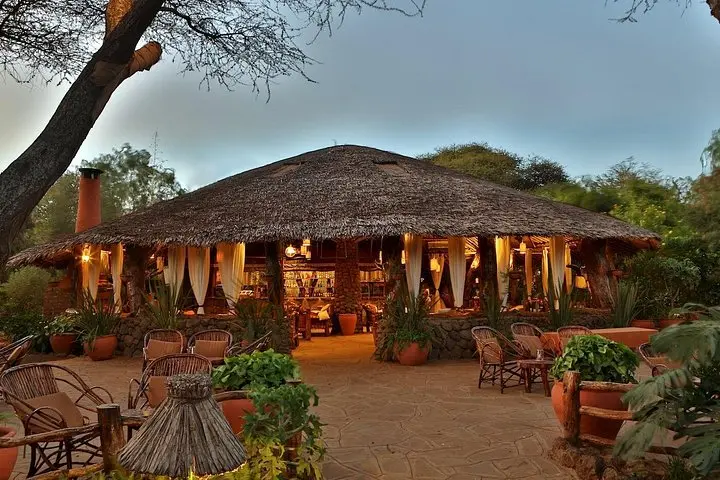
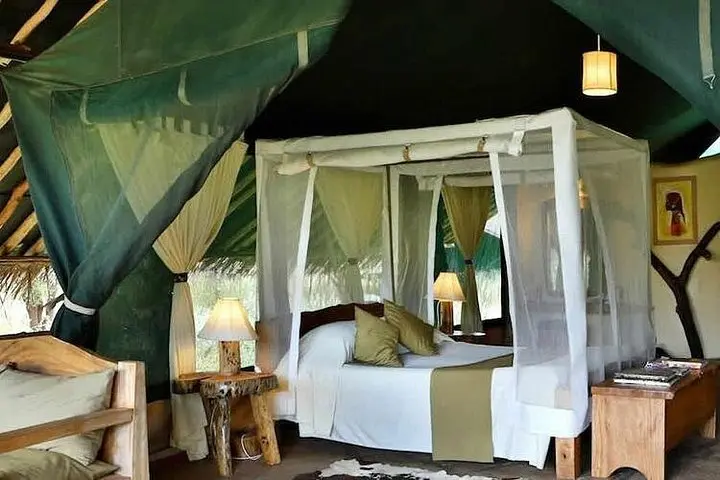
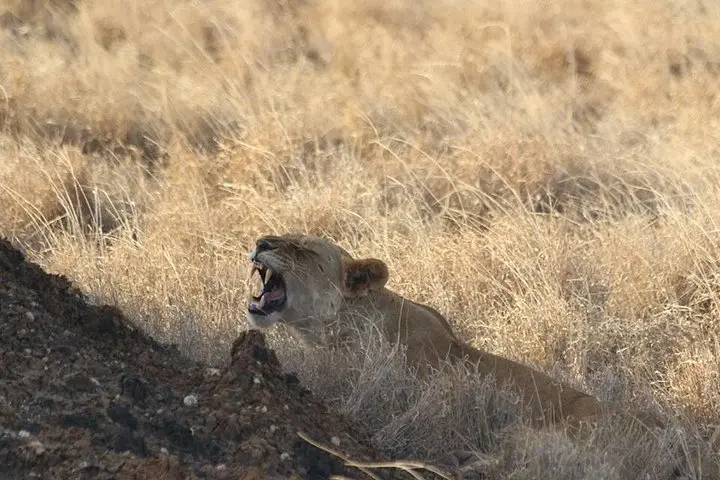
On a three-day safari expect early morning and late afternoon game drives when animals are most active, an observation hill overlook, and opportunities to spot lions, giraffes, and waterbirds in the marshes. Accommodations range from tented camps (Kimana Camp is commonly used) to lodges; drives between Nairobi and the park take roughly 4–5 hours by road.
Practical tips: travel light but bring layered clothing for sharp temperature swings, a good pair of binoculars, sun protection, and a refillable water bottle. Plan for early starts, dusty roads, and limited cell coverage. Respect park rules, keep a safe distance from wildlife, and consider the dry season (June–October, January–March) for clearer Kilimanjaro views.
Driving from Nairobi to Amboseli takes about 4–5 hours depending on traffic and road conditions; private transfers are typically included in multi-day safari packages.
The clearest views are usually in the dry seasons—January to March and June to October—when cloud cover is minimal.
Many itineraries include a short, guided visit to a Maasai community to learn about local culture; these are usually optional and should be approached respectfully.
Some lodges and vehicles are wheelchair-friendly and transportation options may accommodate mobility needs; confirm accessibility details with the operator before booking.
Africa Tours operates guided outdoor trips and adventures with an emphasis on safety, stewardship, and memorable experiences.
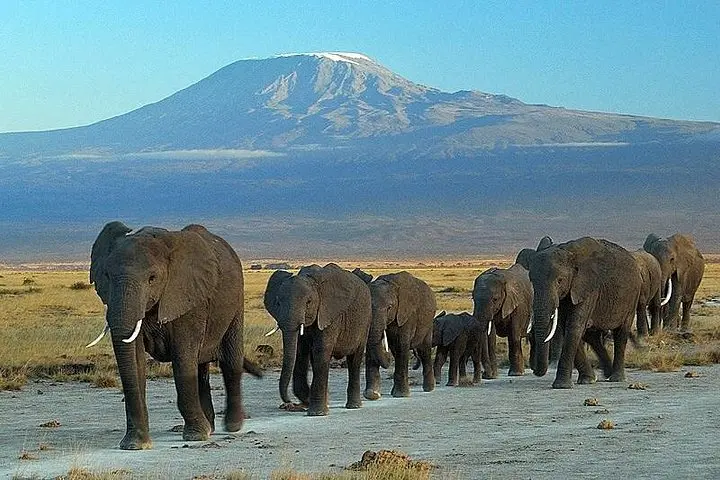
Dawn breaks across a flat, sun-baked plain and a herd of elephants appears like a slow-moving wall, trunks swinging and dust rising. In the distance Mount Kilimanjaro keeps its snow cap like a silent, watchful giant; clouds slip off its flanks as game vehicles ease toward a nearby swamp.
Dawn breaks across a flat, sun-baked plain and a herd of elephants appears like a slow-moving wall, trunks swinging and dust rising. In the distance Mount Kilimanjaro keeps its snow cap like a silent, watchful giant; clouds slip off its flanks as game vehicles ease toward a nearby swamp.
Amboseli National Park sits at roughly 1,100–1,200 meters elevation at the foot of Kilimanjaro. The park’s landscape combines open savannah, seasonal marshes fed by mountain springs, and observation points that give wide views of the plain. Established as a protected area in the 1970s to conserve migrating herds and Maasai grazing lands, Amboseli’s volcanic soils and shallow wetlands create concentrated wildlife viewing—especially for elephant families known locally as the “great jumbos.”
Culturally, the Maasai communities around Amboseli keep pastoral traditions alive; many safari itineraries include a respectful village visit to learn about beadwork, elders’ stories, and cattle practices.
On a three-day safari expect early morning and late afternoon game drives when animals are most active, an observation hill overlook, and opportunities to spot lions, giraffes, and waterbirds in the marshes. Accommodations range from tented camps (Kimana Camp is commonly used) to lodges; drives between Nairobi and the park take roughly 4–5 hours by road.
Practical tips: travel light but bring layered clothing for sharp temperature swings, a good pair of binoculars, sun protection, and a refillable water bottle. Plan for early starts, dusty roads, and limited cell coverage. Respect park rules, keep a safe distance from wildlife, and consider the dry season (June–October, January–March) for clearer Kilimanjaro views.