THE ADVENTURE COLLECTIVE® · Independent discovery and booking for outdoor travel

Three days of Angkor’s great temples, Phnom Kulen’s waterfalls and a Tonle Sap village visit—packed with sunrise views, jungle-clad ruins and rural encounters. This private itinerary balances early starts with local meals and expert guides to make the most of Cambodia’s archaeological heart.
Three days of Angkor’s great temples, Phnom Kulen’s waterfalls and a Tonle Sap village visit—packed with sunrise views, jungle-clad ruins and rural encounters. This private itinerary balances early starts with local meals and expert guides to make the most of Cambodia’s archaeological heart.
You begin before dawn, shuffled through Siem Reap’s soft streetlight toward the temple complex, where the silhouette of Angkor Wat slices the horizon. Mist lifts from lotus ponds as the first light lays filigree across carved galleries; the air smells of warm stone and frying breakfast noodles from a nearby stall.
Verified experiences and guided adventures in the surrounding area.
Operated by Angkor Elephant Tour · Siem Reap, Siem Reap Province
You begin before dawn, shuffled through Siem Reap’s soft streetlight toward the temple complex, where the silhouette of Angkor Wat slices the horizon. Mist lifts from lotus ponds as the first light lays filigree across carved galleries; the air smells of warm stone and frying breakfast noodles from a nearby stall.
This three-day private tour moves at a steady, discovery-focused pace. Day one covers Angkor Thom’s monumental gates, the enigmatic Bayon faces and the jungle-claimed chambers of Ta Prohm, capped by sunset on Phnom Bakheng. Day two crosses into Phnom Kulen National Park — a tectonic uplift of sandstone with cascades, the River of a Thousand Lingas and a reclining Buddha hewn into the ridge. The itinerary folds in Banteay Srei’s finely carved pink sandstone and a visit to the stilted fishing village of Kampong Phluk on Tonle Sap.
Geology-wise, the temples sit on ancient sandstone quarried and sculpted during the Khmer Empire (9th–15th centuries); Kulen’s plateau is the massif that fed the stone and supplied the symbolic waterworks of the kingdom. You’ll encounter rural villages and markets that reflect contemporary Khmer life.
Practical edge: expect long days on foot over uneven stone and forest trails; bring a hat, reusable water bottle and modest clothing for temple entry. Sunrise at Angkor Wat is popular—arrive early and leave time to buy the Angkor pass. Guides handle permits and navigation, leaving you to photograph bas-reliefs and stand beneath roots that have grown through centuries of history.
Yes; the guide will take you to buy a 1- or multi-day Angkor pass on day one—bring passport and cash for the purchase.
Pickup for the Angkor Wat sunrise is usually around 4:30–5:00 AM to arrive before first light, depending on season.
The park has family-friendly sites, but waterfalls and slick rocks require close supervision for young children.
Local lunches are typically included on the itinerary, but check your booking details for specific meal inclusions and dietary needs.
Angkor Elephant Tour operates guided outdoor trips and adventures with an emphasis on safety, stewardship, and memorable experiences.


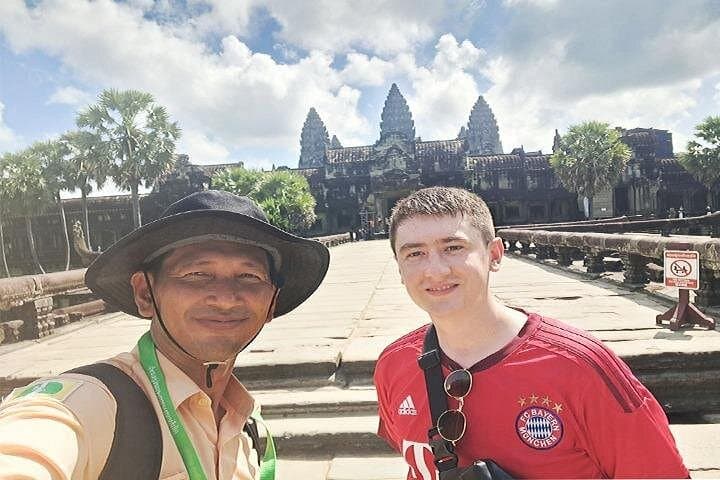

You begin before dawn, shuffled through Siem Reap’s soft streetlight toward the temple complex, where the silhouette of Angkor Wat slices the horizon. Mist lifts from lotus ponds as the first light lays filigree across carved galleries; the air smells of warm stone and frying breakfast noodles from a nearby stall.
You begin before dawn, shuffled through Siem Reap’s soft streetlight toward the temple complex, where the silhouette of Angkor Wat slices the horizon. Mist lifts from lotus ponds as the first light lays filigree across carved galleries; the air smells of warm stone and frying breakfast noodles from a nearby stall.
This three-day private tour moves at a steady, discovery-focused pace. Day one covers Angkor Thom’s monumental gates, the enigmatic Bayon faces and the jungle-claimed chambers of Ta Prohm, capped by sunset on Phnom Bakheng. Day two crosses into Phnom Kulen National Park — a tectonic uplift of sandstone with cascades, the River of a Thousand Lingas and a reclining Buddha hewn into the ridge. The itinerary folds in Banteay Srei’s finely carved pink sandstone and a visit to the stilted fishing village of Kampong Phluk on Tonle Sap.
Geology-wise, the temples sit on ancient sandstone quarried and sculpted during the Khmer Empire (9th–15th centuries); Kulen’s plateau is the massif that fed the stone and supplied the symbolic waterworks of the kingdom. You’ll encounter rural villages and markets that reflect contemporary Khmer life.
Practical edge: expect long days on foot over uneven stone and forest trails; bring a hat, reusable water bottle and modest clothing for temple entry. Sunrise at Angkor Wat is popular—arrive early and leave time to buy the Angkor pass. Guides handle permits and navigation, leaving you to photograph bas-reliefs and stand beneath roots that have grown through centuries of history.