THE ADVENTURE COLLECTIVE® · Independent discovery and booking for outdoor travel

Three days of temple exploration around Angkor — sunrise at Angkor Wat, the many-faced towers of Bayon, root-entwined Ta Prohm, and an evening Apsara dance. Practical pacing, temple etiquette, and walking tips to make the most of Siem Reap’s ancient capital.
Three days of temple exploration around Angkor — sunrise at Angkor Wat, the many-faced towers of Bayon, root-entwined Ta Prohm, and an evening Apsara dance. Practical pacing, temple etiquette, and walking tips to make the most of Siem Reap’s ancient capital.
The day begins before the sun clears the horizon, bicycle carts and tuk-tuks threading warm air toward the moat as you step onto the ancient causeway. Stone lions watch the river of visitors; the first silhouette of Angkor Wat pierces pink sky, its towers daring you to come closer.
Verified experiences and guided adventures in the surrounding area.
Operated by Sharing tour Cambodia · Siem Reap, Siem Reap
The day begins before the sun clears the horizon, bicycle carts and tuk-tuks threading warm air toward the moat as you step onto the ancient causeway. Stone lions watch the river of visitors; the first silhouette of Angkor Wat pierces pink sky, its towers daring you to come closer.
These monuments sit on the low alluvial plain of northwest Cambodia, carved from sandstone blocks and raised by the labor of Khmer kings between the 9th and 13th centuries. Angkor Thom’s Bayon with its four-faced towers reads like a historic manifesto in stone; Ta Prohm allows strangler figs and banyan roots to take the lead, a slow contest of nature vs. architecture. Evenings in Siem Reap bring Apsara dancers—classical movements that echo the bas-reliefs’ stories.
Expect a steady rhythm of walking between sites: 1–6 km stretches across uneven flagstones and low steps, little elevation but long exposure to heat and humidity. Guides handle logistics—temple passes, hotel pickup, and local transfers—so your job is pacing, respect, and stamina. Practical tips: cover shoulders and knees for temple entry, carry 2–3 liters of water, wear sturdy closed-toe shoes and sun protection, and allot early mornings for sunrise at Angkor Wat to avoid midday crowds. The itinerary folds easily into a relaxed three-day cadence: arrival and rest, a full day through Angkor Thom, Ta Prohm and Angkor Wat with an evening Apsara dinner, then a calm departure day. Leave extra time to wander quiet galleries, listen to insects reclaim stone, and let the site’s scale settle in before you go.
Yes. Entry requires purchasing an Angkor Pass at the official ticket center near Siem Reap; passes are available for 1, 3, or 7 days and are checked at park entrances.
Many central areas have uneven stones and steps; some sites have ramps or flatter paths, but assistance and selective sightseeing may be necessary for limited mobility travelers.
Tipping is customary for good service—guide and driver gratuities are appreciated and often shared among local staff.
November to February offers cooler, drier weather and more comfortable walking conditions; the wet season is greener but hotter and rainier.
Sharing tour Cambodia operates guided outdoor trips and adventures with an emphasis on safety, stewardship, and memorable experiences.


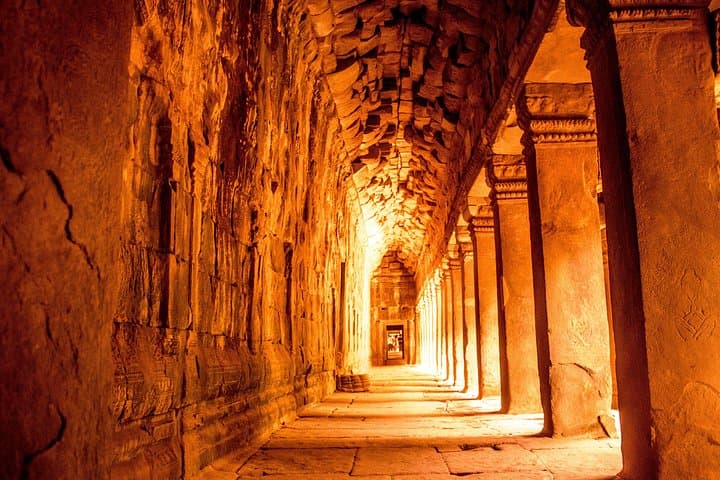

The day begins before the sun clears the horizon, bicycle carts and tuk-tuks threading warm air toward the moat as you step onto the ancient causeway. Stone lions watch the river of visitors; the first silhouette of Angkor Wat pierces pink sky, its towers daring you to come closer.
The day begins before the sun clears the horizon, bicycle carts and tuk-tuks threading warm air toward the moat as you step onto the ancient causeway. Stone lions watch the river of visitors; the first silhouette of Angkor Wat pierces pink sky, its towers daring you to come closer.
These monuments sit on the low alluvial plain of northwest Cambodia, carved from sandstone blocks and raised by the labor of Khmer kings between the 9th and 13th centuries. Angkor Thom’s Bayon with its four-faced towers reads like a historic manifesto in stone; Ta Prohm allows strangler figs and banyan roots to take the lead, a slow contest of nature vs. architecture. Evenings in Siem Reap bring Apsara dancers—classical movements that echo the bas-reliefs’ stories.
Expect a steady rhythm of walking between sites: 1–6 km stretches across uneven flagstones and low steps, little elevation but long exposure to heat and humidity. Guides handle logistics—temple passes, hotel pickup, and local transfers—so your job is pacing, respect, and stamina. Practical tips: cover shoulders and knees for temple entry, carry 2–3 liters of water, wear sturdy closed-toe shoes and sun protection, and allot early mornings for sunrise at Angkor Wat to avoid midday crowds. The itinerary folds easily into a relaxed three-day cadence: arrival and rest, a full day through Angkor Thom, Ta Prohm and Angkor Wat with an evening Apsara dinner, then a calm departure day. Leave extra time to wander quiet galleries, listen to insects reclaim stone, and let the site’s scale settle in before you go.