THE ADVENTURE COLLECTIVE® · Independent discovery and booking for outdoor travel

A three-day loop from Las Vegas that stitches Sedona, Monument Valley, Horseshoe Bend and Antelope Canyon into a single, managed itinerary — ideal for travelers who want maximum landscape in a short time. Plan for long drives, short hikes, and Navajo-led experiences at the region’s most famous formations.
A three-day loop from Las Vegas that stitches Sedona, Monument Valley, Horseshoe Bend and Antelope Canyon into a single, managed itinerary — ideal for travelers who want maximum landscape in a short time. Plan for long drives, short hikes, and Navajo-led experiences at the region’s most famous formations.
The morning air smells of brake dust and brewing coffee as the van peels away from the strip, headlights cutting through the purple pre-dawn. For three days the highway becomes a thread stitching together some of the Southwest’s most iconic geology — red spires rising like punctuation marks, a river that bends like a practiced archer, and slot canyons hollowed by centuries of wind and water. You trade neon for sandstone; the rhythm of the road sets the pace.
Verified experiences and guided adventures in the surrounding area.
Operated by Empire Vacations · Page, Arizona
The morning air smells of brake dust and brewing coffee as the van peels away from the strip, headlights cutting through the purple pre-dawn. For three days the highway becomes a thread stitching together some of the Southwest’s most iconic geology — red spires rising like punctuation marks, a river that bends like a practiced archer, and slot canyons hollowed by centuries of wind and water. You trade neon for sandstone; the rhythm of the road sets the pace.
By midmorning you’re climbing out of the Mojave onto the Colorado Plateau. Sedona’s red rocks appear across Oak Creek Canyon, a drop of roughly 2,000 feet from the rim to the valley floor. The Chapel of the Holy Cross perches like a modern relic on the cliffs, offering a quick photo stop and a reminder of the cultural layering here — ancient Indigenous homelands, Route 66 nostalgia, and a modern tourism economy.
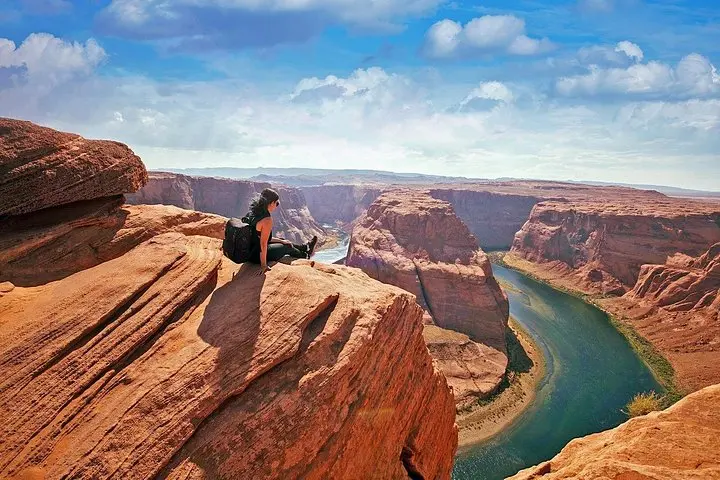
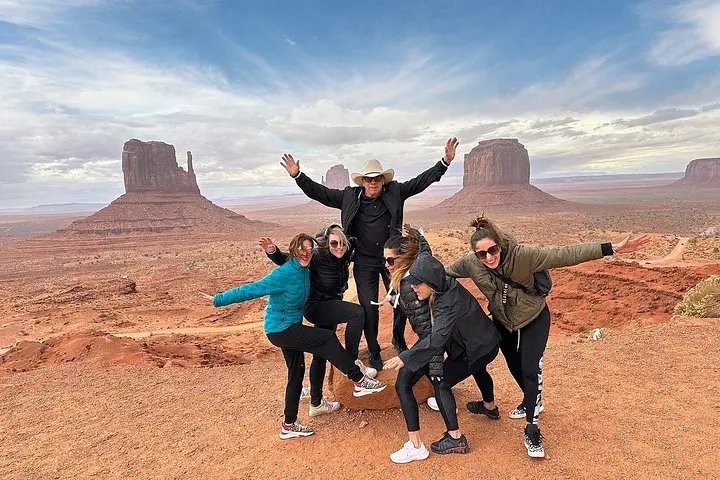
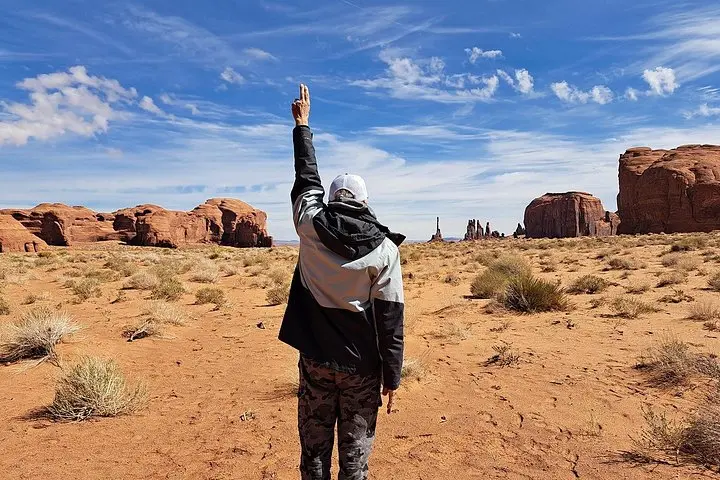
Day two widens the lens. Horseshoe Bend offers a short, sandy 1.5-mile round-trip walk to a rim where the Colorado River folds an emerald loop against sheer sandstone cliffs. Monument Valley follows: a Navajo-guided jeep tour that threads between buttes 400 to 1,000 feet tall. Guides translate landscape into story — clan histories, seasonal floods, and the deep imprint of Navajo stewardship.
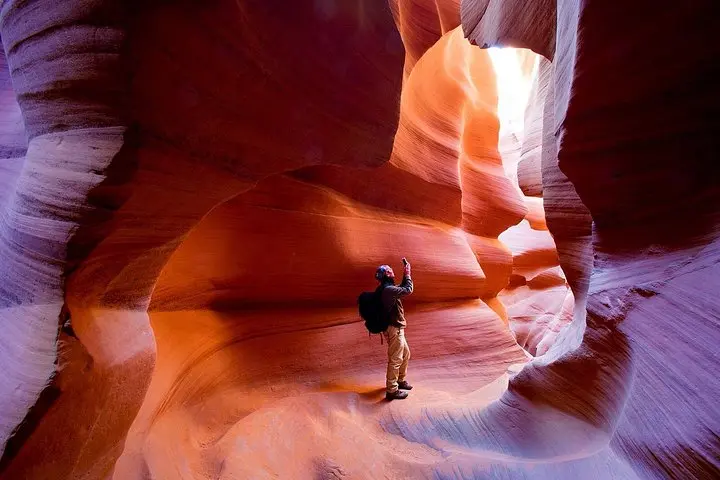
The final act is Antelope Canyon, shaped by flash floods and wind. Lower Antelope’s sinuous walls reveal layers of Navajo Sandstone, iron stains, and light that slides down the curves at certain hours. Nearby, Valley of Fire’s 150-million-year-old Aztec Sandstone glows in the late afternoon, formed from ancient dunes and fossilized by geological time.
Practical guidance is straightforward: expect a lot of time in transit and brief, intense visits on foot. You’ll walk uneven desert trails and climb stairs in slot canyons; the tour requires a moderate fitness level and the ability to walk roughly 1.5 miles on uneven terrain. Hydration is non-negotiable — carry at least 2 liters for day hikes, more in summer. Footwear should be sturdy and grippy; sand and slickrock reward shoes with traction. Timing matters: Antelope’s best light varies by season, and Monument Valley’s jeep tours are scheduled to avoid midday heat when possible.
Respect local regulations: Antelope Canyon and Monument Valley sit within or adjacent to Navajo Nation; entrances and guided access are managed locally. Leave no trace: fragile soils and cryptobiotic crusts take decades to recover. Finally, plan logistics around the long drives — gas up in town, keep a charged phone and power bank, and bring layered clothing for desert nights that can drop sharply in temperature.
This three-day route is compact but dense: geology, culture, and wide-open space, threaded together with pragmatic travel notes so you can step off the van and into some of the most memorable landscapes the Southwest holds.
Expect several short walks: Sedona overlooks, a 1.5-mile round trip at Horseshoe Bend, and about 1–1.5 miles of walking through Lower Antelope Canyon on uneven surfaces.
Yes — guided entrance to Antelope Canyon and a Navajo-guided jeep tour of Monument Valley are included in the itinerary.
Not recommended for very young children or travelers with limited mobility; Antelope Canyon requires stair navigation and walks over uneven terrain; minimum age at Antelope is 7.
A lightweight tripod, polarizer, and spare batteries are useful; bring a lens that handles wide scenes and close-up textures of slot canyons.
Tipping is customary for good service — typically 10–20% split among guides and drivers or a few dollars per person per day depending on service.
Significant driving: expect long stretches between stops — the tour covers roughly 600–800 miles round trip depending on exact route and detours.
Empire Vacations operates guided outdoor trips and adventures with an emphasis on safety, stewardship, and memorable experiences.
The morning air smells of brake dust and brewing coffee as the van peels away from the strip, headlights cutting through the purple pre-dawn. For three days the highway becomes a thread stitching together some of the Southwest’s most iconic geology — red spires rising like punctuation marks, a river that bends like a practiced archer, and slot canyons hollowed by centuries of wind and water. You trade neon for sandstone; the rhythm of the road sets the pace.
The morning air smells of brake dust and brewing coffee as the van peels away from the strip, headlights cutting through the purple pre-dawn. For three days the highway becomes a thread stitching together some of the Southwest’s most iconic geology — red spires rising like punctuation marks, a river that bends like a practiced archer, and slot canyons hollowed by centuries of wind and water. You trade neon for sandstone; the rhythm of the road sets the pace.
By midmorning you’re climbing out of the Mojave onto the Colorado Plateau. Sedona’s red rocks appear across Oak Creek Canyon, a drop of roughly 2,000 feet from the rim to the valley floor. The Chapel of the Holy Cross perches like a modern relic on the cliffs, offering a quick photo stop and a reminder of the cultural layering here — ancient Indigenous homelands, Route 66 nostalgia, and a modern tourism economy.
Day two widens the lens. Horseshoe Bend offers a short, sandy 1.5-mile round-trip walk to a rim where the Colorado River folds an emerald loop against sheer sandstone cliffs. Monument Valley follows: a Navajo-guided jeep tour that threads between buttes 400 to 1,000 feet tall. Guides translate landscape into story — clan histories, seasonal floods, and the deep imprint of Navajo stewardship.
The final act is Antelope Canyon, shaped by flash floods and wind. Lower Antelope’s sinuous walls reveal layers of Navajo Sandstone, iron stains, and light that slides down the curves at certain hours. Nearby, Valley of Fire’s 150-million-year-old Aztec Sandstone glows in the late afternoon, formed from ancient dunes and fossilized by geological time.
Practical guidance is straightforward: expect a lot of time in transit and brief, intense visits on foot. You’ll walk uneven desert trails and climb stairs in slot canyons; the tour requires a moderate fitness level and the ability to walk roughly 1.5 miles on uneven terrain. Hydration is non-negotiable — carry at least 2 liters for day hikes, more in summer. Footwear should be sturdy and grippy; sand and slickrock reward shoes with traction. Timing matters: Antelope’s best light varies by season, and Monument Valley’s jeep tours are scheduled to avoid midday heat when possible.
Respect local regulations: Antelope Canyon and Monument Valley sit within or adjacent to Navajo Nation; entrances and guided access are managed locally. Leave no trace: fragile soils and cryptobiotic crusts take decades to recover. Finally, plan logistics around the long drives — gas up in town, keep a charged phone and power bank, and bring layered clothing for desert nights that can drop sharply in temperature.
This three-day route is compact but dense: geology, culture, and wide-open space, threaded together with pragmatic travel notes so you can step off the van and into some of the most memorable landscapes the Southwest holds.