THE ADVENTURE COLLECTIVE® · Independent discovery and booking for outdoor travel

Explore Armenia’s high plateaus and wetlands on a three-day birding and hiking circuit from Yerevan. Expect alpine species at 2,500 m, raptor-rich refuge terrain, and wetlands teeming with waterbirds at Armash.
Explore Armenia’s high plateaus and wetlands on a three-day birding and hiking circuit from Yerevan. Expect alpine species at 2,500 m, raptor-rich refuge terrain, and wetlands teeming with waterbirds at Armash.
Dawn in the Armenian highlands arrives cool and clear; you push open the lodge door and the mountains answer with the sharp calls of wheatears and the distant silhouette of a golden eagle. This three-day circuit moves from Yerevan into the Vayots Dzor highlands, across the rocky ramps of Qarkatar, into the Caucasus Wildlife Refuge, and down to the reed beds of Armash Marshes.
Verified experiences and guided adventures in the surrounding area.
Operated by SunChild Eco Tours · Yerevan, Yerevan
Dawn in the Armenian highlands arrives cool and clear; you push open the lodge door and the mountains answer with the sharp calls of wheatears and the distant silhouette of a golden eagle. This three-day circuit moves from Yerevan into the Vayots Dzor highlands, across the rocky ramps of Qarkatar, into the Caucasus Wildlife Refuge, and down to the reed beds of Armash Marshes.
The region wears deep history: Geghard’s cave-temple and the Hellenistic Garni temple sit where volcanic basalt meets ancient trade routes. Geology here is practical—columnar basalt, limestone gorges, and high plateaus create microhabitats that concentrate raptors, alpine specialists, and wetland assemblages. Culturally, the route threads through rural villages where shepherding and small-scale agriculture shaped the landscape and remain part of conservation conversations today.
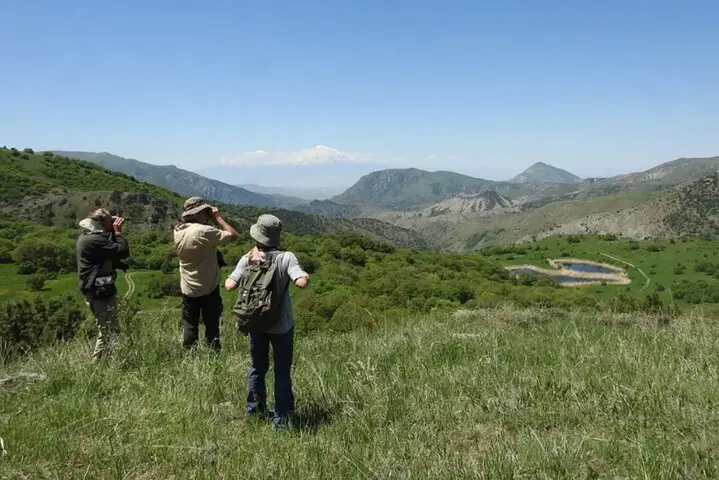
Expect steep scree and rocky ridgelines at 2,500 m when targeting Caspian Snowcock and Bezoar goat viewpoints, and calm, binocular-friendly strolls at Armash where glossy ibis and marbled teal crowd the shallows. Guides combine short hikes, horseback options, and long vantage-point watches—days are structured to follow light and bird movements.
Practicalities: pack layered clothing for 1,500–2,500 m altitudes, bring high-quality binoculars and a scope if you have one, and prepare for long daylight hours of observation and moderate uphill hiking. Hydrate, protect from sun and wind, and plan photography with telephoto lenses. The reward is direct: rare alpine species, sweeping raptor migrations, and the plain-to-peak contrast of Armenia’s wild heart.
Spring (April–June) and early autumn (September–October) offer peak migration and breeding activity; spring brings alpine access after thaw, while autumn sees strong raptor movements.
Daily hikes are moderate with occasional steep, rocky sections up to 2,500 m; horseback options and vehicle access reduce walking when needed.
Overnights are at eco-lodges near Urtsadzor—simple, comfortable lodgings focused on wildlife access and low-impact operation, with meals included as listed.
No special vaccinations are required beyond routine travel vaccines; entry to protected areas is handled by the tour operator and included in the itinerary.
SunChild Eco Tours operates guided outdoor trips and adventures with an emphasis on safety, stewardship, and memorable experiences.
Dawn in the Armenian highlands arrives cool and clear; you push open the lodge door and the mountains answer with the sharp calls of wheatears and the distant silhouette of a golden eagle. This three-day circuit moves from Yerevan into the Vayots Dzor highlands, across the rocky ramps of Qarkatar, into the Caucasus Wildlife Refuge, and down to the reed beds of Armash Marshes.
Dawn in the Armenian highlands arrives cool and clear; you push open the lodge door and the mountains answer with the sharp calls of wheatears and the distant silhouette of a golden eagle. This three-day circuit moves from Yerevan into the Vayots Dzor highlands, across the rocky ramps of Qarkatar, into the Caucasus Wildlife Refuge, and down to the reed beds of Armash Marshes.
The region wears deep history: Geghard’s cave-temple and the Hellenistic Garni temple sit where volcanic basalt meets ancient trade routes. Geology here is practical—columnar basalt, limestone gorges, and high plateaus create microhabitats that concentrate raptors, alpine specialists, and wetland assemblages. Culturally, the route threads through rural villages where shepherding and small-scale agriculture shaped the landscape and remain part of conservation conversations today.
Expect steep scree and rocky ridgelines at 2,500 m when targeting Caspian Snowcock and Bezoar goat viewpoints, and calm, binocular-friendly strolls at Armash where glossy ibis and marbled teal crowd the shallows. Guides combine short hikes, horseback options, and long vantage-point watches—days are structured to follow light and bird movements.
Practicalities: pack layered clothing for 1,500–2,500 m altitudes, bring high-quality binoculars and a scope if you have one, and prepare for long daylight hours of observation and moderate uphill hiking. Hydrate, protect from sun and wind, and plan photography with telephoto lenses. The reward is direct: rare alpine species, sweeping raptor migrations, and the plain-to-peak contrast of Armenia’s wild heart.