THE ADVENTURE COLLECTIVE® · Independent discovery and booking for outdoor travel

Spend three days inside Aso Caldera exploring active volcanic features, rural farms and local crafts. This private program mixes short walks, crater viewpoints and cultural encounters for an intimate introduction to one of Japan’s most dramatic landscapes.
Spend three days inside Aso Caldera exploring active volcanic features, rural farms and local crafts. This private program mixes short walks, crater viewpoints and cultural encounters for an intimate introduction to one of Japan’s most dramatic landscapes.
Dawn lifts a thin mist from the Aso Caldera and the central cones sit like old sentries, steam threading upward where the earth still breathes. You move through low, wind-scoured pastures, past terraced fields and cattle barns, toward viewpoints that show a bowl of volcanic ridges 20–25 km across and peaks rising around 1,500–1,600 m.
Verified experiences and guided adventures in the surrounding area.
Operated by Aso Caldera Tour · Aso, Kumamoto Prefecture
Dawn lifts a thin mist from the Aso Caldera and the central cones sit like old sentries, steam threading upward where the earth still breathes. You move through low, wind-scoured pastures, past terraced fields and cattle barns, toward viewpoints that show a bowl of volcanic ridges 20–25 km across and peaks rising around 1,500–1,600 m.
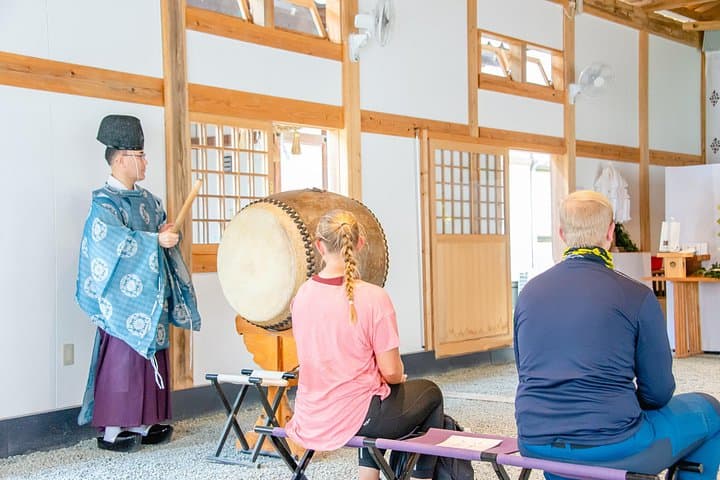
This three-day program follows the geography and human story of Aso: a landscape shaped by repeated eruptions and the caldera’s broad rim. The area is Aso-Kuju National Park and a UNESCO Global Geopark—geology here is visible at a glance, from the symmetrical Komezuka cone to the fumaroles at Naka-dake. Local culture is inseparable from the earth; Aso Shrine, artisan workshops and family farms reflect mountain beliefs and a lifestyle adapted to ash, hot springs and rich volcanic soil.
Expect easy walks and short drives rather than long alpine approaches—paved roads, farm tracks and viewing platforms are typical. Crater outlooks may close on short notice for safety, so plan flexible timing. Practicalities: pack warm layers for 1,200–1,600 m elevation, waterproof outerwear for sudden rain, and sturdy shoes for uneven farm trails. Bring cash for small markets and onsen entrances, and a camera with a polarizer for dramatic skies.
Over three days you’ll meet farmers, try local dairy and beef products, soak in an onsen, and stand where the ground still reminds you it’s alive—an experience that balances geology, daily life and practical travel rhythms.
Regular trains and buses connect Kumamoto to Aso; a private transfer or rental car shortens travel time and is useful for reaching dispersed sites.
No—crater access can close due to volcanic activity or gas; guides will substitute other viewpoints or cultural visits if closures occur.
Yes—it's rated easy with short walks, but notify operators of mobility needs and check altitude sensitivity for older guests.
Basic English is often available through guides or hosts, but learning a few Japanese phrases and having printed directions helps in rural areas.
Aso Caldera Tour operates guided outdoor trips and adventures with an emphasis on safety, stewardship, and memorable experiences.
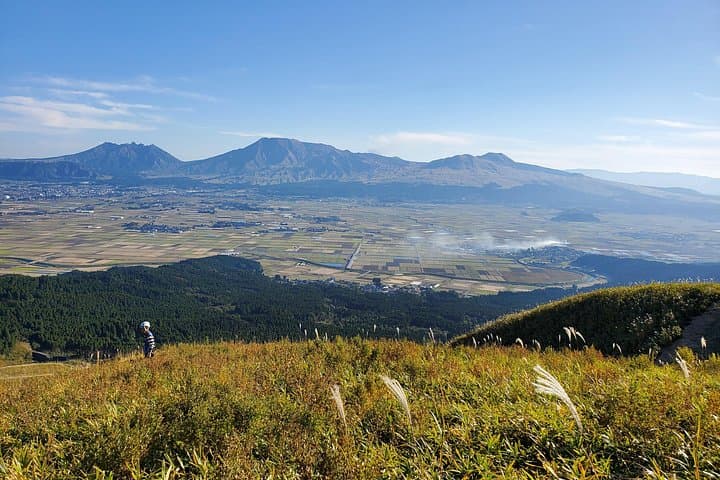
Dawn lifts a thin mist from the Aso Caldera and the central cones sit like old sentries, steam threading upward where the earth still breathes. You move through low, wind-scoured pastures, past terraced fields and cattle barns, toward viewpoints that show a bowl of volcanic ridges 20–25 km across and peaks rising around 1,500–1,600 m.
Dawn lifts a thin mist from the Aso Caldera and the central cones sit like old sentries, steam threading upward where the earth still breathes. You move through low, wind-scoured pastures, past terraced fields and cattle barns, toward viewpoints that show a bowl of volcanic ridges 20–25 km across and peaks rising around 1,500–1,600 m.
This three-day program follows the geography and human story of Aso: a landscape shaped by repeated eruptions and the caldera’s broad rim. The area is Aso-Kuju National Park and a UNESCO Global Geopark—geology here is visible at a glance, from the symmetrical Komezuka cone to the fumaroles at Naka-dake. Local culture is inseparable from the earth; Aso Shrine, artisan workshops and family farms reflect mountain beliefs and a lifestyle adapted to ash, hot springs and rich volcanic soil.
Expect easy walks and short drives rather than long alpine approaches—paved roads, farm tracks and viewing platforms are typical. Crater outlooks may close on short notice for safety, so plan flexible timing. Practicalities: pack warm layers for 1,200–1,600 m elevation, waterproof outerwear for sudden rain, and sturdy shoes for uneven farm trails. Bring cash for small markets and onsen entrances, and a camera with a polarizer for dramatic skies.
Over three days you’ll meet farmers, try local dairy and beef products, soak in an onsen, and stand where the ground still reminds you it’s alive—an experience that balances geology, daily life and practical travel rhythms.