THE ADVENTURE COLLECTIVE® · Independent discovery and booking for outdoor travel

Three days through Cao Bang move from misty passes to the roar of Ban Gioc Waterfall, with cave chambers, bamboo forests, and living ethnic villages along the way. This compact loop pairs geology and history with accessible hikes and homestay nights.
Three days through Cao Bang move from misty passes to the roar of Ban Gioc Waterfall, with cave chambers, bamboo forests, and living ethnic villages along the way. This compact loop pairs geology and history with accessible hikes and homestay nights.
Dawn breaks over a ribbon of limestone ridges as a sleeper bus eases into Cao Bang: mist clings to the valleys, bamboo groves whisper, and the river calls travelers toward Ban Gioc’s thunder. Over three days the route alternates between high, hairpin passes and quiet village lanes—each bend revealing another karst turret or patchwork of wet rice.
Verified experiences and guided adventures in the surrounding area.
Operated by Phu Tho Travel · Cao Bang, Cao Bang Province
Dawn breaks over a ribbon of limestone ridges as a sleeper bus eases into Cao Bang: mist clings to the valleys, bamboo groves whisper, and the river calls travelers toward Ban Gioc’s thunder. Over three days the route alternates between high, hairpin passes and quiet village lanes—each bend revealing another karst turret or patchwork of wet rice.
This corner of northeastern Vietnam carries both geological and historical weight. The region’s karst limestone was folded and etched over millions of years; caves like Nguom Ngao showcase stalactites that trace that slow, subterranean clock. Pac Bo is a living memory site where Hồ Chí Minh operated in the 1940s, and ethnic Tay and Nung communities still maintain centuries-old crafts and communal rhythms.
Expect a mix of short hikes, roadside viewpoints (Me Pia’s 14 bends is a highlight), boat-accessed scenes at Ban Gioc, and time in simple homestays. Terrain ranges from paved provincial roads to steep, rocky viewpoints and bamboo-shaded forest tracks; the longest drives sit between stops. Weather shifts fast—sun becomes rain in an hour—so layer.
Practical guidance: carry local currency and small snacks between villages, start viewpoint walks early for light and fewer bugs, and leave single-use plastics behind—Ban Gioc’s pools are fragile. Physical demands are moderate: several short walks, uneven surfaces, and one or two stair climbs in caves. The itinerary is ideal for travelers who want a compact mix of geology, culture, and scenery without technical climbing—just curiosity and sensible footwear.
Most walks are short to moderate (under 3 km) on uneven terrain; no technical climbing is required, but good mobility and steady footwear are recommended.
Yes—small shops, markets and some homestays prefer Vietnamese đồng; ATMs are available in Cao Bang city but rare in rural areas.
The itinerary includes an English-speaking guide, but in villages many locals speak ethnic languages or Vietnamese—basic translation help is provided by the guide.
Yes, but seasons change the experience: summer brings warm weather and heavy rain; winter is cooler and clearer but can be misty—prepare layers accordingly.
Phu Tho Travel operates guided outdoor trips and adventures with an emphasis on safety, stewardship, and memorable experiences.
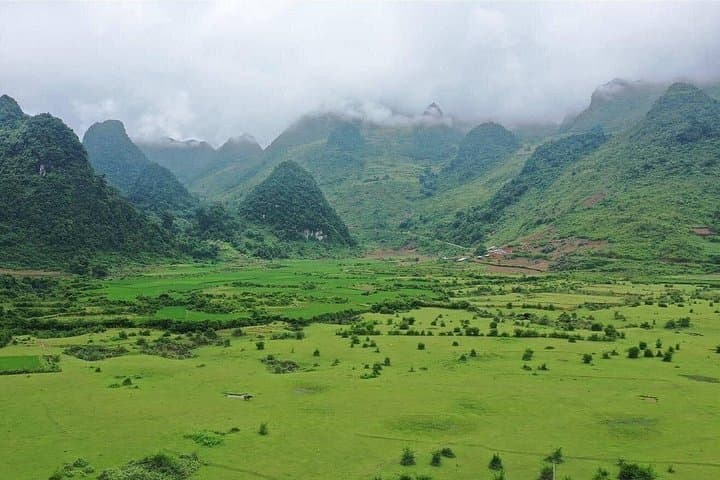
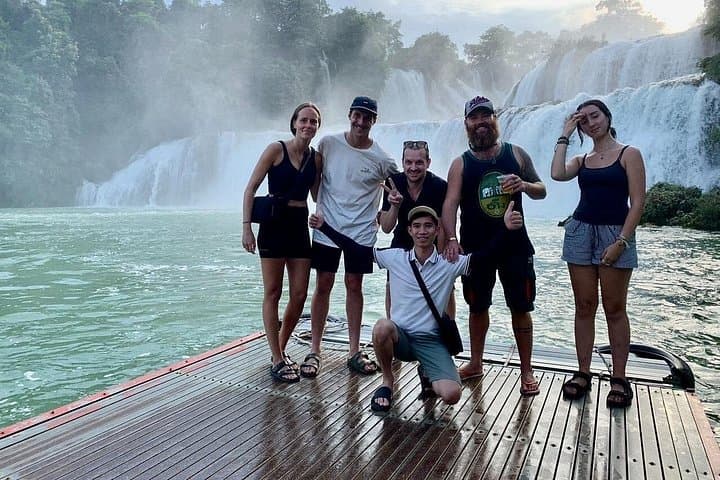

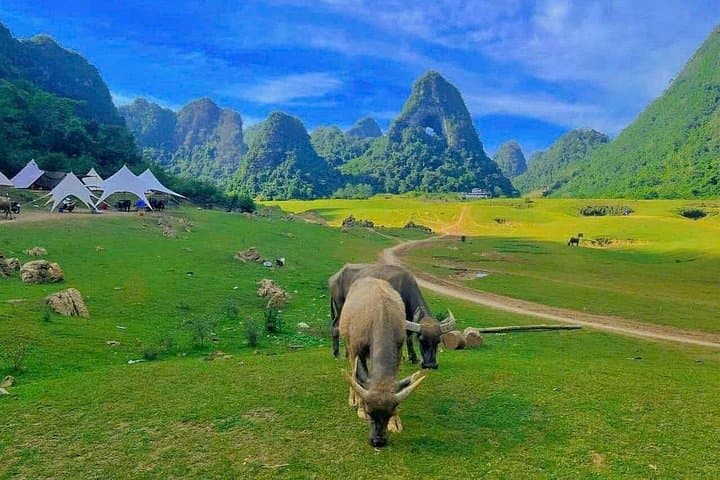
Dawn breaks over a ribbon of limestone ridges as a sleeper bus eases into Cao Bang: mist clings to the valleys, bamboo groves whisper, and the river calls travelers toward Ban Gioc’s thunder. Over three days the route alternates between high, hairpin passes and quiet village lanes—each bend revealing another karst turret or patchwork of wet rice.
Dawn breaks over a ribbon of limestone ridges as a sleeper bus eases into Cao Bang: mist clings to the valleys, bamboo groves whisper, and the river calls travelers toward Ban Gioc’s thunder. Over three days the route alternates between high, hairpin passes and quiet village lanes—each bend revealing another karst turret or patchwork of wet rice.
This corner of northeastern Vietnam carries both geological and historical weight. The region’s karst limestone was folded and etched over millions of years; caves like Nguom Ngao showcase stalactites that trace that slow, subterranean clock. Pac Bo is a living memory site where Hồ Chí Minh operated in the 1940s, and ethnic Tay and Nung communities still maintain centuries-old crafts and communal rhythms.
Expect a mix of short hikes, roadside viewpoints (Me Pia’s 14 bends is a highlight), boat-accessed scenes at Ban Gioc, and time in simple homestays. Terrain ranges from paved provincial roads to steep, rocky viewpoints and bamboo-shaded forest tracks; the longest drives sit between stops. Weather shifts fast—sun becomes rain in an hour—so layer.
Practical guidance: carry local currency and small snacks between villages, start viewpoint walks early for light and fewer bugs, and leave single-use plastics behind—Ban Gioc’s pools are fragile. Physical demands are moderate: several short walks, uneven surfaces, and one or two stair climbs in caves. The itinerary is ideal for travelers who want a compact mix of geology, culture, and scenery without technical climbing—just curiosity and sensible footwear.