THE ADVENTURE COLLECTIVE® · Independent discovery and booking for outdoor travel

A compact three‑day loop from Ulaanbaatar that folds Mongolia’s imperial history, nomadic hospitality and a surprising stretch of sand into one accessible itinerary. Expect monastery courtyards, ger stays and a camel ride across Elsen Tasarkhai.
A compact three‑day loop from Ulaanbaatar that folds Mongolia’s imperial history, nomadic hospitality and a surprising stretch of sand into one accessible itinerary. Expect monastery courtyards, ger stays and a camel ride across Elsen Tasarkhai.
The first morning light breaks across a wide, unbroken sky as your minivan leaves Ulaanbaatar’s smog line and drops into the Orkhon River valley. The road loosens its speed and the horizon opens: grazing horses punctuate the steppe, a scattering of gers (nomadic tents) steams in dawn air, and the mountains of central Mongolia hold the day’s weather like an argument about to be settled.
Verified experiences and guided adventures in the surrounding area.
The first morning light breaks across a wide, unbroken sky as your minivan leaves Ulaanbaatar’s smog line and drops into the Orkhon River valley. The road loosens its speed and the horizon opens: grazing horses punctuate the steppe, a scattering of gers (nomadic tents) steams in dawn air, and the mountains of central Mongolia hold the day’s weather like an argument about to be settled.
Over the next three days this compact itinerary threads history, geology and living culture. At Kharkhorin (modern Karakorum) the sweep of the Orkhon Valley gives way to Erdene Zuu, a 16th‑century monastery built with stones scavenged from the ruined capital first raised by Genghis Khan. The monastery’s prayer wheels and faded murals offer a tactile connection to Mongolia’s Buddhist revival after Soviet-era suppression.
Geology is quieter but no less dramatic: the Elsen Tasarkhai dunes—an anomaly of wind‑sculpted sand a short drive from Kharkhorin—rise like a miniature desert, their ridges shaped by seasonal gusts that still dare travelers to climb and slide. Between monastery walls and sand, rolling steppe and the Orkhon’s braided channels map a landscape shaped by glaciers long gone and by grazing cultures that read the land in hoofprints.
Culturally, the tour highlights the rhythms of nomadic life: a visit to a family ger, a cup of milk tea, and a chance to ride a Bactrian (two‑humped) camel remind you that Mongolia’s traditions are practical—designed for mobility across great distances and seasonal extremes.
Practical guidance: the tour runs roughly 3 days and covers several hundred kilometers of mixed paved and gravel roads; expect daily driving windows of 3–6 hours. Elevation sits around 1,300–1,600 meters, so altitude is gentle but the sun is strong—pack high‑SPF sun protection. Footing ranges from compact steppe trails to soft dune sand, and temperatures swing sharply between day and night; layers are essential.
Plan for simple but comfortable accommodation—ger camps and small guesthouses—with communal meals often centered on meat and dairy. Bring some local currency for small purchases in market towns and tips for hosts. Photography rewards early and late light: sunrise over the Orkhon and sunset on Elsen Tasarkhai create depth and shadow that a phone camera can’t always capture without a little patient framing.
Who is this for? Travelers seeking a concentrated, approachable window into Mongolia’s heart—history, nomadic hospitality and a brush with desert—without committing to weeks on the road. With basic fitness, flexible timing and a readiness to embrace rural conditions, three days here feel expansive.
Expect roughly 5–6 hours of driving each way depending on road conditions; much of the route mixes paved sections with gravel and occasional potholes.
Accommodations are typically two nights in a simple ger camp or guesthouse—clean, locally run lodgings focused on comfort rather than luxury.
Camel rides are generally gentle and slow; operators provide brief safety instruction, but anyone with back issues should consult a guide before mounting.
Most nationalities need a Mongolian visa—obtain it before arrival or check if you qualify for visa‑on‑arrival; no special permits are required for these public sites.
Meals are hearty and dairy‑heavy; vegetarian options are possible with advance notice but notify the operator early to accommodate requests.
Expect intermittent mobile signal outside Ulaanbaatar; some ger camps offer Wi‑Fi but plan for limited connectivity and download maps and info beforehand.
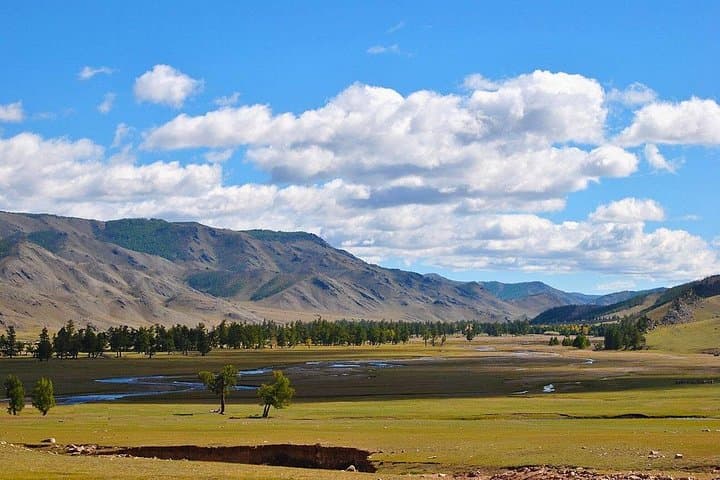
The first morning light breaks across a wide, unbroken sky as your minivan leaves Ulaanbaatar’s smog line and drops into the Orkhon River valley. The road loosens its speed and the horizon opens: grazing horses punctuate the steppe, a scattering of gers (nomadic tents) steams in dawn air, and the mountains of central Mongolia hold the day’s weather like an argument about to be settled.
The first morning light breaks across a wide, unbroken sky as your minivan leaves Ulaanbaatar’s smog line and drops into the Orkhon River valley. The road loosens its speed and the horizon opens: grazing horses punctuate the steppe, a scattering of gers (nomadic tents) steams in dawn air, and the mountains of central Mongolia hold the day’s weather like an argument about to be settled.
Over the next three days this compact itinerary threads history, geology and living culture. At Kharkhorin (modern Karakorum) the sweep of the Orkhon Valley gives way to Erdene Zuu, a 16th‑century monastery built with stones scavenged from the ruined capital first raised by Genghis Khan. The monastery’s prayer wheels and faded murals offer a tactile connection to Mongolia’s Buddhist revival after Soviet-era suppression.
Geology is quieter but no less dramatic: the Elsen Tasarkhai dunes—an anomaly of wind‑sculpted sand a short drive from Kharkhorin—rise like a miniature desert, their ridges shaped by seasonal gusts that still dare travelers to climb and slide. Between monastery walls and sand, rolling steppe and the Orkhon’s braided channels map a landscape shaped by glaciers long gone and by grazing cultures that read the land in hoofprints.
Culturally, the tour highlights the rhythms of nomadic life: a visit to a family ger, a cup of milk tea, and a chance to ride a Bactrian (two‑humped) camel remind you that Mongolia’s traditions are practical—designed for mobility across great distances and seasonal extremes.
Practical guidance: the tour runs roughly 3 days and covers several hundred kilometers of mixed paved and gravel roads; expect daily driving windows of 3–6 hours. Elevation sits around 1,300–1,600 meters, so altitude is gentle but the sun is strong—pack high‑SPF sun protection. Footing ranges from compact steppe trails to soft dune sand, and temperatures swing sharply between day and night; layers are essential.
Plan for simple but comfortable accommodation—ger camps and small guesthouses—with communal meals often centered on meat and dairy. Bring some local currency for small purchases in market towns and tips for hosts. Photography rewards early and late light: sunrise over the Orkhon and sunset on Elsen Tasarkhai create depth and shadow that a phone camera can’t always capture without a little patient framing.
Who is this for? Travelers seeking a concentrated, approachable window into Mongolia’s heart—history, nomadic hospitality and a brush with desert—without committing to weeks on the road. With basic fitness, flexible timing and a readiness to embrace rural conditions, three days here feel expansive.