THE ADVENTURE COLLECTIVE® · Independent discovery and booking for outdoor travel

A compact, wildlife-rich circuit from Kathmandu into Chitwan National Park—three days of jeep safaris, canoeing on the Rapti and guided jungle walks. Ideal for travelers wanting concentrated wildlife viewing with cultural encounters in the Terai lowlands.
A compact, wildlife-rich circuit from Kathmandu into Chitwan National Park—three days of jeep safaris, canoeing on the Rapti and guided jungle walks. Ideal for travelers wanting concentrated wildlife viewing with cultural encounters in the Terai lowlands.
You step off the bus into hot, breathy air and the Rapti River seems to dare you forward—its surface a bright, slow mirror cutting through tall grass. Sauraha’s sandy lanes open onto sal and riverine forests where hornbills call and the jungle keeps its distance until you meet it on a morning walk or jeep track.
Verified experiences and guided adventures in the surrounding area.
Operated by CAN Travels · Sauraha, Bagmati Province
You step off the bus into hot, breathy air and the Rapti River seems to dare you forward—its surface a bright, slow mirror cutting through tall grass. Sauraha’s sandy lanes open onto sal and riverine forests where hornbills call and the jungle keeps its distance until you meet it on a morning walk or jeep track.
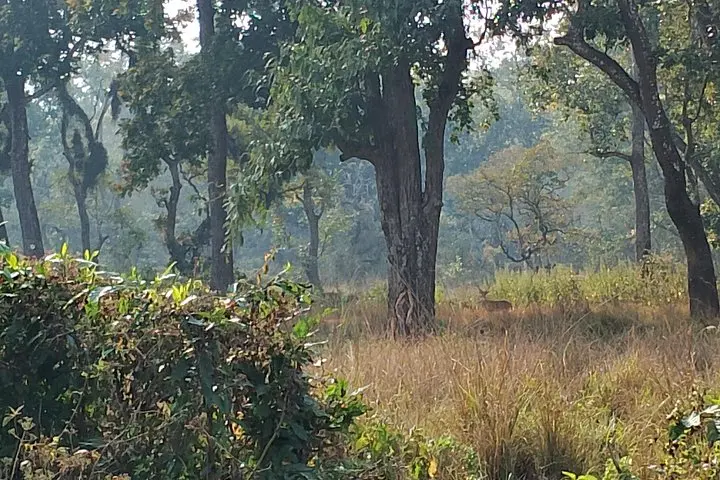
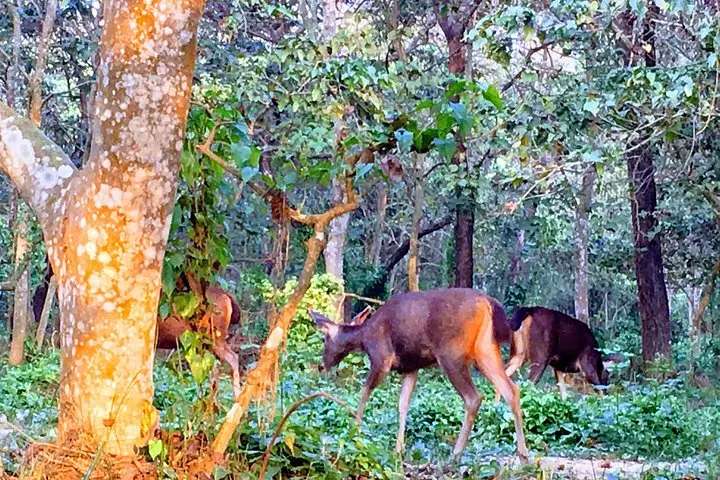
Chitwan National Park occupies lowland Terai plains at roughly 100–300 meters elevation and was protected in 1973; it became a UNESCO World Heritage site in 1984. The park’s geology is alluvial floodplain—broad grasslands, oxbow lakes and braided rivers—habitat for the greater one-horned rhinoceros, Bengal tiger, Asiatic elephant and gharial. Local Tharu communities shaped the riverside villages and visitors can often combine wildlife viewing with cultural performances and a visit to an elephant breeding center.
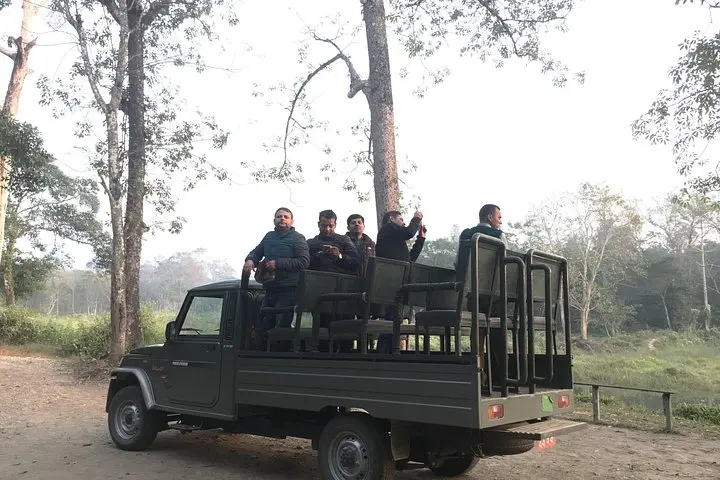
Expect game drives at dawn and dusk, canoeing on the Rapti to spot riverbank reptiles and guided nature walks that cover a few kilometers on uneven trails. Travel time from Kathmandu by tourist bus is about 5–6 hours; roads vary with season. Bring insect repellent, sun protection and light layers for cool mornings. Wildlife sightings are most likely in early morning or late afternoon—stay patient, keep noise low and follow your guide’s instructions.
Practical: carry cash for small purchases, keep copies of your passport, and allow flexibility—the jungle sets its own timetable. With basic preparedness and respect for local rules, this short expedition delivers concentrated wildlife viewing and an intimate look at Nepal’s Terai ecosystem.
The tourist bus transfer typically takes about 5–6 hours depending on traffic and road conditions; private transfers may be faster.
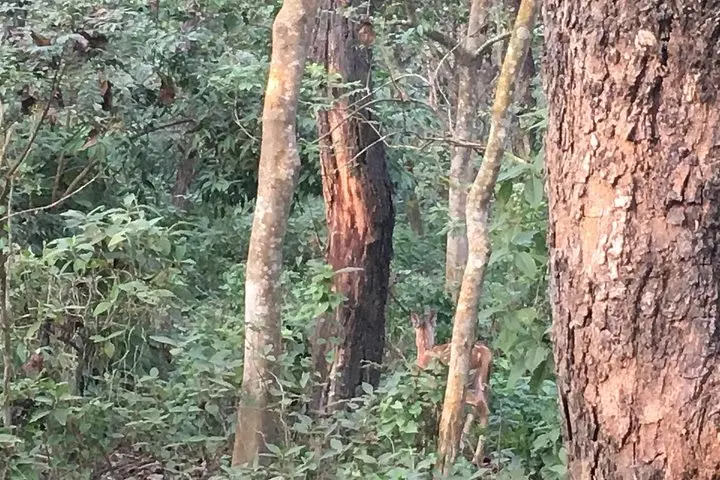
Tigers are present but elusive; Jeep safaris and patient observation increase odds, but sightings cannot be guaranteed.
Yes—activities are rated easy; jeep safaris and canoe rides require minimal mobility, though guided walks may be avoided for those with limited mobility.
Yes—national park permit and entrance fees are included in this tour’s listed inclusions.
CAN Travels operates guided outdoor trips and adventures with an emphasis on safety, stewardship, and memorable experiences.
You step off the bus into hot, breathy air and the Rapti River seems to dare you forward—its surface a bright, slow mirror cutting through tall grass. Sauraha’s sandy lanes open onto sal and riverine forests where hornbills call and the jungle keeps its distance until you meet it on a morning walk or jeep track.
You step off the bus into hot, breathy air and the Rapti River seems to dare you forward—its surface a bright, slow mirror cutting through tall grass. Sauraha’s sandy lanes open onto sal and riverine forests where hornbills call and the jungle keeps its distance until you meet it on a morning walk or jeep track.
Chitwan National Park occupies lowland Terai plains at roughly 100–300 meters elevation and was protected in 1973; it became a UNESCO World Heritage site in 1984. The park’s geology is alluvial floodplain—broad grasslands, oxbow lakes and braided rivers—habitat for the greater one-horned rhinoceros, Bengal tiger, Asiatic elephant and gharial. Local Tharu communities shaped the riverside villages and visitors can often combine wildlife viewing with cultural performances and a visit to an elephant breeding center.
Expect game drives at dawn and dusk, canoeing on the Rapti to spot riverbank reptiles and guided nature walks that cover a few kilometers on uneven trails. Travel time from Kathmandu by tourist bus is about 5–6 hours; roads vary with season. Bring insect repellent, sun protection and light layers for cool mornings. Wildlife sightings are most likely in early morning or late afternoon—stay patient, keep noise low and follow your guide’s instructions.
Practical: carry cash for small purchases, keep copies of your passport, and allow flexibility—the jungle sets its own timetable. With basic preparedness and respect for local rules, this short expedition delivers concentrated wildlife viewing and an intimate look at Nepal’s Terai ecosystem.