THE ADVENTURE COLLECTIVE® · Independent discovery and booking for outdoor travel

Walk three days of the Congo-Nile Trail from Gisenyi along Lake Kivu through coffee farms, fishing villages and lakeside guesthouses. This compact trek blends steady daily mileage with close cultural contact and scenic lake views.
Walk three days of the Congo-Nile Trail from Gisenyi along Lake Kivu through coffee farms, fishing villages and lakeside guesthouses. This compact trek blends steady daily mileage with close cultural contact and scenic lake views.
Dawn breaks over Lake Kivu and the first footsteps hit red clay by the water: the lake seems to dare you forward, islands sliding past like punctuation between the shore and sky. This three-day segment of the Congo-Nile Trail unspools from Gisenyi, threading narrow farm tracks, shaded paths through coffee and banana plots, and village lanes where children wave and fishermen mend nets.
Verified experiences and guided adventures in the surrounding area.
Operated by Usalama Tours Rwanda · Gisenyi, Western Province
Dawn breaks over Lake Kivu and the first footsteps hit red clay by the water: the lake seems to dare you forward, islands sliding past like punctuation between the shore and sky. This three-day segment of the Congo-Nile Trail unspools from Gisenyi, threading narrow farm tracks, shaded paths through coffee and banana plots, and village lanes where children wave and fishermen mend nets.
The Congo-Nile Trail traces the Kivu belt carved by tectonics and volcanic soils; the region’s rich loam supports Rwanda’s coffee and banana agriculture and a distinctive lakeside culture built around fishing and market trade. Historically these paths connected small trading centers long before they were stitched into a formal trail aimed at community-based tourism and sustainable income for lakeshore villages.
Expect undulating terrain rather than long alpine climbs: daily walking blocks of 6–8 hours over narrow singletrack, dirt roads and occasional paved stretches. You’ll pass coffee-processing spots, fishermen’s drying racks and guesthouses that sit on the water’s edge. Weather can flip quickly—sunny mornings give way to sharp afternoon showers—so plan for layers.
Practical edge: carry 2–3 liters of water, a reliable rain shell, and local currency for small purchases. Pace the route by letting locals set the rhythm—tea breaks, coffee stops and market detours are part of the experience. Accommodations are basic lakeside guesthouses; the trail is as much cultural contact as it is hiking, rewarding steady footsteps with sweeping lake views and a real sense of place.
Expect moderate effort: 6–8 hours walking on undulating terrain with short steep sections; good fitness and steady pace are recommended.
Lakeside guesthouses are included on this itinerary; they are basic but comfortable with communal facilities and strong local character.
No special permits are required for this organized 3-day section; your operator handles local permissions and park fees if applicable.
Bring Rwandan francs (RWF) for small purchases; Kinyarwanda and French are common, while English is widely spoken in tourism hubs.
Usalama Tours Rwanda operates guided outdoor trips and adventures with an emphasis on safety, stewardship, and memorable experiences.
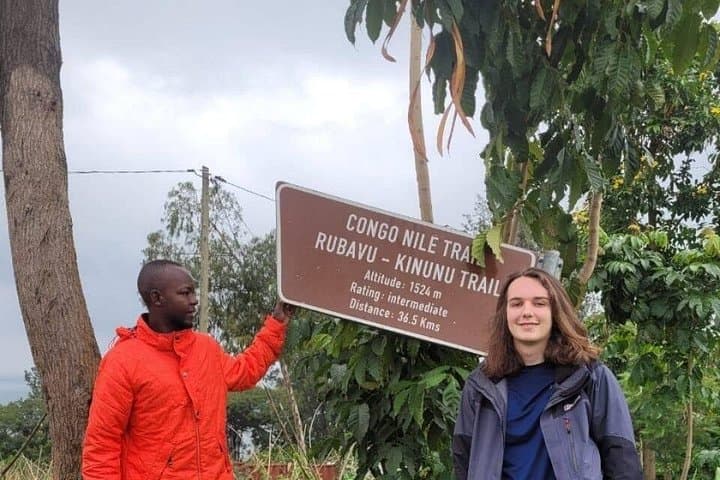


Dawn breaks over Lake Kivu and the first footsteps hit red clay by the water: the lake seems to dare you forward, islands sliding past like punctuation between the shore and sky. This three-day segment of the Congo-Nile Trail unspools from Gisenyi, threading narrow farm tracks, shaded paths through coffee and banana plots, and village lanes where children wave and fishermen mend nets.
Dawn breaks over Lake Kivu and the first footsteps hit red clay by the water: the lake seems to dare you forward, islands sliding past like punctuation between the shore and sky. This three-day segment of the Congo-Nile Trail unspools from Gisenyi, threading narrow farm tracks, shaded paths through coffee and banana plots, and village lanes where children wave and fishermen mend nets.
The Congo-Nile Trail traces the Kivu belt carved by tectonics and volcanic soils; the region’s rich loam supports Rwanda’s coffee and banana agriculture and a distinctive lakeside culture built around fishing and market trade. Historically these paths connected small trading centers long before they were stitched into a formal trail aimed at community-based tourism and sustainable income for lakeshore villages.
Expect undulating terrain rather than long alpine climbs: daily walking blocks of 6–8 hours over narrow singletrack, dirt roads and occasional paved stretches. You’ll pass coffee-processing spots, fishermen’s drying racks and guesthouses that sit on the water’s edge. Weather can flip quickly—sunny mornings give way to sharp afternoon showers—so plan for layers.
Practical edge: carry 2–3 liters of water, a reliable rain shell, and local currency for small purchases. Pace the route by letting locals set the rhythm—tea breaks, coffee stops and market detours are part of the experience. Accommodations are basic lakeside guesthouses; the trail is as much cultural contact as it is hiking, rewarding steady footsteps with sweeping lake views and a real sense of place.