THE ADVENTURE COLLECTIVE® · Independent discovery and booking for outdoor travel

Leave Marrakech for a three-day route through Aït Ben Haddou, the Draa Valley and the remote Erg Chegaga dunes. Expect kasbahs, camel rides, 4x4 crossings and an overnight tent camp beneath desert stars.
Leave Marrakech for a three-day route through Aït Ben Haddou, the Draa Valley and the remote Erg Chegaga dunes. Expect kasbahs, camel rides, 4x4 crossings and an overnight tent camp beneath desert stars.
At dawn the road out of Marrakech climbs Tizi n'Tichka, trading city heat for high-ridge light as the Atlas dips away and the landscape flattens toward Zagora.
Verified experiences and guided adventures in the surrounding area.
Operated by Trekking in Morocco · Zagora, Drâa-Tafilalet
At dawn the road out of Marrakech climbs Tizi n'Tichka, trading city heat for high-ridge light as the Atlas dips away and the landscape flattens toward Zagora.
Over three days this tour moves from kasbahs and palm-lined Draa Valley into the raw sweep of Erg Chegaga—Morocco’s less-frequented high dunes. The route threads Aït Ben Haddou and Ouarzazate, towns shaped by mudbrick architecture and an era of caravan trade; geology here is folded sandstone and alluvium that gives way to the wind-sculpted sand seas near M’Hamid.
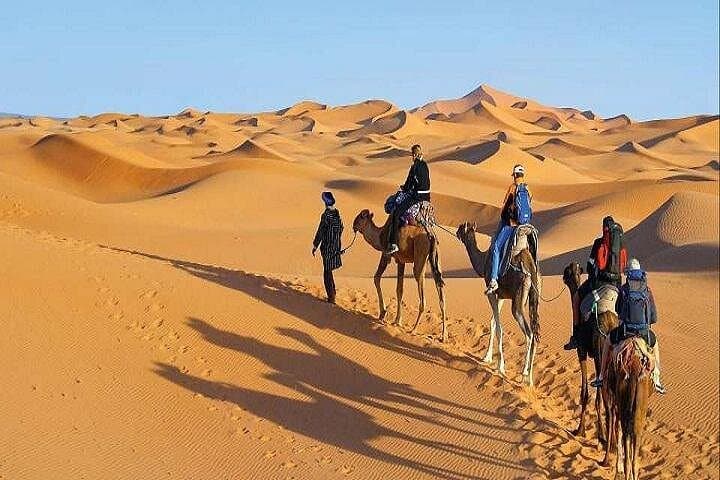
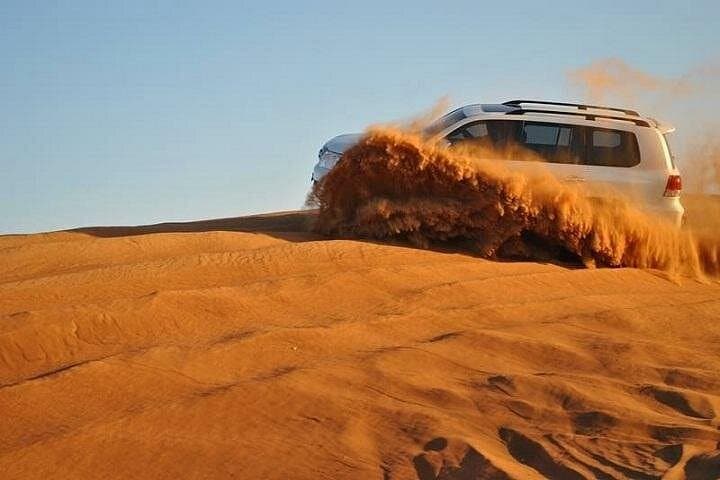
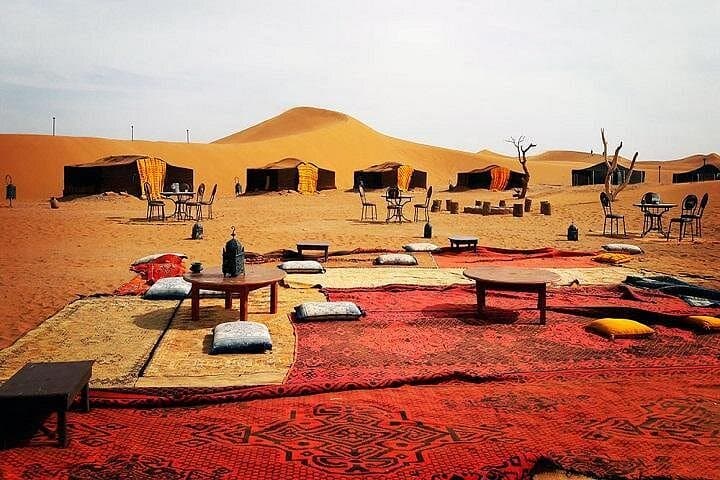
In the dunes, camels lead gentle climbs to ridgelines that shift with every gust, and 4x4 tracks push across plateaus like Irikki where former lake beds meet orange sand. Nights are spent in tents at a desert camp; local musicians often gather to play Gnawa rhythms beneath a clear, cold sky.
Practicalities are straightforward: expect long drives (Marrakech–Zagora ~6–8 hours), early starts for sunset and sunrise views, and modest tent accommodations. Temperatures swing—hot daytime sun and chilly desert nights—so layered clothing, sun protection, and at least 2–3 liters of water per person on dune walks are essential.
The experience suits travelers who want cultural highlights and an accessible desert immersion without multi-day trekking. It’s equal parts photography, slow travel, and simple nights under stars—an introduction to the Sahara that balances comfort (hotels/riads and camp) with authentic desert travel.
Pick-up is from Marrakech at 08:00 on day one; the tour returns to Marrakech by approximately 19:00 on day three.
Camel rides include a sunset short trek on day two and a sunrise ride on day three, typically 30–60 minutes each depending on pace.
Yes—overnight stays are in a hotel or riad in Zagora and a desert camp (tents) at Erg Chegaga; meals listed in the itinerary are provided.
Children and many travelers can participate, but camel mounts and dune terrain require basic mobility; consult the operator about specific needs.
Trekking in Morocco operates guided outdoor trips and adventures with an emphasis on safety, stewardship, and memorable experiences.

At dawn the road out of Marrakech climbs Tizi n'Tichka, trading city heat for high-ridge light as the Atlas dips away and the landscape flattens toward Zagora.
At dawn the road out of Marrakech climbs Tizi n'Tichka, trading city heat for high-ridge light as the Atlas dips away and the landscape flattens toward Zagora.
Over three days this tour moves from kasbahs and palm-lined Draa Valley into the raw sweep of Erg Chegaga—Morocco’s less-frequented high dunes. The route threads Aït Ben Haddou and Ouarzazate, towns shaped by mudbrick architecture and an era of caravan trade; geology here is folded sandstone and alluvium that gives way to the wind-sculpted sand seas near M’Hamid.
In the dunes, camels lead gentle climbs to ridgelines that shift with every gust, and 4x4 tracks push across plateaus like Irikki where former lake beds meet orange sand. Nights are spent in tents at a desert camp; local musicians often gather to play Gnawa rhythms beneath a clear, cold sky.
Practicalities are straightforward: expect long drives (Marrakech–Zagora ~6–8 hours), early starts for sunset and sunrise views, and modest tent accommodations. Temperatures swing—hot daytime sun and chilly desert nights—so layered clothing, sun protection, and at least 2–3 liters of water per person on dune walks are essential.
The experience suits travelers who want cultural highlights and an accessible desert immersion without multi-day trekking. It’s equal parts photography, slow travel, and simple nights under stars—an introduction to the Sahara that balances comfort (hotels/riads and camp) with authentic desert travel.