THE ADVENTURE COLLECTIVE® · Independent discovery and booking for outdoor travel

Three days on the road from Swakopmund into Etosha National Park, two nights of budget camping and guided game drives that focus on waterhole viewing and predator sightings. Ideal for travelers who want an affordable, observation-driven safari with communal campsites.
Three days on the road from Swakopmund into Etosha National Park, two nights of budget camping and guided game drives that focus on waterhole viewing and predator sightings. Ideal for travelers who want an affordable, observation-driven safari with communal campsites.
Dust lifts off the gravel as the minivan slips away from Swakopmund at first light, the Atlantic retreating behind you and the wide, pale interior of Namibia drawing near.
Verified experiences and guided adventures in the surrounding area.
Operated by Chameleon Safaris · Okaukuejo, Oshikoto Region
Dust lifts off the gravel as the minivan slips away from Swakopmund at first light, the Atlantic retreating behind you and the wide, pale interior of Namibia drawing near.
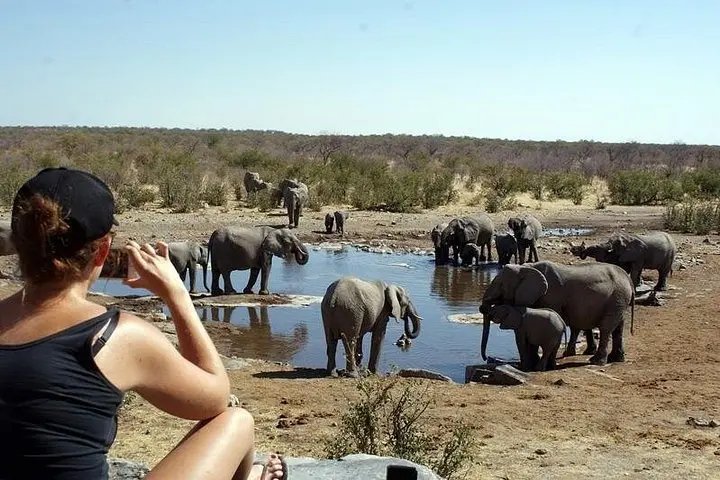
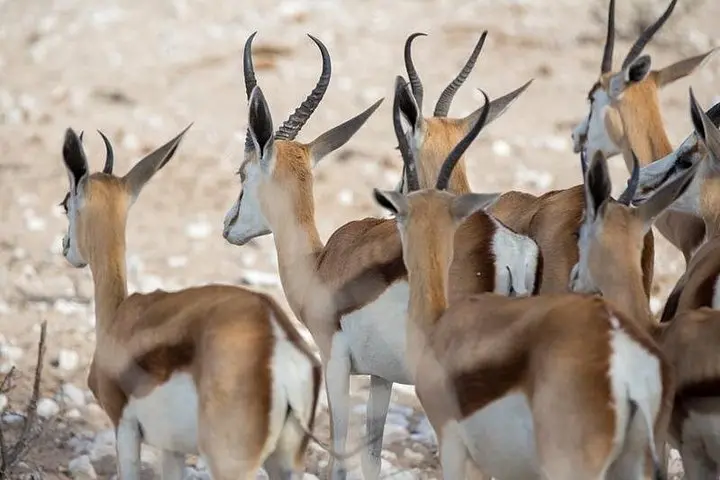
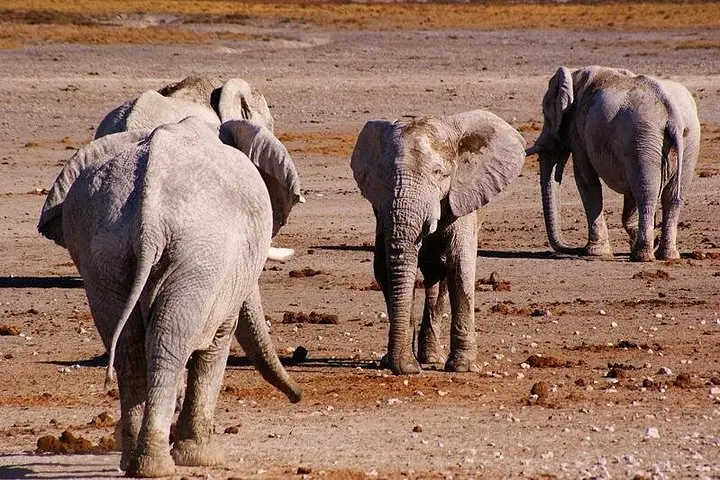
By afternoon the road gives way to scrub and salt-slick horizons; Etosha’s pan is a blanking white that forces the eye outward. Game drives here are deliberate—stop at a road-side waterhole and wait; predators and plains game act like clockwork around scarce water. At night the Okaukuejo floodlit waterhole calls like a magnet, and silhouettes of elephant and zebra move in and out of the lamplight.
Etosha takes its name from the Etosha Pan, the enormous salt pan that dominates the park and shapes its ecology. The park sits on ancient drainage basins and supports wildlife adapted to arid cycles—local Herero and San communities have long known the rhythms of this land, and smaller craft markets at Okahandja speak to a living artisan tradition.
Practicalities: expect long road hours between Swakopmund and the park, two nights camping at Okaukuejo-standard sites, and ranger-led game drives timed for sunrise and late afternoon. Pack sun protection, layered nights, and a small flashlight for camp chores. Water is the single most important resource—carry more than you think. Respect park rules: stay in the vehicle except at designated areas, keep noise low, and follow your guide’s instructions. Meals are simple but hearty—think braai, stews, and picnic lunches.
This itinerary suits first-time safari-goers who want affordable camping and maximum game-viewing time without strenuous hiking—expect patient, observation-driven days and unforgettable night scenes around the waterhole.
No—this budget camping safari is suitable for first-time safari-goers; guides handle navigation, game-driving, and camp setup.
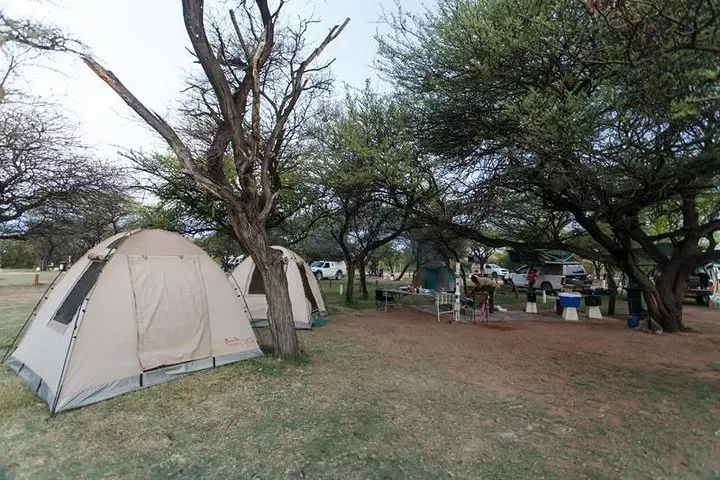
Camps are communal government campsites (Okaukuejo/Halali) with basic ablutions and communal cooking—bring a sleeping mat and warm sleeping bag for cooler nights.
Admission to Etosha is included in the itinerary; viewing is by guided game drive with stops at natural and man-made waterholes—your guide times drives around sunrise and late afternoon.
The tour drops participants in Windhoek city limits and many operators offer shuttle drops at central accommodations, but check with the booking company about luggage transfer or storage policies.
Chameleon Safaris operates guided outdoor trips and adventures with an emphasis on safety, stewardship, and memorable experiences.
Dust lifts off the gravel as the minivan slips away from Swakopmund at first light, the Atlantic retreating behind you and the wide, pale interior of Namibia drawing near.
Dust lifts off the gravel as the minivan slips away from Swakopmund at first light, the Atlantic retreating behind you and the wide, pale interior of Namibia drawing near.
By afternoon the road gives way to scrub and salt-slick horizons; Etosha’s pan is a blanking white that forces the eye outward. Game drives here are deliberate—stop at a road-side waterhole and wait; predators and plains game act like clockwork around scarce water. At night the Okaukuejo floodlit waterhole calls like a magnet, and silhouettes of elephant and zebra move in and out of the lamplight.
Etosha takes its name from the Etosha Pan, the enormous salt pan that dominates the park and shapes its ecology. The park sits on ancient drainage basins and supports wildlife adapted to arid cycles—local Herero and San communities have long known the rhythms of this land, and smaller craft markets at Okahandja speak to a living artisan tradition.
Practicalities: expect long road hours between Swakopmund and the park, two nights camping at Okaukuejo-standard sites, and ranger-led game drives timed for sunrise and late afternoon. Pack sun protection, layered nights, and a small flashlight for camp chores. Water is the single most important resource—carry more than you think. Respect park rules: stay in the vehicle except at designated areas, keep noise low, and follow your guide’s instructions. Meals are simple but hearty—think braai, stews, and picnic lunches.
This itinerary suits first-time safari-goers who want affordable camping and maximum game-viewing time without strenuous hiking—expect patient, observation-driven days and unforgettable night scenes around the waterhole.