THE ADVENTURE COLLECTIVE® · Independent discovery and booking for outdoor travel

Spend three days camping and game-driving through Etosha National Park, focusing on waterhole wildlife viewing and early- and late-day drives. Practical, guided camping makes this a low-barrier, high-reward safari experience from Windhoek.
Spend three days camping and game-driving through Etosha National Park, focusing on waterhole wildlife viewing and early- and late-day drives. Practical, guided camping makes this a low-barrier, high-reward safari experience from Windhoek.
You wake before dawn as the Land Cruiser slides toward a pale horizon; the Etosha pan shines like a sleeping mirror and the air smells of dust and dry grass.
Verified experiences and guided adventures in the surrounding area.
Operated by Discovery Transfer and Tours Namibia · Etosha National Park, Oshikoto
You wake before dawn as the Land Cruiser slides toward a pale horizon; the Etosha pan shines like a sleeping mirror and the air smells of dust and dry grass.
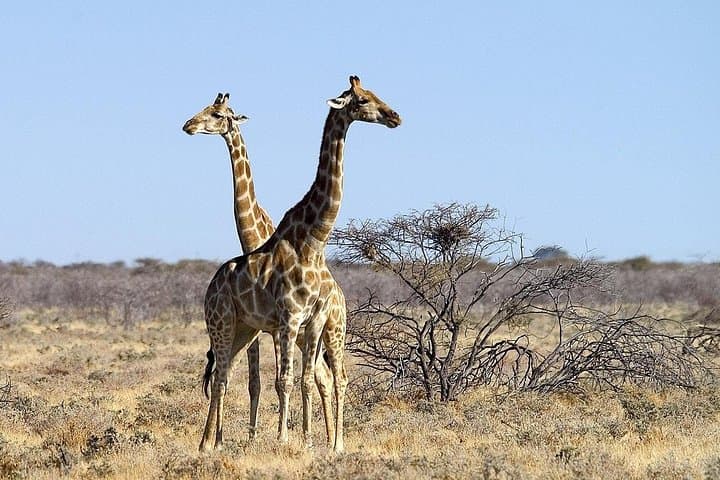
Across three days you’ll track waterholes where herds, predators and birds gather—early-morning and late-afternoon drives keep you close to action. Etosha’s flat salty pan and surrounding savanna sit around 1,000–1,200 m elevation, carved by ancient lake systems and underlain by sedimentary beds that preserve a long geological story. The park is both a living wildlife stage and a cultural crossroads; communities around Etosha include Herero and Ovambo people whose crafts and towns, like Okahandja, show Namibia’s artisan traditions.
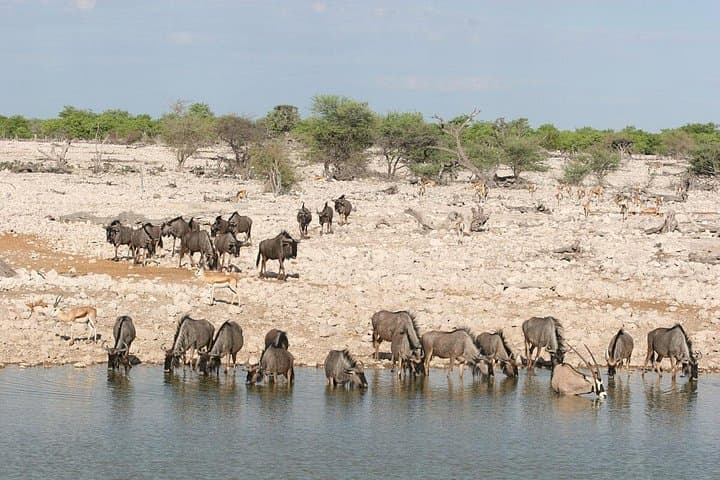
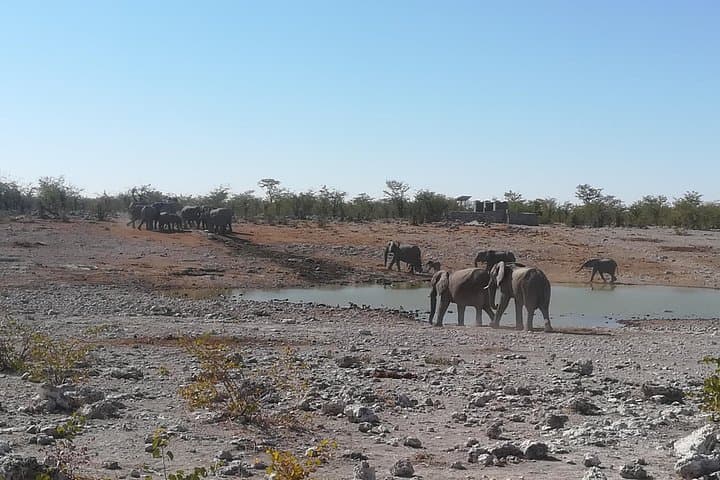
The itinerary combines long road sections from Windhoek with multiple game drives and camping nights (often at park camps or nearby lodges). Expect dusty gravel roads, short walking around camps, open-vehicle viewing, and long binocular sessions at watering holes where elephants, springbok and lions concentrate in the dry season.
Practicalities: drives between Windhoek and Etosha are 4–6 hours depending on camp location; pack layering for hot days and cold nights, carry 3–4 liters of water per person and a headlamp for camp. Wildlife viewing is best at first and last light—silence at waterholes pays dividends. Confirm whether park gate fees are included and bring photocopies of passports for permits. With simple camping comforts and an experienced guide, this three-day loop is focused, wildlife-rich and approachable for travelers of modest fitness.
Tours vary—some include park gate and conservation fees, others list them as additional; confirm with the operator before travel.
Expect roughly 4–6 hours by vehicle depending on traffic, exact camp location and stops along the route.
Camps used on guided tours are established sites with protocols—follow guide instructions, secure food, and avoid wandering after dark.
The dry winter months (May–October) concentrate animals at waterholes and offer cooler daytime conditions; early morning and late afternoon drives yield the best sightings.
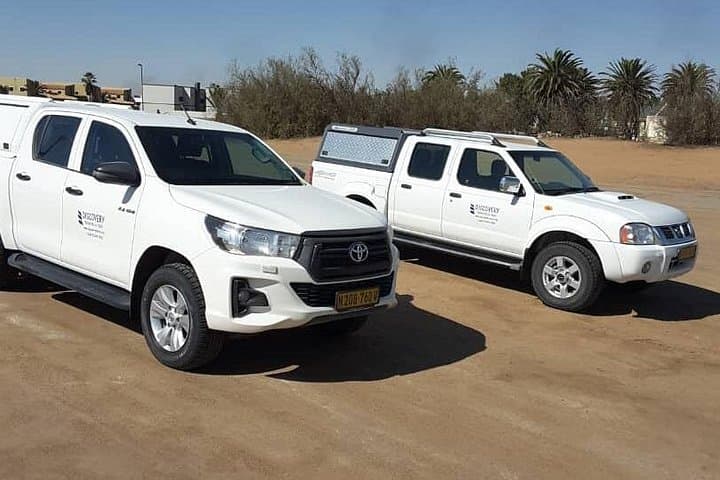
Discovery Transfer and Tours Namibia operates guided outdoor trips and adventures with an emphasis on safety, stewardship, and memorable experiences.
You wake before dawn as the Land Cruiser slides toward a pale horizon; the Etosha pan shines like a sleeping mirror and the air smells of dust and dry grass.
You wake before dawn as the Land Cruiser slides toward a pale horizon; the Etosha pan shines like a sleeping mirror and the air smells of dust and dry grass.
Across three days you’ll track waterholes where herds, predators and birds gather—early-morning and late-afternoon drives keep you close to action. Etosha’s flat salty pan and surrounding savanna sit around 1,000–1,200 m elevation, carved by ancient lake systems and underlain by sedimentary beds that preserve a long geological story. The park is both a living wildlife stage and a cultural crossroads; communities around Etosha include Herero and Ovambo people whose crafts and towns, like Okahandja, show Namibia’s artisan traditions.
The itinerary combines long road sections from Windhoek with multiple game drives and camping nights (often at park camps or nearby lodges). Expect dusty gravel roads, short walking around camps, open-vehicle viewing, and long binocular sessions at watering holes where elephants, springbok and lions concentrate in the dry season.
Practicalities: drives between Windhoek and Etosha are 4–6 hours depending on camp location; pack layering for hot days and cold nights, carry 3–4 liters of water per person and a headlamp for camp. Wildlife viewing is best at first and last light—silence at waterholes pays dividends. Confirm whether park gate fees are included and bring photocopies of passports for permits. With simple camping comforts and an experienced guide, this three-day loop is focused, wildlife-rich and approachable for travelers of modest fitness.