THE ADVENTURE COLLECTIVE® · Independent discovery and booking for outdoor travel

Cross the Middle Atlas, ride camels across Erg Chebbi and spend a night under the desert sky on a private three-day journey from Fes to Marrakech. Expect long scenic drives, dramatic gorges, UNESCO kasbahs and authentic Berber hospitality.
Cross the Middle Atlas, ride camels across Erg Chebbi and spend a night under the desert sky on a private three-day journey from Fes to Marrakech. Expect long scenic drives, dramatic gorges, UNESCO kasbahs and authentic Berber hospitality.
The day begins before sunrise as the minivan threads out of Fes and climbs toward the Middle Atlas; the road opens, and the desert waits like a patient sea. By late afternoon the Erg Chebbi dunes begin to rise on the horizon, wind-sculpted ridges that seem to shift under their own breath — the camel train moves slowly, sand daring you to keep pace.
Verified experiences and guided adventures in the surrounding area.
Operated by Explore Morocco Travel SARL · Merzouga, Errachidia Province
The day begins before sunrise as the minivan threads out of Fes and climbs toward the Middle Atlas; the road opens, and the desert waits like a patient sea. By late afternoon the Erg Chebbi dunes begin to rise on the horizon, wind-sculpted ridges that seem to shift under their own breath — the camel train moves slowly, sand daring you to keep pace.
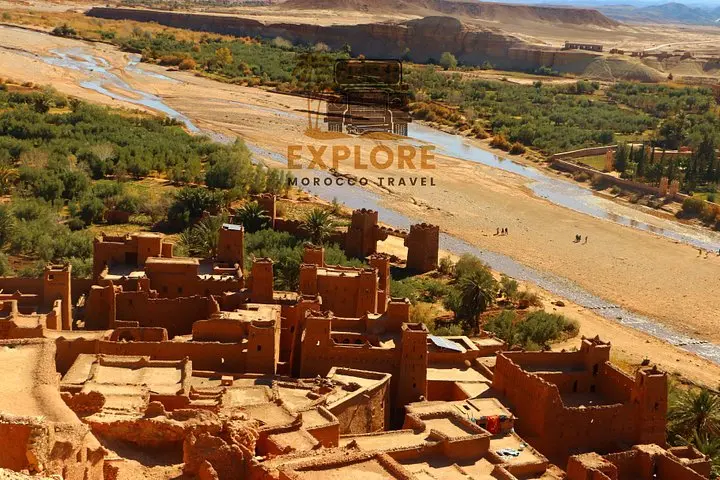
This three-day route stitches together Morocco’s layers: Fes’ medieval medina and craft traditions, cedar forests and the geology of the Middle Atlas, the river-carved Todra and Dades gorges, and the red-earth kasbahs of Aït Ben Haddou — once a stop on trans-Saharan caravan routes and later a film location. The High Atlas crosses the itinerary at Tizi n’Tichka, where ancient trade corridors meet modern asphalt.
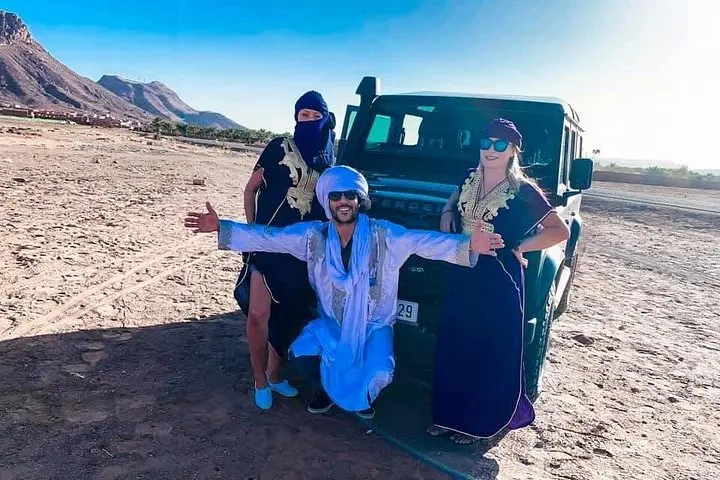
Culturally, the trip places travelers with Berber hospitality: a shared meal in a riad, the rhythms of market bargaining in Rissani, and the nomadic customs near Merzouga. Geologically, you’ll see alluvial valleys give way to wind-formed dunes and weathered sandstone gorges.
Practically: expect long drives punctuated by photo stops and a 60–90 minute camel ride to a standard desert camp (shared facilities). Bring layered clothing for hot days and cold nights, sun protection, and a water bottle with 2–3L capacity per day. Footwear should handle dusty tracks and short scramble sections in the gorges. Time departures early to avoid midday heat and choose a private tour for flexible pacing and local-guide access to kasbahs and markets.
The camel ride from Merzouga to the camp is typically 60–90 minutes at a steady pace, timed to arrive near sunset.
Standard desert camps usually have shared shower and toilet facilities; private tents are available on upgraded packages.
Private transport allows flexibility, but travelers should have moderate mobility; infants or those with cardiovascular issues should consult the operator.
Visa requirements depend on nationality; routine vaccinations are normally sufficient—check government travel advice and consult a travel clinic for personalized recommendations.
Explore Morocco Travel SARL operates guided outdoor trips and adventures with an emphasis on safety, stewardship, and memorable experiences.
The day begins before sunrise as the minivan threads out of Fes and climbs toward the Middle Atlas; the road opens, and the desert waits like a patient sea. By late afternoon the Erg Chebbi dunes begin to rise on the horizon, wind-sculpted ridges that seem to shift under their own breath — the camel train moves slowly, sand daring you to keep pace.
The day begins before sunrise as the minivan threads out of Fes and climbs toward the Middle Atlas; the road opens, and the desert waits like a patient sea. By late afternoon the Erg Chebbi dunes begin to rise on the horizon, wind-sculpted ridges that seem to shift under their own breath — the camel train moves slowly, sand daring you to keep pace.
This three-day route stitches together Morocco’s layers: Fes’ medieval medina and craft traditions, cedar forests and the geology of the Middle Atlas, the river-carved Todra and Dades gorges, and the red-earth kasbahs of Aït Ben Haddou — once a stop on trans-Saharan caravan routes and later a film location. The High Atlas crosses the itinerary at Tizi n’Tichka, where ancient trade corridors meet modern asphalt.
Culturally, the trip places travelers with Berber hospitality: a shared meal in a riad, the rhythms of market bargaining in Rissani, and the nomadic customs near Merzouga. Geologically, you’ll see alluvial valleys give way to wind-formed dunes and weathered sandstone gorges.
Practically: expect long drives punctuated by photo stops and a 60–90 minute camel ride to a standard desert camp (shared facilities). Bring layered clothing for hot days and cold nights, sun protection, and a water bottle with 2–3L capacity per day. Footwear should handle dusty tracks and short scramble sections in the gorges. Time departures early to avoid midday heat and choose a private tour for flexible pacing and local-guide access to kasbahs and markets.