THE ADVENTURE COLLECTIVE® · Independent discovery and booking for outdoor travel

A compact three-day loop from Fez to Marrakech that takes you through cedar forests, the Ziz Valley, Todra Gorge, and the staggering Erg Chebbi dunes. Expect sunset camel rides, an overnight private desert tent, and a UNESCO stop at Ait Ben Haddou.
A compact three-day loop from Fez to Marrakech that takes you through cedar forests, the Ziz Valley, Todra Gorge, and the staggering Erg Chebbi dunes. Expect sunset camel rides, an overnight private desert tent, and a UNESCO stop at Ait Ben Haddou.
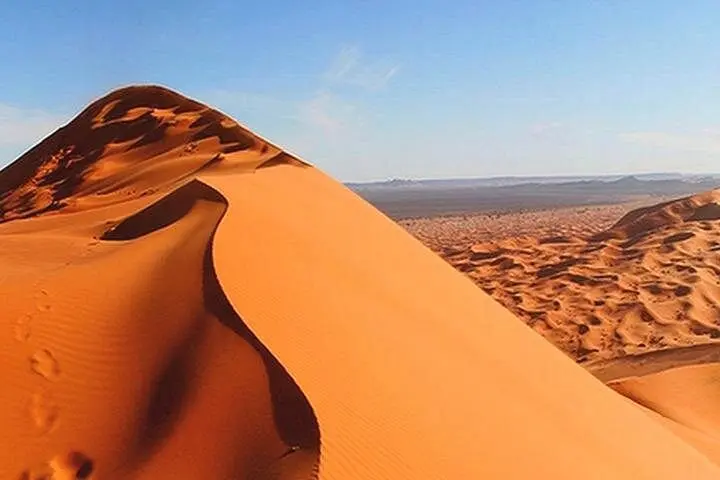
You crest a high mountain pass and the light changes: ochre plains unfurl, then a band of rippling sand rising like an island — Erg Chebbi pushing its curves toward the horizon. On this three-day loop from Fez to Marrakech you move from Atlas peaks to cedar woods, through palm-lined valleys, and finally into the desert that reshapes itself every wind.
Verified experiences and guided adventures in the surrounding area.
Operated by Sahara safaris · Merzouga, Drâa-Tafilalet
You crest a high mountain pass and the light changes: ochre plains unfurl, then a band of rippling sand rising like an island — Erg Chebbi pushing its curves toward the horizon. On this three-day loop from Fez to Marrakech you move from Atlas peaks to cedar woods, through palm-lined valleys, and finally into the desert that reshapes itself every wind.
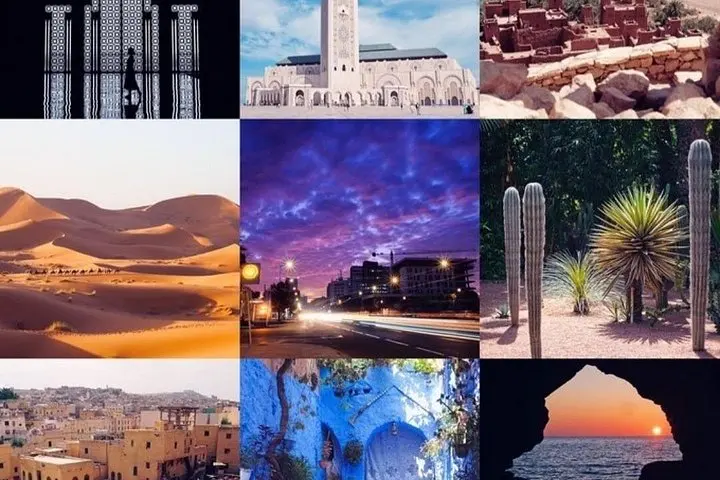
The route threads Ifrane’s alpine feel and Azrou’s cedar groves, skirts the Ziz Valley’s irrigated date palms, then reaches Merzouga and the towering Erg Chebbi dunes where sunset and sunrise are the itinerary’s heart. Geological forces carved the High Atlas and funneled ancient rivers into the Ziz, leaving wind-sculpted dunes and narrow limestone gorges like Todra. Culture here mixes Berber kasbah architecture — notably the UNESCO-listed Ait Ben Haddou — with oasis agriculture and caravan-era roads now called the Road of 1000 Kasbahs.
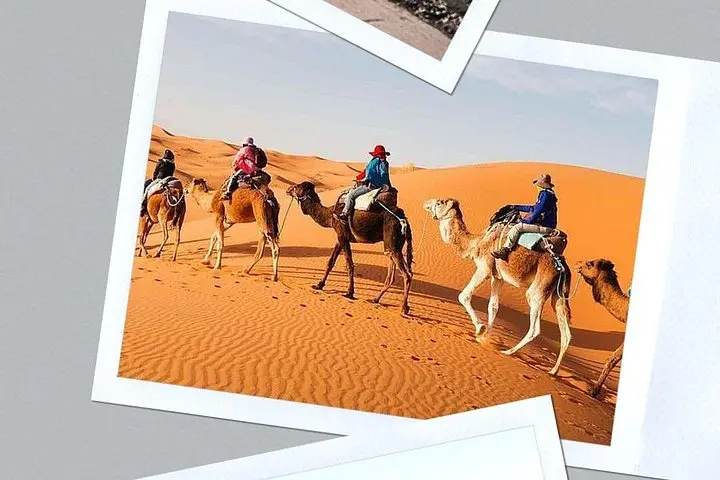
Practical guidance: expect long driving stretches broken by short walks, a sunset camel ride into camp, an overnight in a private desert tent and a sunrise return the next morning. Tizi n’Tichka pass reaches about 2,260 meters, so pack layers; desert nights can drop sharply. Bring sun protection, at least 2 liters of water per day, ankle-support shoes for sand and rocky turns, and a small daypack for camera and snacks. Respect local customs—modest dress and asking before photographing people—and tip guides if service is good. The experience is sensory and direct: dunes that invite slow climbs, a sky that stages the Milky Way, and travel that stitches Morocco’s mountains, valleys, and desert into one compact, three-day odyssey.
No special skill is required; local handlers lead camels and provide brief instructions — however, mounting and dismounting can be awkward for some.
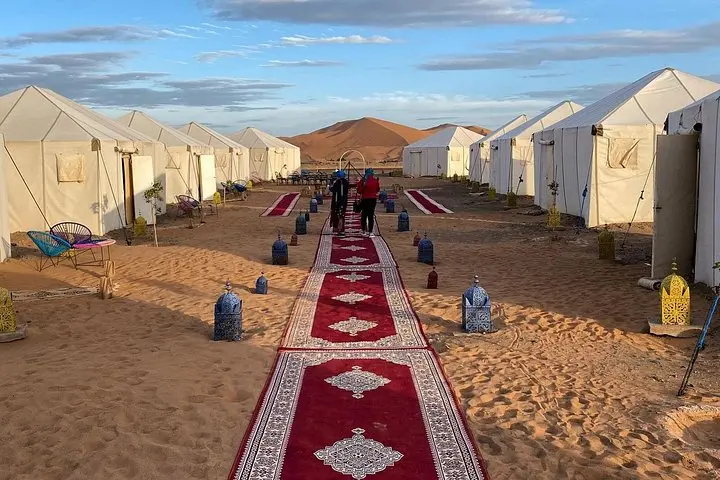
The itinerary includes an overnight in a private desert tent; facilities are basic but typically include mattresses, blankets, and shared or simple ablutions depending on operator.
Infants must sit on an adult’s lap during transport; children can join but consider the long drives and night temperatures when planning.
Days include several long transfers between attractions—plan on multiple 3–5 hour driving stretches broken by stops at viewpoints and attractions.
Sahara safaris operates guided outdoor trips and adventures with an emphasis on safety, stewardship, and memorable experiences.
You crest a high mountain pass and the light changes: ochre plains unfurl, then a band of rippling sand rising like an island — Erg Chebbi pushing its curves toward the horizon. On this three-day loop from Fez to Marrakech you move from Atlas peaks to cedar woods, through palm-lined valleys, and finally into the desert that reshapes itself every wind.
You crest a high mountain pass and the light changes: ochre plains unfurl, then a band of rippling sand rising like an island — Erg Chebbi pushing its curves toward the horizon. On this three-day loop from Fez to Marrakech you move from Atlas peaks to cedar woods, through palm-lined valleys, and finally into the desert that reshapes itself every wind.
The route threads Ifrane’s alpine feel and Azrou’s cedar groves, skirts the Ziz Valley’s irrigated date palms, then reaches Merzouga and the towering Erg Chebbi dunes where sunset and sunrise are the itinerary’s heart. Geological forces carved the High Atlas and funneled ancient rivers into the Ziz, leaving wind-sculpted dunes and narrow limestone gorges like Todra. Culture here mixes Berber kasbah architecture — notably the UNESCO-listed Ait Ben Haddou — with oasis agriculture and caravan-era roads now called the Road of 1000 Kasbahs.
Practical guidance: expect long driving stretches broken by short walks, a sunset camel ride into camp, an overnight in a private desert tent and a sunrise return the next morning. Tizi n’Tichka pass reaches about 2,260 meters, so pack layers; desert nights can drop sharply. Bring sun protection, at least 2 liters of water per day, ankle-support shoes for sand and rocky turns, and a small daypack for camera and snacks. Respect local customs—modest dress and asking before photographing people—and tip guides if service is good. The experience is sensory and direct: dunes that invite slow climbs, a sky that stages the Milky Way, and travel that stitches Morocco’s mountains, valleys, and desert into one compact, three-day odyssey.