THE ADVENTURE COLLECTIVE® · Independent discovery and booking for outdoor travel

Swap Cape Town’s skyline for scrubland, caves and sunrise game drives on this focused 3-day Garden Route safari. Visit Cango Caves, search for the Big Five, and experience private reserves without the long-haul logistics.
Swap Cape Town’s skyline for scrubland, caves and sunrise game drives on this focused 3-day Garden Route safari. Visit Cango Caves, search for the Big Five, and experience private reserves without the long-haul logistics.
The tour begins before dawn, when Cape Town’s city lights still blink against the dark. You board a small coach and the Atlantic coast peels away as the road bends east; the wind off the bay seems to dare you into the interior. Within a few hours the landscape changes from low coastal fynbos to the rounded, arid scrub outside Oudtshoorn, where limestone cliffs guard the mouth of the Cango Caves and private game reserves stretch across gently rolling karoo.
Verified experiences and guided adventures in the surrounding area.
The tour begins before dawn, when Cape Town’s city lights still blink against the dark. You board a small coach and the Atlantic coast peels away as the road bends east; the wind off the bay seems to dare you into the interior. Within a few hours the landscape changes from low coastal fynbos to the rounded, arid scrub outside Oudtshoorn, where limestone cliffs guard the mouth of the Cango Caves and private game reserves stretch across gently rolling karoo.
On day two the pace slows: a guided walk through the Cango Caves forces you into a different rhythm — careful footsteps, a cool hush, fingers trailing along calcite curtains formed over millennia. The caves are less a curiosity and more a record of geological weathering; passages widened by slow-moving groundwater, stalactites and stalagmites meeting like old acquaintances. Above ground, the reserve roads are a map of contrasts — dusty tracks that open into savanna-like plains where guides scan for movement: the triangular ears of a cheetah, a distant buffalo herd, or the flash of a crocodile where a river widens.
This route blends natural history with regional culture. The Garden Route corridor was a crossroads for Khoisan peoples long before colonial roads, and the Ostrich Boom of the late 19th century left small towns of Victorian feather-palaces and working farms. Private reserves in this part of the Western Cape are relatively young institutions, created to protect fragmented habitat and offer sustainable tourism revenue where low-intensity agriculture once ruled.
Practicalities are straightforward but matter. Expect roughly 4–5 hours driving from Cape Town to Oudtshoorn; daily drives can range from 90–300 km depending on which reserves you visit. Cango Caves’ standard route is approximately 1 km of walking with a few flights of steps and narrow sections — plan for 200 or so steps and cool, damp rock underfoot. Safari game drives typically last 4–6 hours and cover 30–50 km over gravel tracks with intermittent stops for viewing and photography.
Bring layers for early mornings and cave cool, and sun protection for midday drives. Hydration is non-negotiable — long, dusty hours on reserve make a 2–3 liter water bottle advisable. If you’re after close encounters, carry binoculars and a 200–400mm lens for wildlife; set your camera for low shutter times when light drops. Accommodations often range from guesthouse-style lodges to simple bush chalets; expect basic comforts, regional meals, and local guides who read animal behavior like a second language.
This itinerary delivers contrast: subterranean cool, open plains alive with motion, and the quiet history of a land that shifts between sea and semi-arid interior. For travelers who want concentrated wildlife time without long fly-ins, this three-day loop from Cape Town compresses the Garden Route’s best features into a compact, attainable adventure.
Expect 3–6 hours of driving across the itinerary; Cape Town to Oudtshoorn is roughly 4–5 hours (approx. 420 km), with shorter transfers between reserves and towns on days two and three.
The standard guided route is about 1 km with steps and narrow sections; it’s cool and damp but manageable for most people who can navigate stairs.
Private reserves aim to offer Big Five sightings, but wildlife sightings can’t be guaranteed — guides maximize opportunities by timing drives and using local knowledge.
Accommodations typically range from comfortable guesthouses to rustic lodge rooms; specifics vary by operator so check inclusions before booking.
Families with older children who can handle early starts and long drives will enjoy it; young children may find long transfers and cave stairs tiring.
Vaccination and visa requirements depend on your nationality; consult your doctor for vaccinations and South African consulate for visa rules before travel.
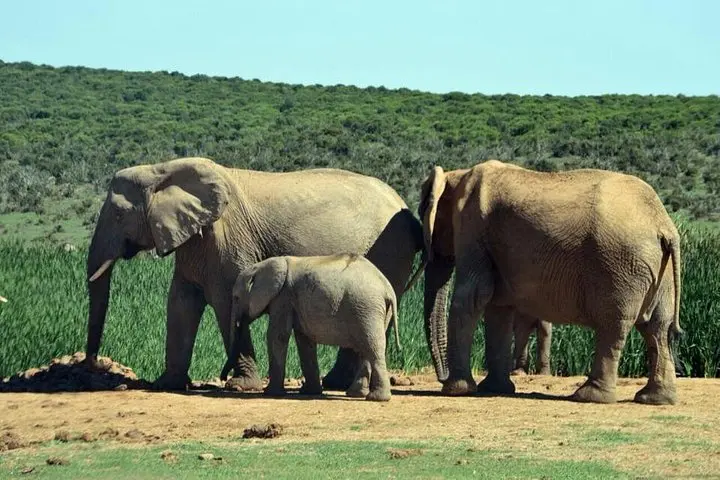
The tour begins before dawn, when Cape Town’s city lights still blink against the dark. You board a small coach and the Atlantic coast peels away as the road bends east; the wind off the bay seems to dare you into the interior. Within a few hours the landscape changes from low coastal fynbos to the rounded, arid scrub outside Oudtshoorn, where limestone cliffs guard the mouth of the Cango Caves and private game reserves stretch across gently rolling karoo.
The tour begins before dawn, when Cape Town’s city lights still blink against the dark. You board a small coach and the Atlantic coast peels away as the road bends east; the wind off the bay seems to dare you into the interior. Within a few hours the landscape changes from low coastal fynbos to the rounded, arid scrub outside Oudtshoorn, where limestone cliffs guard the mouth of the Cango Caves and private game reserves stretch across gently rolling karoo.
On day two the pace slows: a guided walk through the Cango Caves forces you into a different rhythm — careful footsteps, a cool hush, fingers trailing along calcite curtains formed over millennia. The caves are less a curiosity and more a record of geological weathering; passages widened by slow-moving groundwater, stalactites and stalagmites meeting like old acquaintances. Above ground, the reserve roads are a map of contrasts — dusty tracks that open into savanna-like plains where guides scan for movement: the triangular ears of a cheetah, a distant buffalo herd, or the flash of a crocodile where a river widens.
This route blends natural history with regional culture. The Garden Route corridor was a crossroads for Khoisan peoples long before colonial roads, and the Ostrich Boom of the late 19th century left small towns of Victorian feather-palaces and working farms. Private reserves in this part of the Western Cape are relatively young institutions, created to protect fragmented habitat and offer sustainable tourism revenue where low-intensity agriculture once ruled.
Practicalities are straightforward but matter. Expect roughly 4–5 hours driving from Cape Town to Oudtshoorn; daily drives can range from 90–300 km depending on which reserves you visit. Cango Caves’ standard route is approximately 1 km of walking with a few flights of steps and narrow sections — plan for 200 or so steps and cool, damp rock underfoot. Safari game drives typically last 4–6 hours and cover 30–50 km over gravel tracks with intermittent stops for viewing and photography.
Bring layers for early mornings and cave cool, and sun protection for midday drives. Hydration is non-negotiable — long, dusty hours on reserve make a 2–3 liter water bottle advisable. If you’re after close encounters, carry binoculars and a 200–400mm lens for wildlife; set your camera for low shutter times when light drops. Accommodations often range from guesthouse-style lodges to simple bush chalets; expect basic comforts, regional meals, and local guides who read animal behavior like a second language.
This itinerary delivers contrast: subterranean cool, open plains alive with motion, and the quiet history of a land that shifts between sea and semi-arid interior. For travelers who want concentrated wildlife time without long fly-ins, this three-day loop from Cape Town compresses the Garden Route’s best features into a compact, attainable adventure.