THE ADVENTURE COLLECTIVE® · Independent discovery and booking for outdoor travel

Three days of camping, open‑top game drives and close wildlife encounters across Serengeti and Ngorongoro. Expect long transfer days, early starts for predator activity, and camp dinners under the stars.
Three days of camping, open‑top game drives and close wildlife encounters across Serengeti and Ngorongoro. Expect long transfer days, early starts for predator activity, and camp dinners under the stars.
Dawn arrives over the Serengeti as headlights pick out grazing impala and the first lions stretch under a flat‑topped acacia. You sit in the open-top land cruiser, the engine quietly humming while the grasslands unfurl — a living plain that moves with the wind and dares you to look away.
Verified experiences and guided adventures in the surrounding area.
Operated by Nkollo Tours&Safaris · Arusha, Arusha Region
Dawn arrives over the Serengeti as headlights pick out grazing impala and the first lions stretch under a flat‑topped acacia. You sit in the open-top land cruiser, the engine quietly humming while the grasslands unfurl — a living plain that moves with the wind and dares you to look away.
This three-day loop threads the northern circuit: long game drives around Seronera in Serengeti National Park, a night under canvas at Seronera and Simba campsites, then a descent into the Ngorongoro Crater’s bowl-shaped world. Geologically, Ngorongoro is an ancient collapsed volcano whose rim sits around 2,200–2,400 m while the crater floor drops to roughly 1,800–1,900 m; Serengeti plains are lower and more open, averaging about 1,300–1,500 m. The region blends Maasai culture, Olduvai Gorge’s paleoanthropological legacy, and ecosystems that support resident lions, elephants, leopards, and year-round plains game.
Expect long vehicle days — roughly 6–8 hours road transfer from Arusha to Seronera depending on stops — punctuated by multiple game drives each day and early starts to catch predators at their most active. Guides handle camp setup and meals; a cook prepares hot breakfasts and dinners around camp. Practical notes: bring layered clothing for cool crater mornings and strong sun protection for daytime on the plains. Binoculars, a charged camera, ample water, and patience will reward you: sightings in both parks are reliable but never guaranteed. Confirm park entry fees and pickup details when you book; travel light, and let the guide manage logistics so you can focus on the wildlife.
This operator lists ‘all fees & taxes’ as included; confirm at booking whether statutory park entrance and conservation fees are covered or payable locally.
Expect roughly 6–8 hours from Arusha to Seronera depending on stops; transfers between Serengeti and Ngorongoro typically take several hours with game stops en route.
The itinerary provides camping equipment and campsite accommodation (Seronera and Simba Campsites); guides handle setup and cooking—bring personal sleeping essentials if you prefer.
Talk to a travel health clinic before departure — malaria prophylaxis and routine vaccinations are commonly recommended for northern Tanzania.
Nkollo Tours&Safaris operates guided outdoor trips and adventures with an emphasis on safety, stewardship, and memorable experiences.
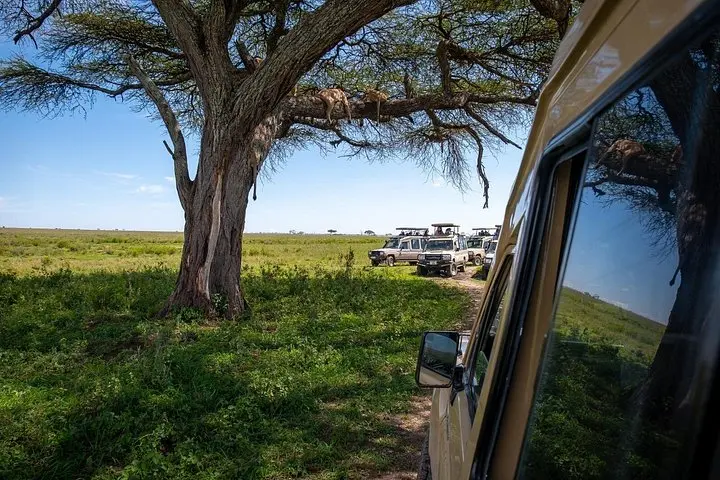
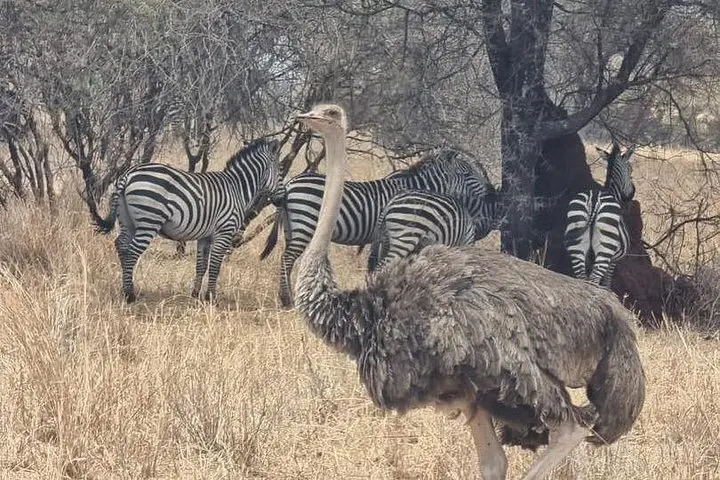
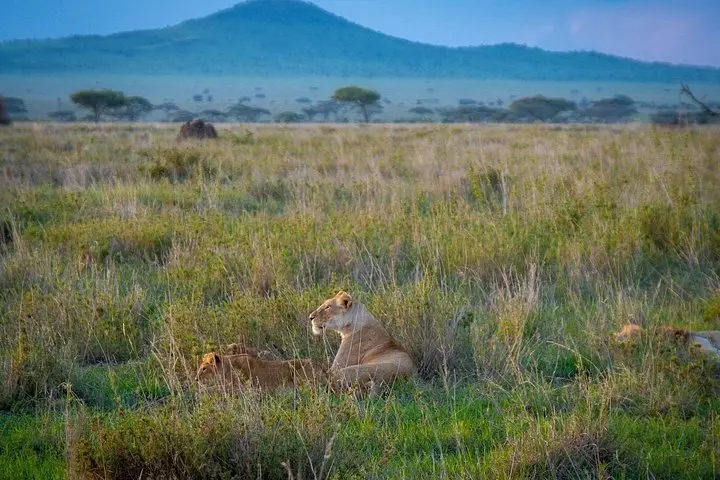
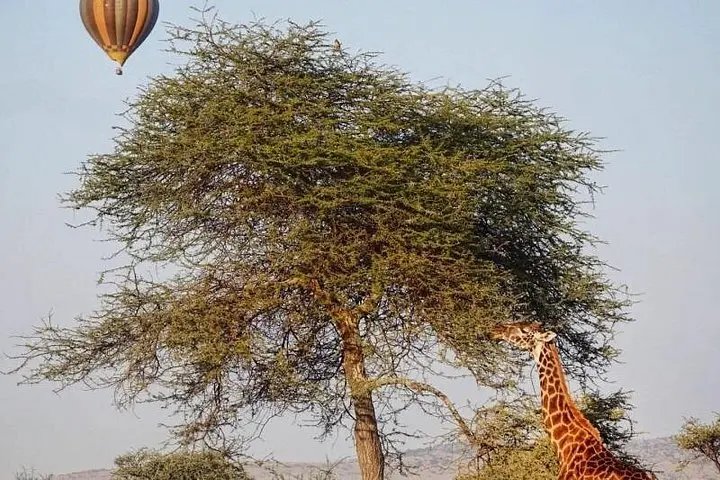
Dawn arrives over the Serengeti as headlights pick out grazing impala and the first lions stretch under a flat‑topped acacia. You sit in the open-top land cruiser, the engine quietly humming while the grasslands unfurl — a living plain that moves with the wind and dares you to look away.
Dawn arrives over the Serengeti as headlights pick out grazing impala and the first lions stretch under a flat‑topped acacia. You sit in the open-top land cruiser, the engine quietly humming while the grasslands unfurl — a living plain that moves with the wind and dares you to look away.
This three-day loop threads the northern circuit: long game drives around Seronera in Serengeti National Park, a night under canvas at Seronera and Simba campsites, then a descent into the Ngorongoro Crater’s bowl-shaped world. Geologically, Ngorongoro is an ancient collapsed volcano whose rim sits around 2,200–2,400 m while the crater floor drops to roughly 1,800–1,900 m; Serengeti plains are lower and more open, averaging about 1,300–1,500 m. The region blends Maasai culture, Olduvai Gorge’s paleoanthropological legacy, and ecosystems that support resident lions, elephants, leopards, and year-round plains game.
Expect long vehicle days — roughly 6–8 hours road transfer from Arusha to Seronera depending on stops — punctuated by multiple game drives each day and early starts to catch predators at their most active. Guides handle camp setup and meals; a cook prepares hot breakfasts and dinners around camp. Practical notes: bring layered clothing for cool crater mornings and strong sun protection for daytime on the plains. Binoculars, a charged camera, ample water, and patience will reward you: sightings in both parks are reliable but never guaranteed. Confirm park entry fees and pickup details when you book; travel light, and let the guide manage logistics so you can focus on the wildlife.