THE ADVENTURE COLLECTIVE® · Independent discovery and booking for outdoor travel

Three days from Windhoek delivers sunrise climbs on world-class dunes, surreal imagery at Deadvlei, and a cool walk through Sesriem Canyon. This guided tour balances long scenic drives with well-timed excursions and comfortable lodge nights near the park gate.
Three days from Windhoek delivers sunrise climbs on world-class dunes, surreal imagery at Deadvlei, and a cool walk through Sesriem Canyon. This guided tour balances long scenic drives with well-timed excursions and comfortable lodge nights near the park gate.
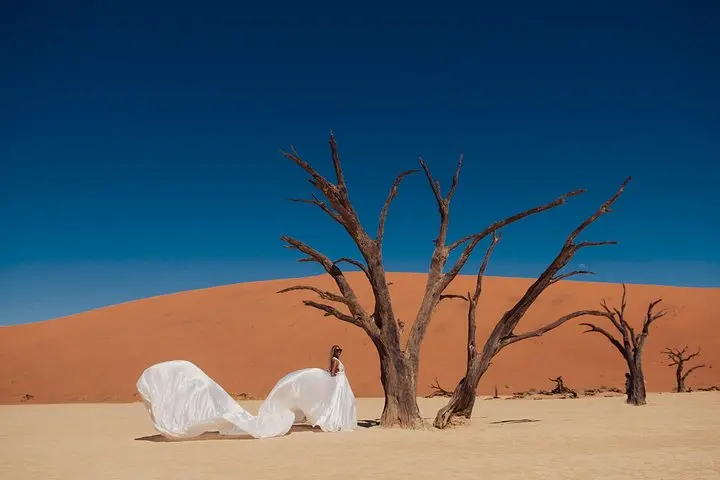
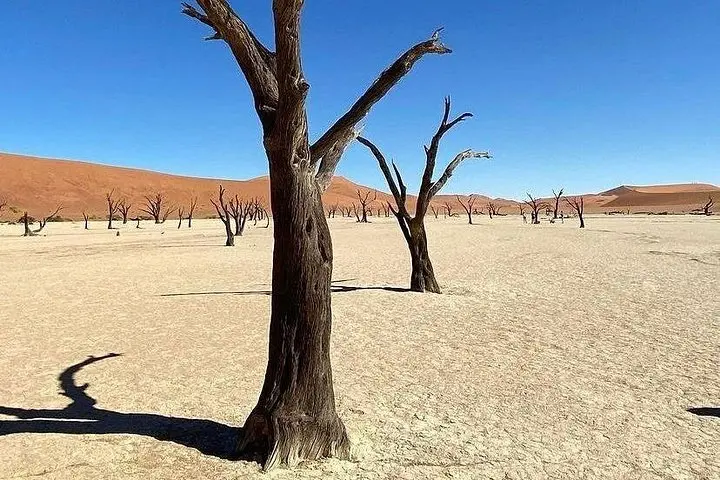
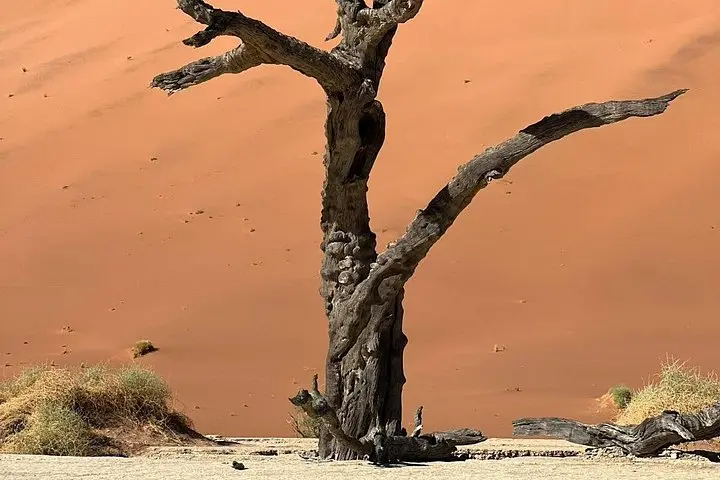
The bus eases out of Windhoek before dawn, headlights cutting through a pale sky that promises heat. Miles of scrub and ochre gravel roll past, then the land opens: a sea of sculpted ridges and orange sand. On day two, you step onto Dune 45 and the desert feels alive — wind catching the crest, grain whispering underfoot, the horizon a hard line of color. The guide points to the deep bowl of Deadvlei, where the sun strips the pan into postcards of white clay and black, fossilized trees.
Verified experiences and guided adventures in the surrounding area.
Operated by Chena Tours & Safaris Namibia · Sesriem, Hardap
The bus eases out of Windhoek before dawn, headlights cutting through a pale sky that promises heat. Miles of scrub and ochre gravel roll past, then the land opens: a sea of sculpted ridges and orange sand. On day two, you step onto Dune 45 and the desert feels alive — wind catching the crest, grain whispering underfoot, the horizon a hard line of color. The guide points to the deep bowl of Deadvlei, where the sun strips the pan into postcards of white clay and black, fossilized trees.
This three-day route follows the old trade corridors to what is arguably Namibia’s most photographed landscape. The Namib Desert is often called the world’s oldest desert; its dunes are wind-grown mountains of iron-rich sand whose rust-red tones come from long weathering and slow oxidation. Sesriem Canyon, carved by the intermittent Tsauchab River, reads like a geological diary — layered sedimentary rock, polished walls, and a narrow corridor offering relief from the sun.
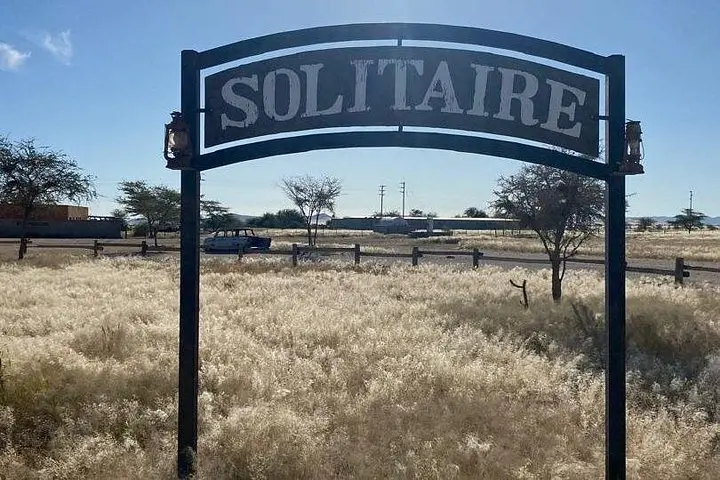
Culturally, the drive traces colonial and local footprints. You’ll pass Solitaire — a tiny refueling hamlet famous for its apple pie and a scatter of abandoned cars that feel part folk art, part waystation. Guides here mix natural history with practical knowledge: how springs used to support pastoralists, why dune crests shift seasonally, and how park entrance fees fund conservation and local lodges.
Practical travel matters are simple but vital. Expect roughly 4–6 hours of driving from Windhoek to Sesriem on day one, plus an early-morning excursion to the pans on day two; the tour returns to Windhoek on day three in the afternoon. Park fees, limited water availability, and strong desert sun mean preparation is mandatory: carry at least 2–3 liters of water per person for excursions, wear closed shoes for dune climbs, and leave fragile flats undisturbed. Big Daddy is listed at about 325 meters of vertical dune height — climbing is optional and best attempted at cooler hours.
The itinerary balances activity and downtime: sunrise on the dunes, photo stops at Dune 45 and Deadvlei, a cool walk through Sesriem Canyon, and sundowners on Elim Dune. Accommodation is comfortable lodge-style near the park gate — a welcome counterpoint to desert nights, where the Milky Way is bright enough to read by.
This tour is ideal for travelers with moderate fitness who want an efficient, guided way to see Namibia’s signature landscapes without roughing it. Time your visit for shoulder seasons if you prefer cooler mornings and softer light, and come prepared: the desert rewards curiosity, but it demands respect.
Expect roughly 4–6 hours each way depending on stops and road conditions; the route includes the scenic Spreetshoogte Pass.
Park fees are typically paid at the park gate and may not be included in the tour price — confirm with the operator before travel.
No — climbing is optional and depends on your fitness; many visitors opt for partial ascents to enjoy the view without a full summit push.
Common sightings include oryx (gemsbok), springbok, and smaller creatures like bat-eared foxes; birdlife appears around pans after rains.
Early morning and late afternoon provide the most dramatic light; sunrise adds warm backlighting to dune profiles and long shadows across the pan.
The tour vehicle handles the route; guests do not need to self-drive, but private travelers should use a high-clearance 4x4 for some interior park sections.
Chena Tours & Safaris Namibia operates guided outdoor trips and adventures with an emphasis on safety, stewardship, and memorable experiences.
The bus eases out of Windhoek before dawn, headlights cutting through a pale sky that promises heat. Miles of scrub and ochre gravel roll past, then the land opens: a sea of sculpted ridges and orange sand. On day two, you step onto Dune 45 and the desert feels alive — wind catching the crest, grain whispering underfoot, the horizon a hard line of color. The guide points to the deep bowl of Deadvlei, where the sun strips the pan into postcards of white clay and black, fossilized trees.
The bus eases out of Windhoek before dawn, headlights cutting through a pale sky that promises heat. Miles of scrub and ochre gravel roll past, then the land opens: a sea of sculpted ridges and orange sand. On day two, you step onto Dune 45 and the desert feels alive — wind catching the crest, grain whispering underfoot, the horizon a hard line of color. The guide points to the deep bowl of Deadvlei, where the sun strips the pan into postcards of white clay and black, fossilized trees.
This three-day route follows the old trade corridors to what is arguably Namibia’s most photographed landscape. The Namib Desert is often called the world’s oldest desert; its dunes are wind-grown mountains of iron-rich sand whose rust-red tones come from long weathering and slow oxidation. Sesriem Canyon, carved by the intermittent Tsauchab River, reads like a geological diary — layered sedimentary rock, polished walls, and a narrow corridor offering relief from the sun.
Culturally, the drive traces colonial and local footprints. You’ll pass Solitaire — a tiny refueling hamlet famous for its apple pie and a scatter of abandoned cars that feel part folk art, part waystation. Guides here mix natural history with practical knowledge: how springs used to support pastoralists, why dune crests shift seasonally, and how park entrance fees fund conservation and local lodges.
Practical travel matters are simple but vital. Expect roughly 4–6 hours of driving from Windhoek to Sesriem on day one, plus an early-morning excursion to the pans on day two; the tour returns to Windhoek on day three in the afternoon. Park fees, limited water availability, and strong desert sun mean preparation is mandatory: carry at least 2–3 liters of water per person for excursions, wear closed shoes for dune climbs, and leave fragile flats undisturbed. Big Daddy is listed at about 325 meters of vertical dune height — climbing is optional and best attempted at cooler hours.
The itinerary balances activity and downtime: sunrise on the dunes, photo stops at Dune 45 and Deadvlei, a cool walk through Sesriem Canyon, and sundowners on Elim Dune. Accommodation is comfortable lodge-style near the park gate — a welcome counterpoint to desert nights, where the Milky Way is bright enough to read by.
This tour is ideal for travelers with moderate fitness who want an efficient, guided way to see Namibia’s signature landscapes without roughing it. Time your visit for shoulder seasons if you prefer cooler mornings and softer light, and come prepared: the desert rewards curiosity, but it demands respect.