THE ADVENTURE COLLECTIVE® · Independent discovery and booking for outdoor travel

Three days across central Sri Lanka pair colonial-era gardens, cave temples and a modern safari into one compact itinerary. Climb Sigiriya, watch Minneriya’s elephants, and sample Kandy’s living traditions on this private cultural tour.
Three days across central Sri Lanka pair colonial-era gardens, cave temples and a modern safari into one compact itinerary. Climb Sigiriya, watch Minneriya’s elephants, and sample Kandy’s living traditions on this private cultural tour.
You arrive on the third morning to a slab of granite rising out of green—Sigiriya’s rock catches the sun first, a lone giant watching the plain. Earlier in the trip you’ve passed tea gardens that slope like folded quilts and the wide, formal lawns of Peradeniya, where century-old trees throw long shadows across stone paths. By night you’ll hear drums from Kandy’s cultural show, and by afternoon Minneriya’s reservoir will call elephants to water, trunks swinging like living cranes.
Verified experiences and guided adventures in the surrounding area.
Operated by Diamond Lanka Holidays · Sigiriya, Central Province
You arrive on the third morning to a slab of granite rising out of green—Sigiriya’s rock catches the sun first, a lone giant watching the plain. Earlier in the trip you’ve passed tea gardens that slope like folded quilts and the wide, formal lawns of Peradeniya, where century-old trees throw long shadows across stone paths. By night you’ll hear drums from Kandy’s cultural show, and by afternoon Minneriya’s reservoir will call elephants to water, trunks swinging like living cranes.
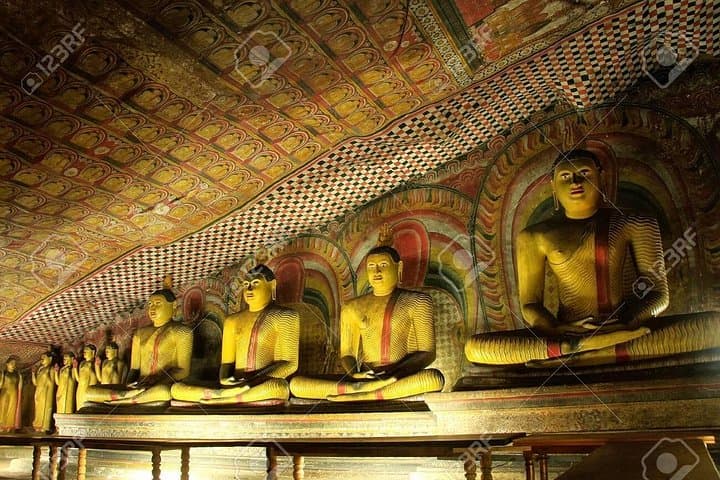
This three-day private circuit stitches together Sri Lanka’s layered past and its living countryside. Kandy, once the capital of a mountain kingdom, centers on the Temple of the Tooth, a gilded shrine that anchors Buddhist devotion and the city’s identity. The Royal Botanical Gardens at Peradeniya spread over roughly 147 acres, cataloguing plants collected during colonial botanical enterprise and local horticultural know-how. Further north, Dambulla’s cave temples preserve painted Buddhas and reliefs carved into volcanic rock from the 1st century BC, while Sigiriya’s 180-meter monolith bears the scars and gardens of King Kasyapa’s 5th-century palace-fortress—1,200 stairs, frescoes, and engineered water gardens that still shape the plain.
Geology and human ambition meet here: hard igneous cores remain where softer material eroded; humans built on that permanence. Tea estates cling to cooler slopes where elevation and mist favor Camellia sinensis. Minneriya National Park, centered on an artificial reservoir from ancient irrigation works, funnels wildlife seasonally—when the lake shrinks, grasses deepen and elephants concentrate.
The tour balances culture and nature: a tea factory visit and plucking demo, Peradeniya’s orchid house, a guided spice garden tour with a cooking demo in Matale, a short steep walk to Dambulla’s cave sanctuaries, and a private 3‑hour jeep safari in Minneriya to watch elephants congregate. Each stop pairs sensory detail with context—the aroma of cinnamon at the spice garden, the roar of drums in Kandy, the abrupt, wind-cleared view from Sigiriya’s summit.
Practical edge: plan for stairs and heat. Sigiriya’s climb is steep—expect 60–90 minutes round trip for fit visitors; bring sun protection and sturdy shoes for rocky, sometimes slippery steps. Dambulla’s approach is 15–40 minutes of steep trail. Minneriya safaris are best late afternoon when animals feed and light flatters photography; July–October offers the highest probability of large elephant gatherings. The tour includes hotel pickup and drop-off, two nights’ accommodation at 3-star hotels, bottled water, and an English-speaking guide, but entrance fees and personal tips are usually extra.
This itinerary suits travelers seeking concentrated cultural context with a strong wildlife highlight—pack light layers for humidity shifts, a reusable water bottle, and a camera with a modest zoom. Expect a rhythm of short hikes, cultural interpretation, and windowed drives through changing landscapes, each leg revealing a different face of central Sri Lanka.
The ascent is steep with around 1,200 steps and narrow sections; most visitors complete it in 45–90 minutes depending on pace and stops for photos.
The dry season, typically July–October, concentrates elephants around the reservoir and gives the highest chance of large gatherings during late afternoon.
The tour listing usually covers accommodation, transport, bottled water, and guide services; national park and monument entrance fees are commonly extra—confirm at booking.
Families and older travelers can join, but the itinerary involves stairs and some climbs—notify the operator of mobility issues so they can adapt timing and expectations.
Yes—most operators can adjust for vegetarian, vegan, and common dietary restrictions if you provide details when booking.
Tipping is discretionary but customary; consider roughly 10–15% of tour cost distributed between guide and driver, adjusted to service quality.
Diamond Lanka Holidays operates guided outdoor trips and adventures with an emphasis on safety, stewardship, and memorable experiences.



You arrive on the third morning to a slab of granite rising out of green—Sigiriya’s rock catches the sun first, a lone giant watching the plain. Earlier in the trip you’ve passed tea gardens that slope like folded quilts and the wide, formal lawns of Peradeniya, where century-old trees throw long shadows across stone paths. By night you’ll hear drums from Kandy’s cultural show, and by afternoon Minneriya’s reservoir will call elephants to water, trunks swinging like living cranes.
You arrive on the third morning to a slab of granite rising out of green—Sigiriya’s rock catches the sun first, a lone giant watching the plain. Earlier in the trip you’ve passed tea gardens that slope like folded quilts and the wide, formal lawns of Peradeniya, where century-old trees throw long shadows across stone paths. By night you’ll hear drums from Kandy’s cultural show, and by afternoon Minneriya’s reservoir will call elephants to water, trunks swinging like living cranes.
This three-day private circuit stitches together Sri Lanka’s layered past and its living countryside. Kandy, once the capital of a mountain kingdom, centers on the Temple of the Tooth, a gilded shrine that anchors Buddhist devotion and the city’s identity. The Royal Botanical Gardens at Peradeniya spread over roughly 147 acres, cataloguing plants collected during colonial botanical enterprise and local horticultural know-how. Further north, Dambulla’s cave temples preserve painted Buddhas and reliefs carved into volcanic rock from the 1st century BC, while Sigiriya’s 180-meter monolith bears the scars and gardens of King Kasyapa’s 5th-century palace-fortress—1,200 stairs, frescoes, and engineered water gardens that still shape the plain.
Geology and human ambition meet here: hard igneous cores remain where softer material eroded; humans built on that permanence. Tea estates cling to cooler slopes where elevation and mist favor Camellia sinensis. Minneriya National Park, centered on an artificial reservoir from ancient irrigation works, funnels wildlife seasonally—when the lake shrinks, grasses deepen and elephants concentrate.
The tour balances culture and nature: a tea factory visit and plucking demo, Peradeniya’s orchid house, a guided spice garden tour with a cooking demo in Matale, a short steep walk to Dambulla’s cave sanctuaries, and a private 3‑hour jeep safari in Minneriya to watch elephants congregate. Each stop pairs sensory detail with context—the aroma of cinnamon at the spice garden, the roar of drums in Kandy, the abrupt, wind-cleared view from Sigiriya’s summit.
Practical edge: plan for stairs and heat. Sigiriya’s climb is steep—expect 60–90 minutes round trip for fit visitors; bring sun protection and sturdy shoes for rocky, sometimes slippery steps. Dambulla’s approach is 15–40 minutes of steep trail. Minneriya safaris are best late afternoon when animals feed and light flatters photography; July–October offers the highest probability of large elephant gatherings. The tour includes hotel pickup and drop-off, two nights’ accommodation at 3-star hotels, bottled water, and an English-speaking guide, but entrance fees and personal tips are usually extra.
This itinerary suits travelers seeking concentrated cultural context with a strong wildlife highlight—pack light layers for humidity shifts, a reusable water bottle, and a camera with a modest zoom. Expect a rhythm of short hikes, cultural interpretation, and windowed drives through changing landscapes, each leg revealing a different face of central Sri Lanka.