THE ADVENTURE COLLECTIVE® · Independent discovery and booking for outdoor travel

Three days of mule tracks, walnut groves and Berber gites in Morocco’s High Atlas: a moderate trek from Imlil that climbs to 2,400 m and returns to Marrakech. Follow mule paths, meet mountain villagers and sleep in family-run guesthouses.
Three days of mule tracks, walnut groves and Berber gites in Morocco’s High Atlas: a moderate trek from Imlil that climbs to 2,400 m and returns to Marrakech. Follow mule paths, meet mountain villagers and sleep in family-run guesthouses.
The path rises before you like a question: pine-scented air, mule tracks cutting across terraces, and the massif of Jebel Toubkal watching from a distance. After a morning drive from Marrakech you arrive in Imlil and step into villages where stone houses and walnut groves frame the trail. Streams challenge your footing and passes reward you with wide views over cultivated valleys.
Verified experiences and guided adventures in the surrounding area.
Operated by Marrakech Day Trips · Imlil, Marrakech-Safi
The path rises before you like a question: pine-scented air, mule tracks cutting across terraces, and the massif of Jebel Toubkal watching from a distance. After a morning drive from Marrakech you arrive in Imlil and step into villages where stone houses and walnut groves frame the trail. Streams challenge your footing and passes reward you with wide views over cultivated valleys.
Geology here is mostly volcanic and metamorphic rock folded into sharp ridges; the High Atlas formed as Africa pushed north, lifting ancient seabeds into jagged peaks. The area’s human story is equally rugged — Berber communities have farmed these slopes for centuries, trading walnuts, cherries, and labor with mule caravans. Traditional gites and family-run guesthouses give a direct line to local culture: expect shared meals, mint tea, and conversation about seasonal harvests.
Practical guidance is simple: this is a moderate, multi-day trek with daily walking of roughly 4–7 hours. Highest passes hit about 2,400 m (7,874 ft), with frequent short climbs and descents over rocky mule paths and dirt tracks. Carry layered clothing for cool mornings and warm afternoons, a reliable water system, and ankle-supporting boots; walking poles smooth steep sections and are available to rent in Imlil.
Timing matters — start early to avoid midday heat and give yourself daylight for descents. Respect village life: ask before photographing and leave no trace. With a steady pace, good kit, and curiosity, the High Atlas offers compact, immersive mountain travel: wild enough to feel remote, close enough to Marrakech for accessible adventure.
Expect moderate difficulty: day 1 and 3 are about 4 hours of walking; day 2 is 6–7 hours with longer ascents to passes around 2,000–2,400 m.
Two nights in family-run gites (guesthouses) with shared rooms and communal meals; bring a light sleeping layer for cooler nights.
Yes — poles can be rented in Imlil and mules are used to carry luggage on portions of the route; confirm details with the operator.
Not recommended for travelers with serious spinal or cardiovascular conditions; infants can ride in strollers during transfers but hiking sections require moderate fitness.
Marrakech Day Trips operates guided outdoor trips and adventures with an emphasis on safety, stewardship, and memorable experiences.
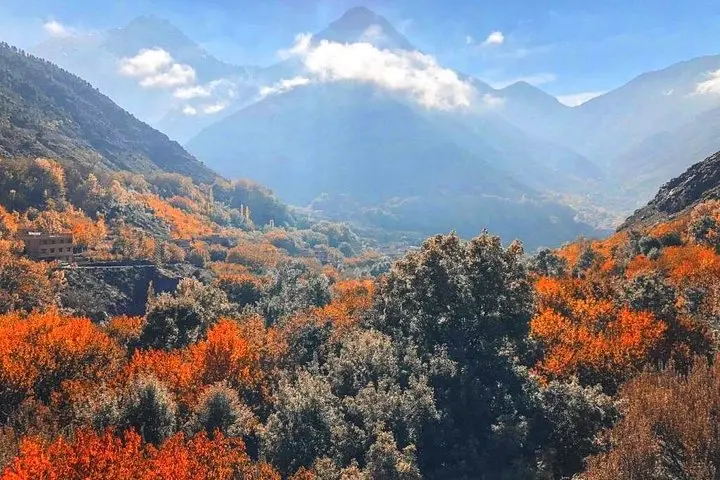
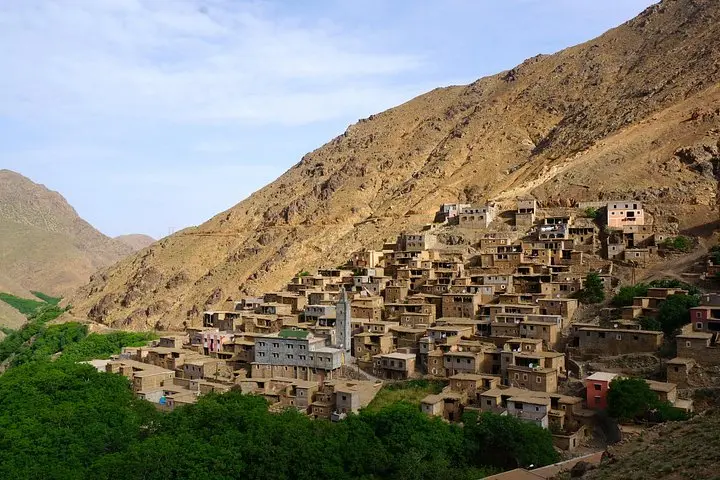
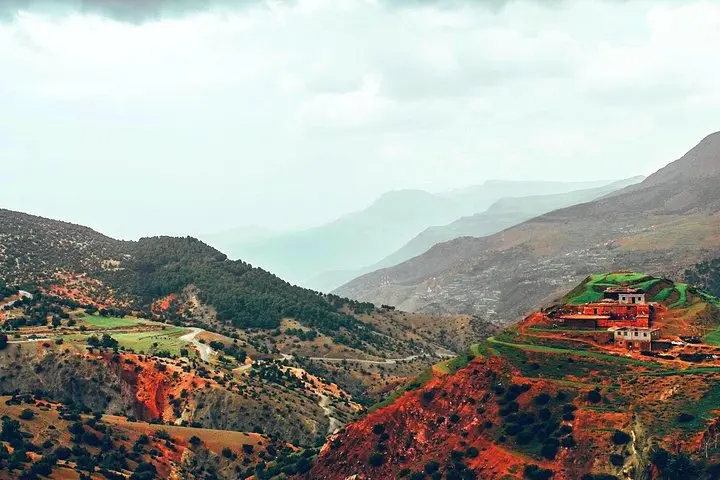
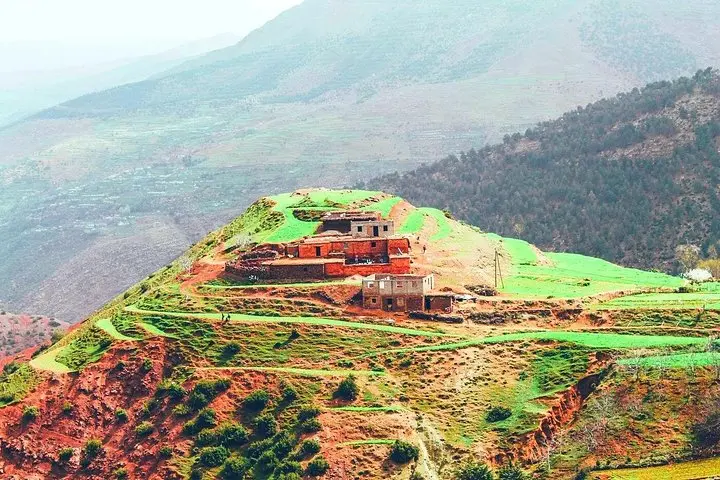
The path rises before you like a question: pine-scented air, mule tracks cutting across terraces, and the massif of Jebel Toubkal watching from a distance. After a morning drive from Marrakech you arrive in Imlil and step into villages where stone houses and walnut groves frame the trail. Streams challenge your footing and passes reward you with wide views over cultivated valleys.
The path rises before you like a question: pine-scented air, mule tracks cutting across terraces, and the massif of Jebel Toubkal watching from a distance. After a morning drive from Marrakech you arrive in Imlil and step into villages where stone houses and walnut groves frame the trail. Streams challenge your footing and passes reward you with wide views over cultivated valleys.
Geology here is mostly volcanic and metamorphic rock folded into sharp ridges; the High Atlas formed as Africa pushed north, lifting ancient seabeds into jagged peaks. The area’s human story is equally rugged — Berber communities have farmed these slopes for centuries, trading walnuts, cherries, and labor with mule caravans. Traditional gites and family-run guesthouses give a direct line to local culture: expect shared meals, mint tea, and conversation about seasonal harvests.
Practical guidance is simple: this is a moderate, multi-day trek with daily walking of roughly 4–7 hours. Highest passes hit about 2,400 m (7,874 ft), with frequent short climbs and descents over rocky mule paths and dirt tracks. Carry layered clothing for cool mornings and warm afternoons, a reliable water system, and ankle-supporting boots; walking poles smooth steep sections and are available to rent in Imlil.
Timing matters — start early to avoid midday heat and give yourself daylight for descents. Respect village life: ask before photographing and leave no trace. With a steady pace, good kit, and curiosity, the High Atlas offers compact, immersive mountain travel: wild enough to feel remote, close enough to Marrakech for accessible adventure.