THE ADVENTURE COLLECTIVE® · Independent discovery and booking for outdoor travel

A three-day trek from Marrakech into the High Atlas that threads through Berber villages, crosses 2,200–2,500 m passes, and finishes in Imlil. Expect rocky paths, village hospitality, and sustained ascents with big valley views.
A three-day trek from Marrakech into the High Atlas that threads through Berber villages, crosses 2,200–2,500 m passes, and finishes in Imlil. Expect rocky paths, village hospitality, and sustained ascents with big valley views.
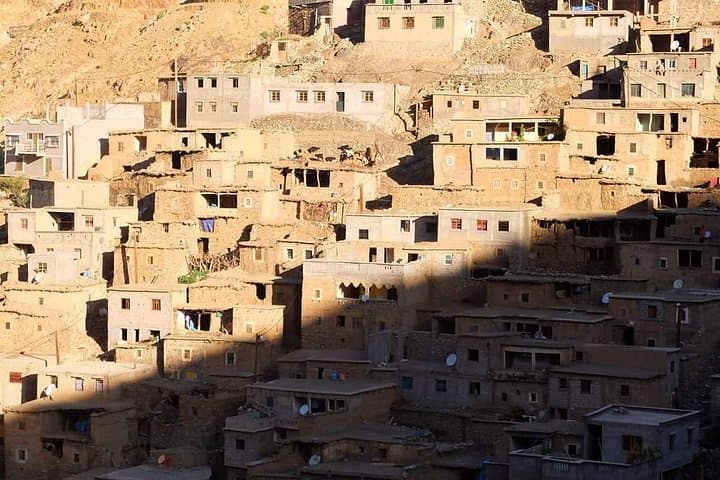
Morning light strips the city of Marrakech away and the road climbs into the High Atlas—stone houses thin out, terraces appear, and the air sharpens with altitude. On this three-day trek, walkers move through small Berber villages, cross high passes, and follow gullied streams until guesthouses appear like warm stops in a rugged landscape.
Verified experiences and guided adventures in the surrounding area.
Operated by Adventure Tours Morocco · Imlil, Marrakesh-Safi
Morning light strips the city of Marrakech away and the road climbs into the High Atlas—stone houses thin out, terraces appear, and the air sharpens with altitude. On this three-day trek, walkers move through small Berber villages, cross high passes, and follow gullied streams until guesthouses appear like warm stops in a rugged landscape.
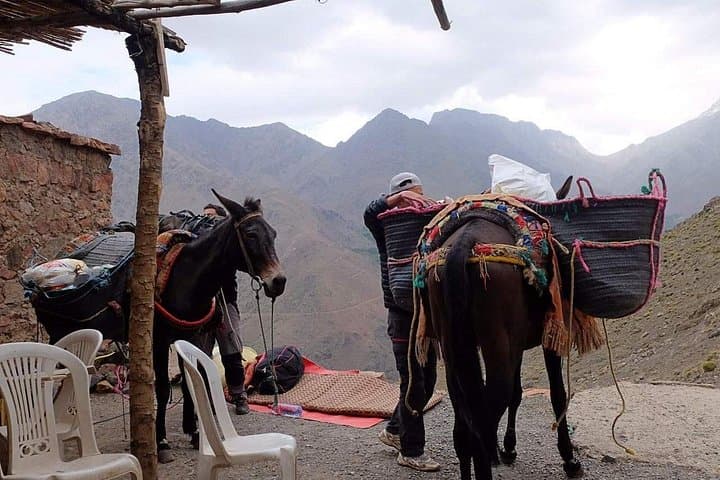
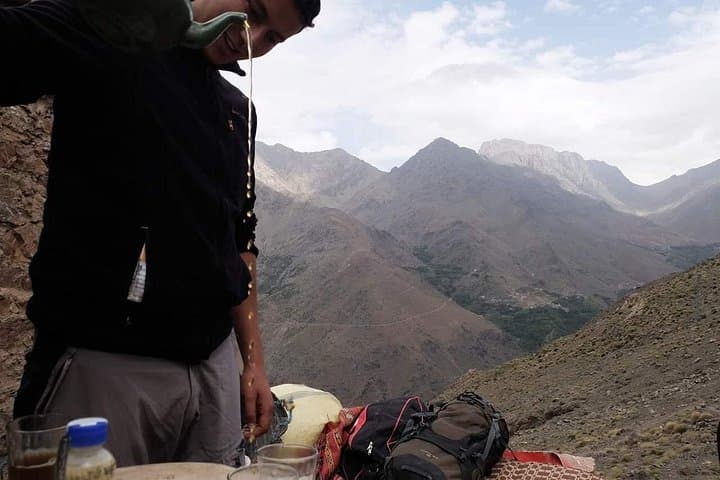
The High Atlas is young mountains carved by uplift and erosion; you'll cross passes around 2,200–2,500 m with views into glacially-scoured valleys and red-brown volcanic ridgelines. The region has been inhabited by Amazigh (Berber) communities for centuries—tea rituals, terraced fields, and mule tracks are part of daily life, and guides provide cultural context during village stops.
Expect rocky trails, scree on higher approaches, and packed dirt paths between villages. Day 1 climbs to Tizi n’Tamatert (~2,300 m) with a tea stop in a family home; Day 2 is the longest (5–6 hours) over Oudit Pass and village-to-village walking; Day 3 visits a large waterfall then Mzik Pass (~2,500 m) before descending to Imlil and a return to Marrakech.
Practical notes: mornings are cold at elevation—start early to avoid afternoon heat and potential storms. Hydrate steadily; pack layers for wind and sun; sturdy boots with ankle support matter on scree and stream crossings. Guesthouses provide hot showers and dinners—this isn’t camping, but evenings are simple. Trail markers are intermittent; a local guide manages route-finding and village etiquette. For those fit enough for long ascents and high passes, the trek delivers raw mountain scenery, human-scale villages, and measured challenge.
Expect 4–6 hours of walking on most days; Day 2 is typically the longest at around 5–6 hours.
No technical climbing skills are required, but you should be comfortable with full days of uphill and downhill hiking at altitude.
Night stops are in local guesthouses with hot showers and shared rooms; facilities are basic but hospitable.
Yes—local guides handle navigation, village introductions, and safety in variable mountain weather.
Adventure Tours Morocco operates guided outdoor trips and adventures with an emphasis on safety, stewardship, and memorable experiences.
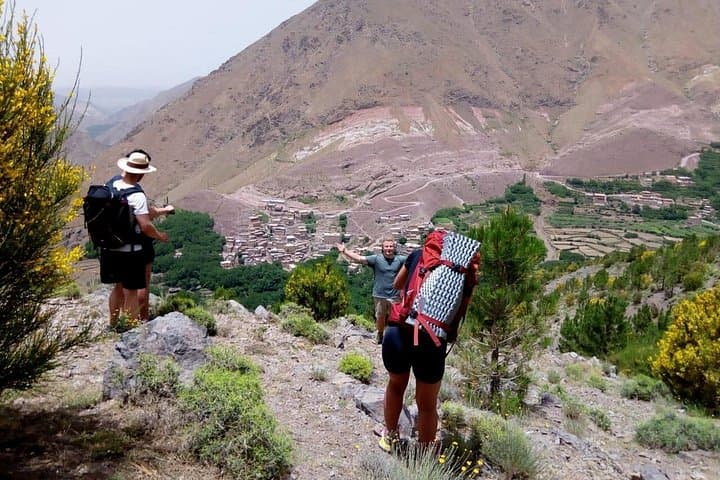
Morning light strips the city of Marrakech away and the road climbs into the High Atlas—stone houses thin out, terraces appear, and the air sharpens with altitude. On this three-day trek, walkers move through small Berber villages, cross high passes, and follow gullied streams until guesthouses appear like warm stops in a rugged landscape.
Morning light strips the city of Marrakech away and the road climbs into the High Atlas—stone houses thin out, terraces appear, and the air sharpens with altitude. On this three-day trek, walkers move through small Berber villages, cross high passes, and follow gullied streams until guesthouses appear like warm stops in a rugged landscape.
The High Atlas is young mountains carved by uplift and erosion; you'll cross passes around 2,200–2,500 m with views into glacially-scoured valleys and red-brown volcanic ridgelines. The region has been inhabited by Amazigh (Berber) communities for centuries—tea rituals, terraced fields, and mule tracks are part of daily life, and guides provide cultural context during village stops.
Expect rocky trails, scree on higher approaches, and packed dirt paths between villages. Day 1 climbs to Tizi n’Tamatert (~2,300 m) with a tea stop in a family home; Day 2 is the longest (5–6 hours) over Oudit Pass and village-to-village walking; Day 3 visits a large waterfall then Mzik Pass (~2,500 m) before descending to Imlil and a return to Marrakech.
Practical notes: mornings are cold at elevation—start early to avoid afternoon heat and potential storms. Hydrate steadily; pack layers for wind and sun; sturdy boots with ankle support matter on scree and stream crossings. Guesthouses provide hot showers and dinners—this isn’t camping, but evenings are simple. Trail markers are intermittent; a local guide manages route-finding and village etiquette. For those fit enough for long ascents and high passes, the trek delivers raw mountain scenery, human-scale villages, and measured challenge.