THE ADVENTURE COLLECTIVE® · Independent discovery and booking for outdoor travel

A concentrated three-day trek from Arusha to the summit of Mount Meru. Expect steep climbs, shifting ecosystems from montane forest to alpine desert, and a summit sunrise view that can reveal Kilimanjaro above the clouds.
A concentrated three-day trek from Arusha to the summit of Mount Meru. Expect steep climbs, shifting ecosystems from montane forest to alpine desert, and a summit sunrise view that can reveal Kilimanjaro above the clouds.
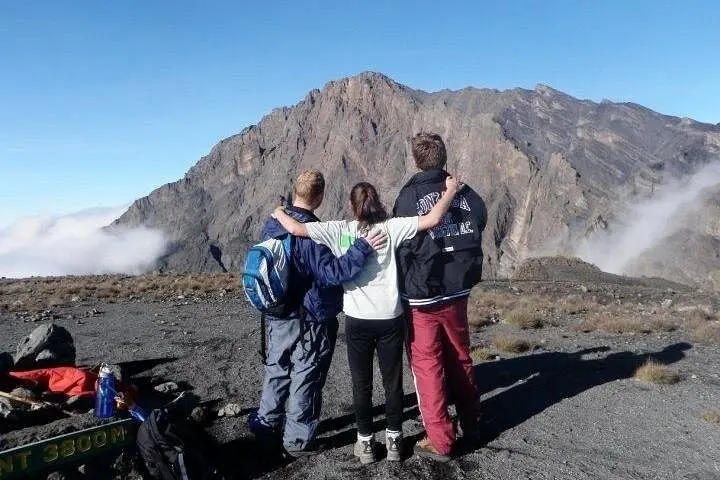
The headlamp is a thin coin of light on the first morning as a column of climbers files away from Saddle Hut into the shadowed throat of Mount Meru. The air bites at exposed faces; every breath comes with the faint metallic taste of altitude. As the slope eases and the sky blanches, the crater wall opens and Kilimanjaro, a pale guardian, looms above a sea of clouds — a moment that makes the early hour worth every step.
Verified experiences and guided adventures in the surrounding area.
Operated by Serengeti Safari Booking · Arusha, Arusha Region
The headlamp is a thin coin of light on the first morning as a column of climbers files away from Saddle Hut into the shadowed throat of Mount Meru. The air bites at exposed faces; every breath comes with the faint metallic taste of altitude. As the slope eases and the sky blanches, the crater wall opens and Kilimanjaro, a pale guardian, looms above a sea of clouds — a moment that makes the early hour worth every step.
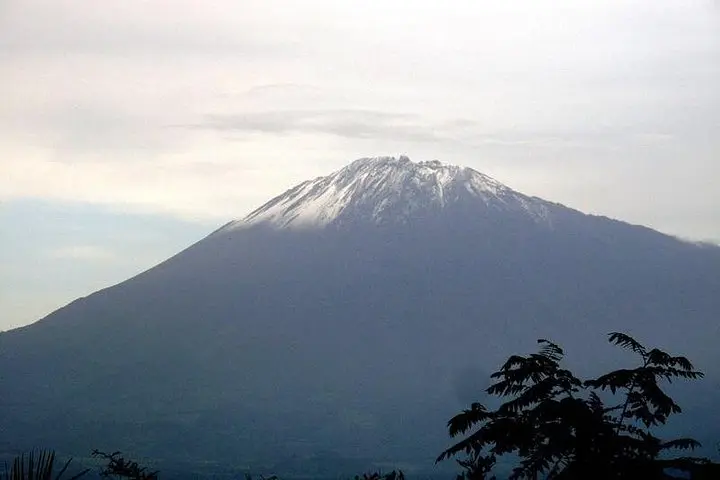
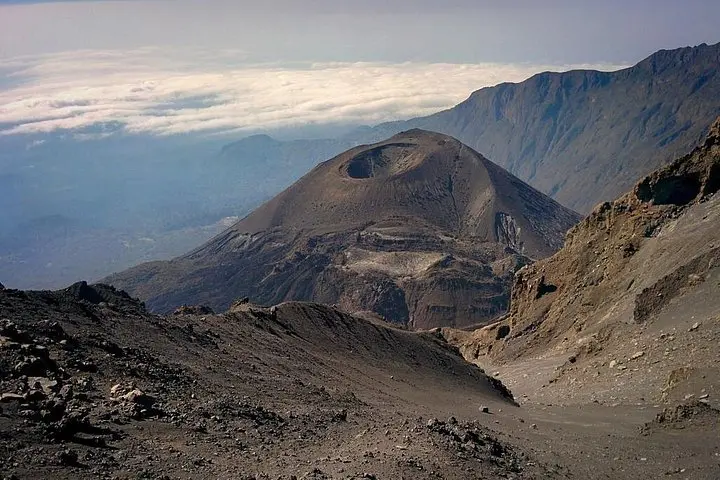
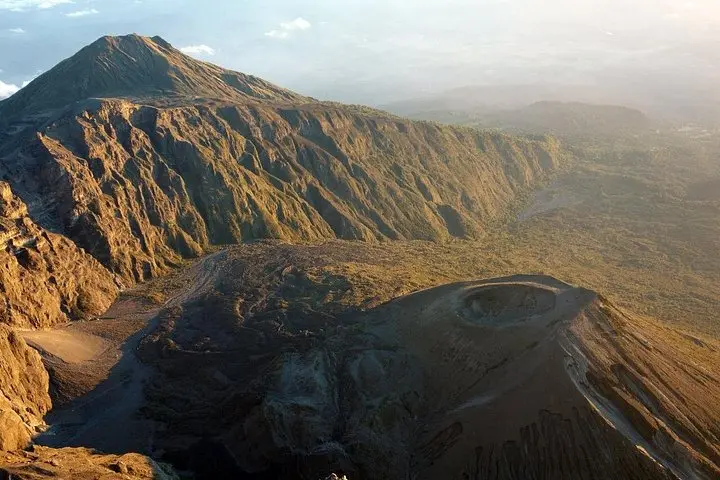
Mount Meru is the second-highest peak in Tanzania and an active stratovolcano whose sculpted crater and ash cone record repeated eruptions. Rising from the floor of Arusha National Park, the mountain transitions rapidly through montane forest, heath and moorland, alpine desert, and finally the exposed rocky ridgeline that leads to the summit at 4,566 meters. The route follows game paths where buffalo, giraffe and elephant trek below; chimpanzee-like black-and-white colobus monkeys move in the canopy. The Maasai and Meru peoples have long watched the mountain for weather and water, and its slopes supply springs that feed local farms and Momela Lakes.
The itinerary from Arusha to Momela Gate (day 1), a steep ridge to Saddle Hut via Little Meru (day 2) and the pre-dawn push to Rhino and Cobra Points before the summit sunrise (day 3) is vintage East African trekking: short, steep, and richly varied. Expect 5–13 km day distances with sharp elevation gains — the climb is more about acclimatization and pacing than technical difficulty. Porters carry the bulk of camp kit; guides read the weather and route like a map of moods.
Practical edge: begin in Arusha or Moshi where operators provide hotel pickup; you will be issued sleeping mats, a mess tent and hot meals on the trail. Fitness-wise, train on sustained uphill hikes and practice sleeping and eating at altitude to avoid early fatigue. Hydration, slow steps, and attention to breathing are the simplest altitude tools you bring.
Timing: pick clear-season windows to minimize afternoon storms and maximize summit visibility. Footwear should be broken-in, ankle-supporting boots; layers must include a warm outer shell for the 1:30 a.m. start. Bring personal toiletries and any altitude medication you need; the outfitter supplies first aid and boiled water.
On descent, the mountain changes mood — the crater seems to exhale, and the forest dares you to look closer at birdlife and rare orchids. In three days you will cover ecological zones, ancestral landscapes and the kind of sunrise that keeps climbers talking long after the boots are finally put away.
Summit day starts around 1:30 a.m.; expect 5 km up and 13 km down with total moving time of 8–12 hours depending on pace.
No technical climbing gear is needed; the route is a trek rather than a technical climb—good boots and trekking poles are recommended.
Temperatures can fall below freezing with wind chill during the pre-dawn push; an insulated jacket, gloves and hat are essential.
Yes, qualified guides, porters and cooking staff are included; guides also handle permits and route safety.
Fit beginners can succeed with proper pacing and acclimatization, but those with heart or spinal issues should avoid it.
Entry fees and permits are organized by the operator and included in the tour price; always confirm inclusions at booking.
Serengeti Safari Booking operates guided outdoor trips and adventures with an emphasis on safety, stewardship, and memorable experiences.
The headlamp is a thin coin of light on the first morning as a column of climbers files away from Saddle Hut into the shadowed throat of Mount Meru. The air bites at exposed faces; every breath comes with the faint metallic taste of altitude. As the slope eases and the sky blanches, the crater wall opens and Kilimanjaro, a pale guardian, looms above a sea of clouds — a moment that makes the early hour worth every step.
The headlamp is a thin coin of light on the first morning as a column of climbers files away from Saddle Hut into the shadowed throat of Mount Meru. The air bites at exposed faces; every breath comes with the faint metallic taste of altitude. As the slope eases and the sky blanches, the crater wall opens and Kilimanjaro, a pale guardian, looms above a sea of clouds — a moment that makes the early hour worth every step.
Mount Meru is the second-highest peak in Tanzania and an active stratovolcano whose sculpted crater and ash cone record repeated eruptions. Rising from the floor of Arusha National Park, the mountain transitions rapidly through montane forest, heath and moorland, alpine desert, and finally the exposed rocky ridgeline that leads to the summit at 4,566 meters. The route follows game paths where buffalo, giraffe and elephant trek below; chimpanzee-like black-and-white colobus monkeys move in the canopy. The Maasai and Meru peoples have long watched the mountain for weather and water, and its slopes supply springs that feed local farms and Momela Lakes.
The itinerary from Arusha to Momela Gate (day 1), a steep ridge to Saddle Hut via Little Meru (day 2) and the pre-dawn push to Rhino and Cobra Points before the summit sunrise (day 3) is vintage East African trekking: short, steep, and richly varied. Expect 5–13 km day distances with sharp elevation gains — the climb is more about acclimatization and pacing than technical difficulty. Porters carry the bulk of camp kit; guides read the weather and route like a map of moods.
Practical edge: begin in Arusha or Moshi where operators provide hotel pickup; you will be issued sleeping mats, a mess tent and hot meals on the trail. Fitness-wise, train on sustained uphill hikes and practice sleeping and eating at altitude to avoid early fatigue. Hydration, slow steps, and attention to breathing are the simplest altitude tools you bring.
Timing: pick clear-season windows to minimize afternoon storms and maximize summit visibility. Footwear should be broken-in, ankle-supporting boots; layers must include a warm outer shell for the 1:30 a.m. start. Bring personal toiletries and any altitude medication you need; the outfitter supplies first aid and boiled water.
On descent, the mountain changes mood — the crater seems to exhale, and the forest dares you to look closer at birdlife and rare orchids. In three days you will cover ecological zones, ancestral landscapes and the kind of sunrise that keeps climbers talking long after the boots are finally put away.