THE ADVENTURE COLLECTIVE® · Independent discovery and booking for outdoor travel

Track habituated chimpanzee troops in Kibale National Park over three days, combining early-morning treks with Bigodi wetland walks and cultural stops near Fort Portal. This practical guide outlines what to expect, how to prepare, and why Kibale ranks high for primate encounters.
Track habituated chimpanzee troops in Kibale National Park over three days, combining early-morning treks with Bigodi wetland walks and cultural stops near Fort Portal. This practical guide outlines what to expect, how to prepare, and why Kibale ranks high for primate encounters.
Dawn in Kibale arrives in green light: mist lifts off swamp channels, and the forest exhales a damp, loamy scent as you step from the lodge into a world shaped by primates.
Verified experiences and guided adventures in the surrounding area.
Operated by Gatsio Safariz · Fort Portal, Kabarole District
Dawn in Kibale arrives in green light: mist lifts off swamp channels, and the forest exhales a damp, loamy scent as you step from the lodge into a world shaped by primates.
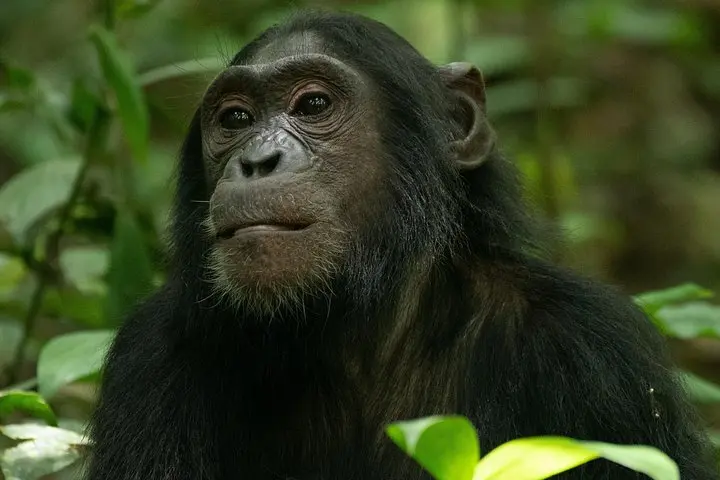
Over three days you follow narrow trails through mixed rainforest and wetland, tracking habituated chimpanzee groups at Kanyanchu and exploring the Bigodi wetland where colobus monkeys and birdlife keep watch. The chimps here have been observed for decades, so sightings are high—often a family will regard you with the same calm curiosity that defines this reserve.
Geologically the park sits on worn volcanic soils that feed the patchwork of swamps, ridgelines and coffee farms that fringe the forest. Culturally, the Kabarole communities link the forest to livelihoods: coffee estates and small crafts sell local flavors at roadside stops, and the Amabere Caves carry folklore tied to the Toro kingdom.
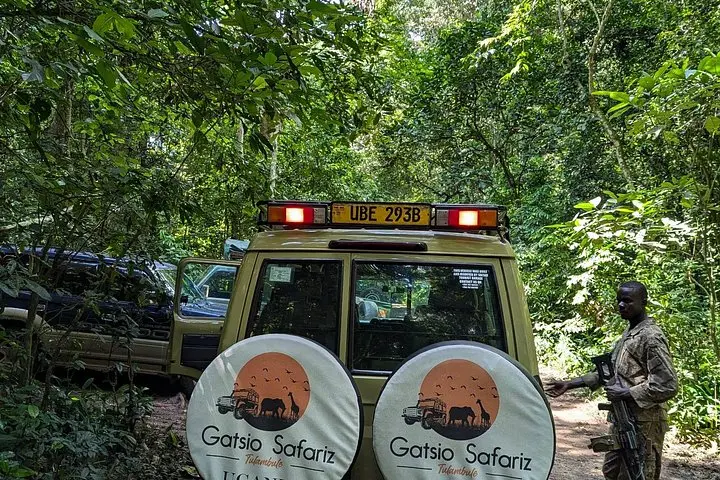
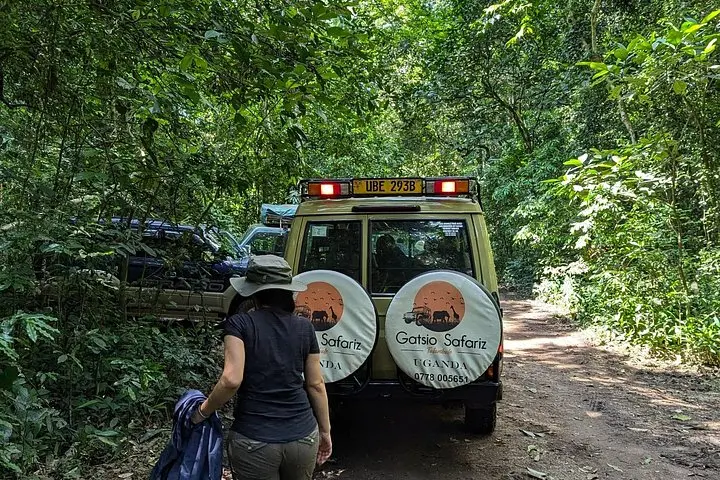
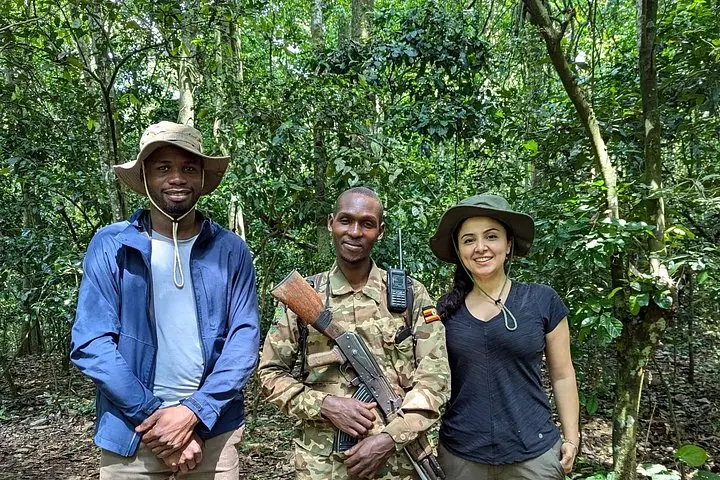
Practical guidance: expect uneven, sometimes muddy terrain—tracking sessions typically last 1–3 hours on foot. Guides brief groups on quiet approaches and disease-prevention (keep distance and avoid fresh fruit). Permits are provided as part of the trip; bring binoculars and a waterproof layer.
Timing matters: early mornings are richest for primate movement; midday is for birding or the guided swamp walk at Bigodi. Hydrate and pace yourself—the forest can change mood quickly, from languid marsh to sudden, focused energy when a chimpanzee troop appears.
This is a wildlife-first experience: leave no trace, respect habitat rules, and you’ll come away with close encounters and a clearer sense of why Kibale remains one of East Africa’s premier primate destinations.
Groups at Kanyanchu are well habituated and sightings exceed 90% historically, though wildlife is never guaranteed.
Yes—chimpanzee permits are required and are included with this trip; bring ID for verification.
Tracking varies from short, flat walks to steeper, muddier sections; most guests manage fine with moderate fitness and stable footwear.
Yellow fever vaccination is recommended by Ugandan authorities; consult a travel clinic about malaria prophylaxis and routine immunizations.
Gatsio Safariz operates guided outdoor trips and adventures with an emphasis on safety, stewardship, and memorable experiences.
Dawn in Kibale arrives in green light: mist lifts off swamp channels, and the forest exhales a damp, loamy scent as you step from the lodge into a world shaped by primates.
Dawn in Kibale arrives in green light: mist lifts off swamp channels, and the forest exhales a damp, loamy scent as you step from the lodge into a world shaped by primates.
Over three days you follow narrow trails through mixed rainforest and wetland, tracking habituated chimpanzee groups at Kanyanchu and exploring the Bigodi wetland where colobus monkeys and birdlife keep watch. The chimps here have been observed for decades, so sightings are high—often a family will regard you with the same calm curiosity that defines this reserve.
Geologically the park sits on worn volcanic soils that feed the patchwork of swamps, ridgelines and coffee farms that fringe the forest. Culturally, the Kabarole communities link the forest to livelihoods: coffee estates and small crafts sell local flavors at roadside stops, and the Amabere Caves carry folklore tied to the Toro kingdom.
Practical guidance: expect uneven, sometimes muddy terrain—tracking sessions typically last 1–3 hours on foot. Guides brief groups on quiet approaches and disease-prevention (keep distance and avoid fresh fruit). Permits are provided as part of the trip; bring binoculars and a waterproof layer.
Timing matters: early mornings are richest for primate movement; midday is for birding or the guided swamp walk at Bigodi. Hydrate and pace yourself—the forest can change mood quickly, from languid marsh to sudden, focused energy when a chimpanzee troop appears.
This is a wildlife-first experience: leave no trace, respect habitat rules, and you’ll come away with close encounters and a clearer sense of why Kibale remains one of East Africa’s premier primate destinations.