
3-Day Kilimanjaro Trek on the Marangu Route — Mid-Altitude Hike to Horombo Hut
A compact, three-day way to experience Kilimanjaro without attempting the summit: hike the Marangu Route to Horombo Hut through rainforest, moorland and high-altitude heath. Ideal for travelers short on time who want mountain panoramas, unique alpine plants and a cultural mountain experience.
An Adventure In Moshi.
A compact, three-day way to experience Kilimanjaro without attempting the summit: hike the Marangu Route to Horombo Hut through rainforest, moorland and high-altitude heath. Ideal for travelers short on time who want mountain panoramas, unique alpine plants and a cultural mountain experience.
Read the full experience
You shoulder your pack at dawn, the air already carrying a cool, highland edge. The road out of Moshi narrows and the town’s bustle falls away; fields of maize and banana give way to eucalyptus that line the park gate like a wind-tossed fence. On day one you walk into the mountain’s rainforest, where shafts of light find the floor between hanging ferns and Colobus monkeys call through the canopy. By nightfall the Mandara Hut’s lamplight appears, low and practical, and the mountain — patient and immovable — organizes the next two days.
You shoulder your pack at dawn, the air already carrying a cool, highland edge. The road out of Moshi narrows and the town’s bustle falls away; fields of maize and banana give way to eucalyptus that line the park gate like a wind-tossed fence. On day one you walk into the mountain’s rainforest, where shafts of light find the floor between hanging ferns and Colobus monkeys call through the canopy. By nightfall the Mandara Hut’s lamplight appears, low and practical, and the mountain — patient and immovable — organizes the next two days.
Marangu is the classic, human-scale route on Kilimanjaro: the trail runs a steady rhythm of gentle ascents, moorland expanses and high-altitude heath. Geologically, Kilimanjaro is an extinct stratovolcano composed of three cones — Kibo, Mawenzi and Shira — and the Marangu approach climbs the forested southeastern flank to Horombo Hut at roughly 3,700 meters. The route is as much cultural passage as physical one; your guides and porters are often from nearby Chagga villages, and their knowledge of local trails, weather signs and the mountain’s moods is as essential as a map.
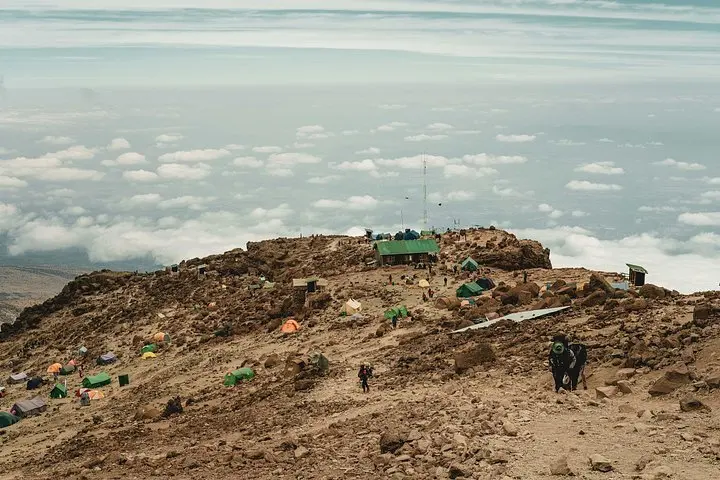
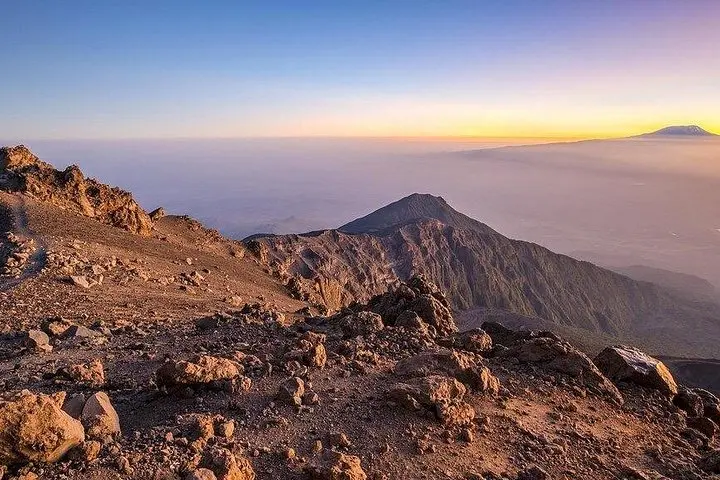
On day two the forest opens into heather and giant lobelia domains, and the skyline sharpens: you begin to see Kibo’s flat-topped summit and Mawenzi’s jagged ridge. Altitude starts to register here — shortness of breath, slower pace — and the hut itself functions as a practical acclimatization point. The final morning is a long but straightforward descent; boots will squelch in muddy trail sections and the air grows warmer as you lose elevation back toward Marangu Gate and the waiting vehicle to Moshi or Arusha.
Practical guide: this itinerary is purposely short — it doesn’t summit — so it suits travelers with limited time who want a taste of Kilimanjaro ecology and highland scenery without the technical demands of a summit bid. Expect 5–6 hours on day two with roughly 1,000 meters of elevation gain. Weather is unpredictable: pack a waterproof shell and warm mid-layers for nights at 3,000–3,700 m. Hydration and steady pacing are your best defenses against altitude effects; consider acetazolamide only after consulting a physician.
Local tips: ask guides about a short side trip to the Maundi Crater viewpoint on day one for sweeping plains views; keep cameras ready for colobus monkeys and sunlit groves. Respect the park’s rules — stick to paths and carry out any non-biodegradable trash. Whether you’re after highland plants, close-up mountain panoramas or a cultural walk through Chagga country, the Marangu route delivers a compact, practical Kilimanjaro experience.
Frequently asked questions
No technical altitude experience is required for this 3-day itinerary, but you should be comfortable walking several hours a day and able to follow pacing instructions from guides.
Meals as listed (breakfast, lunch, dinner on assigned days) and dormitory-style hut accommodation at Mandara and Horombo Huts are included.
Expect 5–6 hours and about 1,000 m of elevation gain from Mandara to Horombo; the trail is steady but altitude can make the day feel more strenuous.
No — this package ends at Horombo Hut and does not include a summit attempt; it’s designed as a shorter, less technical experience.
Variable weather: warm and humid in the rainforest, cool and windy on the moorland, and cold nights at higher elevations — pack waterproof and insulating layers.
Not recommended for travelers with significant cardiovascular issues; check with the operator about age limits and medical screening for minors.
About This Experience
Africa Exhibition Safari Agency operates guided outdoor trips and adventures with an emphasis on safety, stewardship, and memorable experiences.
Adventure tips
Recommended gear
- Sturdy hiking boots: Support and traction for muddy, rocky trail sections and steep forest paths.
- Insulating mid-layer (fleece/down): Nights at Horombo Hut and early mornings are cold even in the dry season.
- Water bladder (2–3L): Easy access to fluids encourages frequent sipping to mitigate altitude effects.
- Trekking poles: Reduce knee strain on descents and provide stability on uneven, muddy terrain.
Photos of the experience
Related adventures & guides
Read the full experience
You shoulder your pack at dawn, the air already carrying a cool, highland edge. The road out of Moshi narrows and the town’s bustle falls away; fields of maize and banana give way to eucalyptus that line the park gate like a wind-tossed fence. On day one you walk into the mountain’s rainforest, where shafts of light find the floor between hanging ferns and Colobus monkeys call through the canopy. By nightfall the Mandara Hut’s lamplight appears, low and practical, and the mountain — patient and immovable — organizes the next two days.
You shoulder your pack at dawn, the air already carrying a cool, highland edge. The road out of Moshi narrows and the town’s bustle falls away; fields of maize and banana give way to eucalyptus that line the park gate like a wind-tossed fence. On day one you walk into the mountain’s rainforest, where shafts of light find the floor between hanging ferns and Colobus monkeys call through the canopy. By nightfall the Mandara Hut’s lamplight appears, low and practical, and the mountain — patient and immovable — organizes the next two days.
Marangu is the classic, human-scale route on Kilimanjaro: the trail runs a steady rhythm of gentle ascents, moorland expanses and high-altitude heath. Geologically, Kilimanjaro is an extinct stratovolcano composed of three cones — Kibo, Mawenzi and Shira — and the Marangu approach climbs the forested southeastern flank to Horombo Hut at roughly 3,700 meters. The route is as much cultural passage as physical one; your guides and porters are often from nearby Chagga villages, and their knowledge of local trails, weather signs and the mountain’s moods is as essential as a map.
On day two the forest opens into heather and giant lobelia domains, and the skyline sharpens: you begin to see Kibo’s flat-topped summit and Mawenzi’s jagged ridge. Altitude starts to register here — shortness of breath, slower pace — and the hut itself functions as a practical acclimatization point. The final morning is a long but straightforward descent; boots will squelch in muddy trail sections and the air grows warmer as you lose elevation back toward Marangu Gate and the waiting vehicle to Moshi or Arusha.
Practical guide: this itinerary is purposely short — it doesn’t summit — so it suits travelers with limited time who want a taste of Kilimanjaro ecology and highland scenery without the technical demands of a summit bid. Expect 5–6 hours on day two with roughly 1,000 meters of elevation gain. Weather is unpredictable: pack a waterproof shell and warm mid-layers for nights at 3,000–3,700 m. Hydration and steady pacing are your best defenses against altitude effects; consider acetazolamide only after consulting a physician.
Local tips: ask guides about a short side trip to the Maundi Crater viewpoint on day one for sweeping plains views; keep cameras ready for colobus monkeys and sunlit groves. Respect the park’s rules — stick to paths and carry out any non-biodegradable trash. Whether you’re after highland plants, close-up mountain panoramas or a cultural walk through Chagga country, the Marangu route delivers a compact, practical Kilimanjaro experience.
Make a day of it nearby.
Verified experiences and guided adventures in the surrounding area.