THE ADVENTURE COLLECTIVE® · Independent discovery and booking for outdoor travel

Short on time but hungry for big landscapes and big animals? This 3-day package from Hazyview pairs the Panorama Route’s cliff-top drama with full-day open-vehicle safaris in Kruger National Park — a compact, well-paced introduction to Mpumalanga’s geology and wildlife.
Short on time but hungry for big landscapes and big animals? This 3-day package from Hazyview pairs the Panorama Route’s cliff-top drama with full-day open-vehicle safaris in Kruger National Park — a compact, well-paced introduction to Mpumalanga’s geology and wildlife.
The morning light in Hazyview arrives like an invitation: a thin gold across the lowveld, a promise of horns and wings and the rumble of a highway that unspools toward the escarpment. On Day 1 the van eases out of town and climbs toward the Panorama Route, where cliffs drop away to reveal the Blyde River Canyon and a sequence of viewpoints — Three Rondavels, Bourke’s Luck Potholes, Lisbon Falls and God’s Window — each stop a lesson in water and time. The air tastes of eucalyptus and dust; the rock here is old sandstone, long sculpted by rain and river, and the potholes chiseled into riverbed bedrock look like small moons that the lowveld once orbited.
Verified experiences and guided adventures in the surrounding area.
Operated by Humulani Tours & Safaris · Hazyview, Mpumalanga
The morning light in Hazyview arrives like an invitation: a thin gold across the lowveld, a promise of horns and wings and the rumble of a highway that unspools toward the escarpment. On Day 1 the van eases out of town and climbs toward the Panorama Route, where cliffs drop away to reveal the Blyde River Canyon and a sequence of viewpoints — Three Rondavels, Bourke’s Luck Potholes, Lisbon Falls and God’s Window — each stop a lesson in water and time. The air tastes of eucalyptus and dust; the rock here is old sandstone, long sculpted by rain and river, and the potholes chiseled into riverbed bedrock look like small moons that the lowveld once orbited.
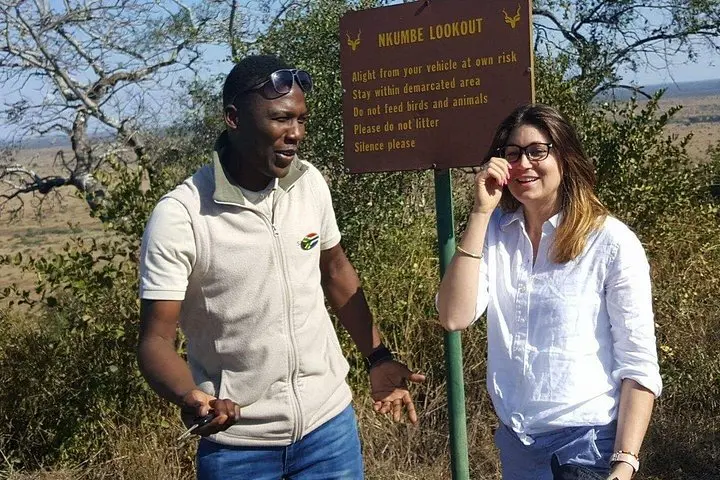
By the second day the scenery changes from cliff to savanna. Kruger National Park opens like a living map: red earth tracks, trees that throw broad shade, and the teaser of distant movement — a line of impala, an elephant mast at a waterhole, a leopard showing the patience of a ghost. Open-vehicle safaris in Kruger are about presence: the hum of diesel, the guide’s measured voice, binoculars pinning down birds and tiny behavioral cues that mean the difference between seeing and missing the Big Five. Kruger’s history is rooted in the late 19th and early 20th centuries — land set aside for conservation under Paul Kruger and later formalized as a national park — and its geology speaks of uplifted plateaus and river-carved canyons that make this corner of Mpumalanga unusually rich for both biodiversity and landscape drama.
Practicalities that matter: the tour moves fast but thoughtfully. Pickup is from Hazyview with multiple hotel stops; expect early starts for game drives (often before dawn) and long days in the park (full-day drives typically run 8–10 hours with breaks). The dry winter months (May–Sept) offer the best visibility for wildlife as animals concentrate around water; the rainy season (Oct–Apr) is lush and bird-rich but hotter and mosquito-prone. Guides handle permits and routes inside Kruger; visitors should bring sun protection, layers for chilly mornings, and insect repellent.
For travelers with limited time, this 2-night itinerary stitches two signature experiences — the high drama of the Panorama Route and the slow, deliberate search for wildlife in Kruger — into a compact, well-paced package. Expect simple hotel accommodations in Hazyview between excursions, two breakfasts and two dinners included, and a measured balance of driving and on-foot viewing. If you go, travel light, charge batteries the night before, and come ready to watch: in Mpumalanga the landscape and wildlife both ask you to keep your eyes moving.
The itinerary includes full-day open-vehicle safaris in Kruger on Days 2 and morning drives on Day 3; durations vary but full-day drives run about 8–10 hours.
Accommodations are in hotels in Hazyview town for two nights; specific properties depend on bookings and availability.
Guides handle park access; check with the supplier whether gate fees are included in your booking as policies can vary.
Yes — the tour offers road transfer pickup from Johannesburg with stops along the Panorama Route before transferring to Hazyview.
The operator notes this tour is not recommended for pregnant travelers and advises checking age restrictions; infant seats may be available, but verify with the supplier.
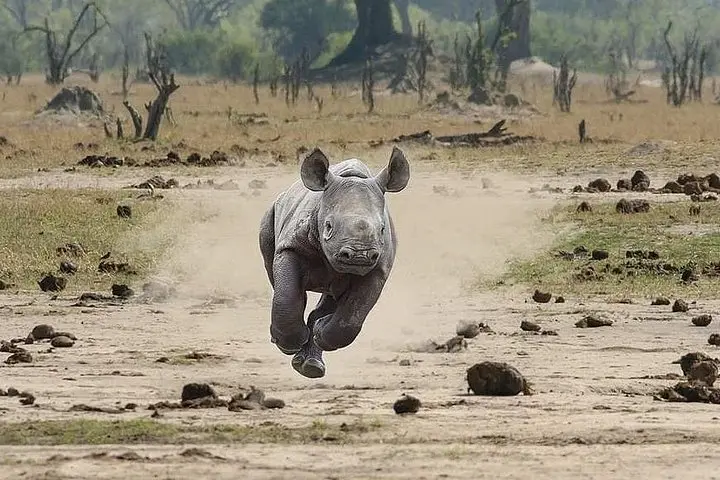
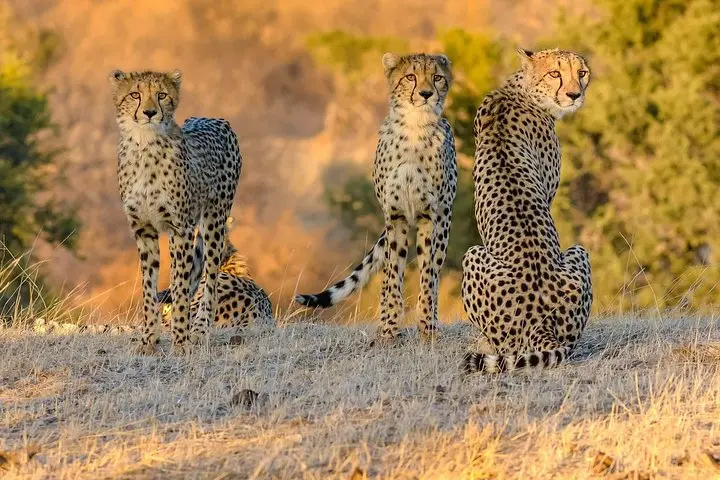
Expect a strong chance to see elephants, buffalo, lions, leopards, rhinos, as well as abundant antelope and birdlife — sightings depend on season and a bit of luck.
Humulani Tours & Safaris operates guided outdoor trips and adventures with an emphasis on safety, stewardship, and memorable experiences.
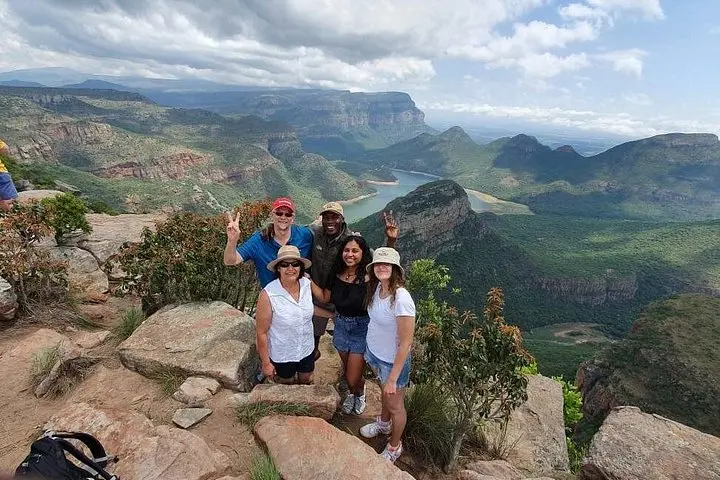
The morning light in Hazyview arrives like an invitation: a thin gold across the lowveld, a promise of horns and wings and the rumble of a highway that unspools toward the escarpment. On Day 1 the van eases out of town and climbs toward the Panorama Route, where cliffs drop away to reveal the Blyde River Canyon and a sequence of viewpoints — Three Rondavels, Bourke’s Luck Potholes, Lisbon Falls and God’s Window — each stop a lesson in water and time. The air tastes of eucalyptus and dust; the rock here is old sandstone, long sculpted by rain and river, and the potholes chiseled into riverbed bedrock look like small moons that the lowveld once orbited.
The morning light in Hazyview arrives like an invitation: a thin gold across the lowveld, a promise of horns and wings and the rumble of a highway that unspools toward the escarpment. On Day 1 the van eases out of town and climbs toward the Panorama Route, where cliffs drop away to reveal the Blyde River Canyon and a sequence of viewpoints — Three Rondavels, Bourke’s Luck Potholes, Lisbon Falls and God’s Window — each stop a lesson in water and time. The air tastes of eucalyptus and dust; the rock here is old sandstone, long sculpted by rain and river, and the potholes chiseled into riverbed bedrock look like small moons that the lowveld once orbited.
By the second day the scenery changes from cliff to savanna. Kruger National Park opens like a living map: red earth tracks, trees that throw broad shade, and the teaser of distant movement — a line of impala, an elephant mast at a waterhole, a leopard showing the patience of a ghost. Open-vehicle safaris in Kruger are about presence: the hum of diesel, the guide’s measured voice, binoculars pinning down birds and tiny behavioral cues that mean the difference between seeing and missing the Big Five. Kruger’s history is rooted in the late 19th and early 20th centuries — land set aside for conservation under Paul Kruger and later formalized as a national park — and its geology speaks of uplifted plateaus and river-carved canyons that make this corner of Mpumalanga unusually rich for both biodiversity and landscape drama.
Practicalities that matter: the tour moves fast but thoughtfully. Pickup is from Hazyview with multiple hotel stops; expect early starts for game drives (often before dawn) and long days in the park (full-day drives typically run 8–10 hours with breaks). The dry winter months (May–Sept) offer the best visibility for wildlife as animals concentrate around water; the rainy season (Oct–Apr) is lush and bird-rich but hotter and mosquito-prone. Guides handle permits and routes inside Kruger; visitors should bring sun protection, layers for chilly mornings, and insect repellent.
For travelers with limited time, this 2-night itinerary stitches two signature experiences — the high drama of the Panorama Route and the slow, deliberate search for wildlife in Kruger — into a compact, well-paced package. Expect simple hotel accommodations in Hazyview between excursions, two breakfasts and two dinners included, and a measured balance of driving and on-foot viewing. If you go, travel light, charge batteries the night before, and come ready to watch: in Mpumalanga the landscape and wildlife both ask you to keep your eyes moving.