THE ADVENTURE COLLECTIVE® · Independent discovery and booking for outdoor travel

Three days through Las Verapaces takes you from cloud-forest lookouts and a 400-species orchid sanctuary to the turquoise pools of Semuc Champey and the wet passages of Kanba Caves. Expect moderate hikes, cave wading, and focused birdwatching for quetzal sightings.
Three days through Las Verapaces takes you from cloud-forest lookouts and a 400-species orchid sanctuary to the turquoise pools of Semuc Champey and the wet passages of Kanba Caves. Expect moderate hikes, cave wading, and focused birdwatching for quetzal sightings.
Dawn arrives cool and green as the van climbs out of Guatemala City and into the cloud forests of Las Verapaces. Mist clings to bamboo and towering ficus, and the guide points out the first raptor silhouette against a pale sky. By mid-afternoon on Day 1 you’ll stand on a lookout over a ribbon of falls — water daring you toward the plunge pools below — then move through an orchid sanctuary where epiphytes hang like living sculptures.
Verified experiences and guided adventures in the surrounding area.
Operated by Guat2do Travel Experiences · Cobán, Alta Verapaz
Dawn arrives cool and green as the van climbs out of Guatemala City and into the cloud forests of Las Verapaces. Mist clings to bamboo and towering ficus, and the guide points out the first raptor silhouette against a pale sky. By mid-afternoon on Day 1 you’ll stand on a lookout over a ribbon of falls — water daring you toward the plunge pools below — then move through an orchid sanctuary where epiphytes hang like living sculptures.
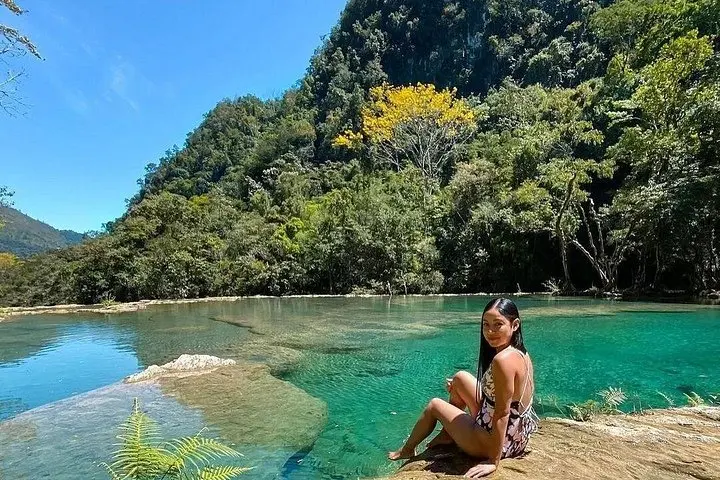
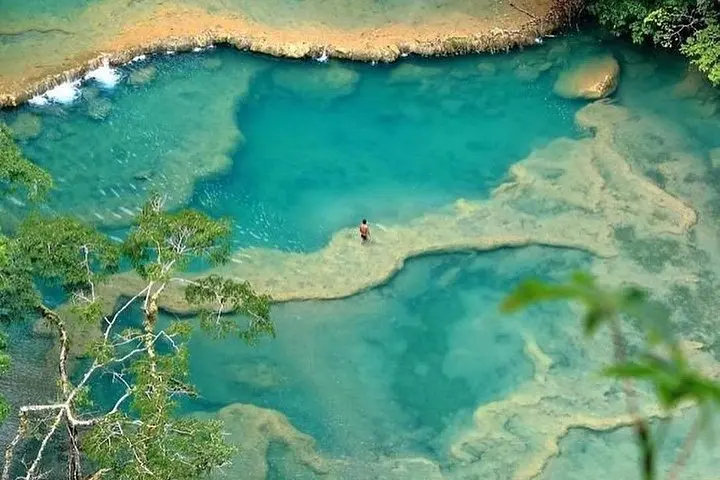
The region’s limestone bedrock and heavy seasonal rains carved the Cahabón River system into terraces and submerged caverns. Semuc Champey is a natural limestone bridge with a stair of turquoise pools above a subterranean river; the viewpoint hike gains roughly 150–250 meters over steep, often stepped trails (30–45 minutes from the trailhead). Kanba Caves cut deeper: expect wet passages, slick rock, and sections of waist-deep water guided by local cavers.
Cultural threads run through each stop — Q’eqchi’ communities, colonial-era Cobán, and the sugar mill relics that tell the region’s economic history. Local guides double as stewards: they lead responsible swims, teach bird calls, and explain orchid ecology.
Practical edge: start early to avoid midday heat, wear grippy, quick-dry footwear, and carry water, a headlamp, and a lightweight rain layer. Bring small bills for entrance fees and tips; phone service is intermittent beyond Cobán. With moderate fitness and an appetite for damp caves and cool pools, this three-day route delivers rainforest immersion with clear, actionable logistics.
The viewpoint hike is a steady, steep climb of roughly 30–45 minutes with an elevation gain of about 150–250 meters; fit walkers should manage it at a steady pace with rests.
Yes, with a guide: caves include wet, uneven passages and some waist-deep water—comfortable mobility and basic swimming confidence are helpful.
Swimming is common at designated pools; water can be cold and currents near the river outlet are stronger—follow guide instructions and avoid edges where water flows over the limestone bridge.
Pack binoculars, a field guide or app, quiet clothing in muted colors, and patience—early mornings yield the best chances for quetzal and other cloud-forest species.
Guat2do Travel Experiences operates guided outdoor trips and adventures with an emphasis on safety, stewardship, and memorable experiences.
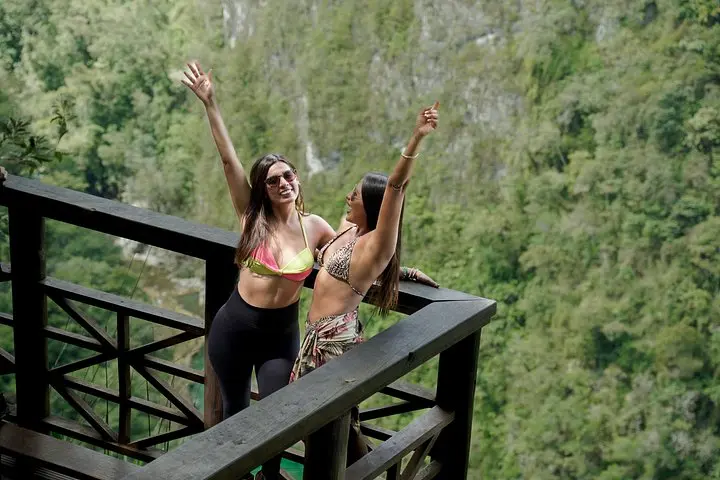
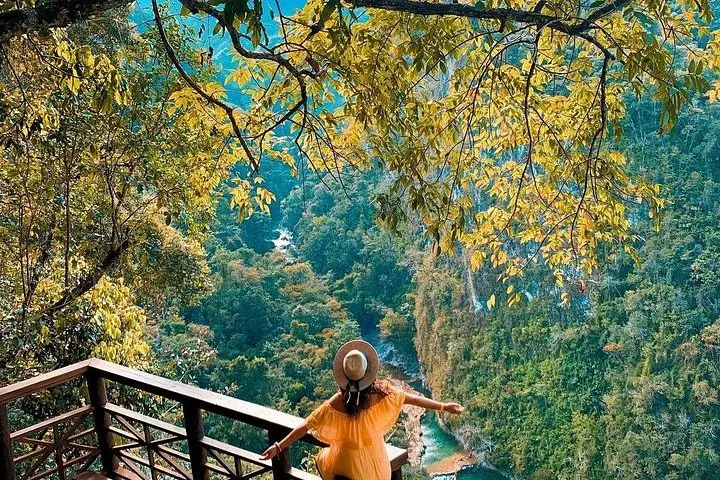
Dawn arrives cool and green as the van climbs out of Guatemala City and into the cloud forests of Las Verapaces. Mist clings to bamboo and towering ficus, and the guide points out the first raptor silhouette against a pale sky. By mid-afternoon on Day 1 you’ll stand on a lookout over a ribbon of falls — water daring you toward the plunge pools below — then move through an orchid sanctuary where epiphytes hang like living sculptures.
Dawn arrives cool and green as the van climbs out of Guatemala City and into the cloud forests of Las Verapaces. Mist clings to bamboo and towering ficus, and the guide points out the first raptor silhouette against a pale sky. By mid-afternoon on Day 1 you’ll stand on a lookout over a ribbon of falls — water daring you toward the plunge pools below — then move through an orchid sanctuary where epiphytes hang like living sculptures.
The region’s limestone bedrock and heavy seasonal rains carved the Cahabón River system into terraces and submerged caverns. Semuc Champey is a natural limestone bridge with a stair of turquoise pools above a subterranean river; the viewpoint hike gains roughly 150–250 meters over steep, often stepped trails (30–45 minutes from the trailhead). Kanba Caves cut deeper: expect wet passages, slick rock, and sections of waist-deep water guided by local cavers.
Cultural threads run through each stop — Q’eqchi’ communities, colonial-era Cobán, and the sugar mill relics that tell the region’s economic history. Local guides double as stewards: they lead responsible swims, teach bird calls, and explain orchid ecology.
Practical edge: start early to avoid midday heat, wear grippy, quick-dry footwear, and carry water, a headlamp, and a lightweight rain layer. Bring small bills for entrance fees and tips; phone service is intermittent beyond Cobán. With moderate fitness and an appetite for damp caves and cool pools, this three-day route delivers rainforest immersion with clear, actionable logistics.