THE ADVENTURE COLLECTIVE® · Independent discovery and booking for outdoor travel

Drive the Tizi n'Tichka pass, walk through Ait Benhaddou's mud-brick alleys and ride camels over Erg Chebbi at sunset. This 3-day route mixes geology, Berber culture and desert nights into a compact Moroccan adventure.
Drive the Tizi n'Tichka pass, walk through Ait Benhaddou's mud-brick alleys and ride camels over Erg Chebbi at sunset. This 3-day route mixes geology, Berber culture and desert nights into a compact Moroccan adventure.
You step out of the minivan high on Tizi n'Tichka, wind tugging at your scarf as the Atlas foothills spill toward ochre valleys and the road drops into light. The pass at 2,260 meters gives one last alpine breath before the landscape thins and the desert begins to beckon.
Verified experiences and guided adventures in the surrounding area.
Operated by myholidays-inmorocco · Merzouga, Drâa-Tafilalet
You step out of the minivan high on Tizi n'Tichka, wind tugging at your scarf as the Atlas foothills spill toward ochre valleys and the road drops into light. The pass at 2,260 meters gives one last alpine breath before the landscape thins and the desert begins to beckon.
This short expedition threads cinematic Ouarzazate and the fortified adobe of Ait Benhaddou — a UNESCO ksar shaped in sun-baked clay — with the sculpted canyons of the Todra and the satin slopes of Erg Chebbi near Merzouga. Geology here is obvious: folded, uplifted mountains turn to alluvial fans and then to wind-worked sands; some dunes reach roughly 100–150 meters and shift nightly under hot sirocco gusts.
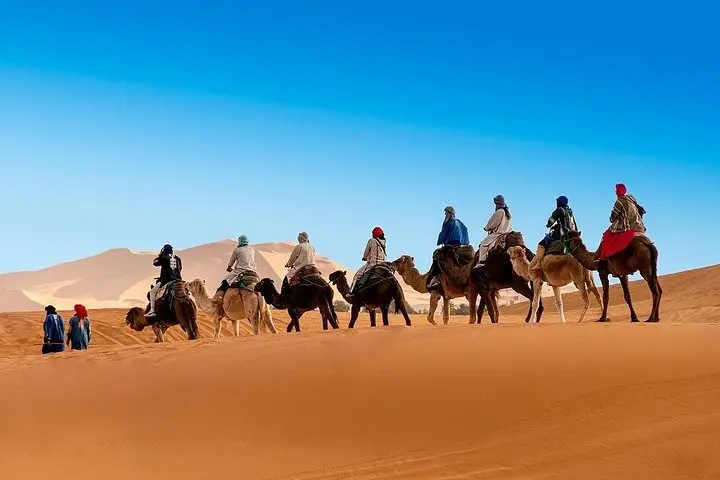
Culturally, the route follows old caravan corridors; Berber hospitality centers the trip — shared tagines, drum evenings under a wide, cold sky, and a camel caravan that moves at a deliberate, desert rhythm. Guides add local context: the Glaoui history at Telouet, the rose harvest around Kelaa M'Gouna, and film sets in Ouarzazate.
Practical edge: expect long drives—roughly 8–10 hours cumulative between Marrakech and Merzouga—short walks and gentle camel treks rather than technical hiking. Temperatures swing dramatically: strong sun by day, near-freezing nights in shoulder seasons. Bring layered clothing, sun protection, at least 2–3 liters of water per day on desert segments, and a reliable sunhat. Plan arrival and departure windows around daylight for photos and smoother driving. The desert dares you to slow down; prepare accordingly and it rewards with wide light and quiet you won’t forget.
The trip is moderate: most movement is by vehicle with short walks, camel rides and light climbing in ksars and gorges; no technical skills required.
Camels are typically docile and handlers brief riders; if anxious, request assistance mounting and choose a shorter ride or remain at camp while others ride.
Bring layers—thermal or fleece, a windproof shell, closed shoes and a hat—temperatures can drop sharply after sunset.
Many operators accommodate families, but check age and seat requirements; overnight camp conditions and camel saddles may be challenging for infants.
myholidays-inmorocco operates guided outdoor trips and adventures with an emphasis on safety, stewardship, and memorable experiences.
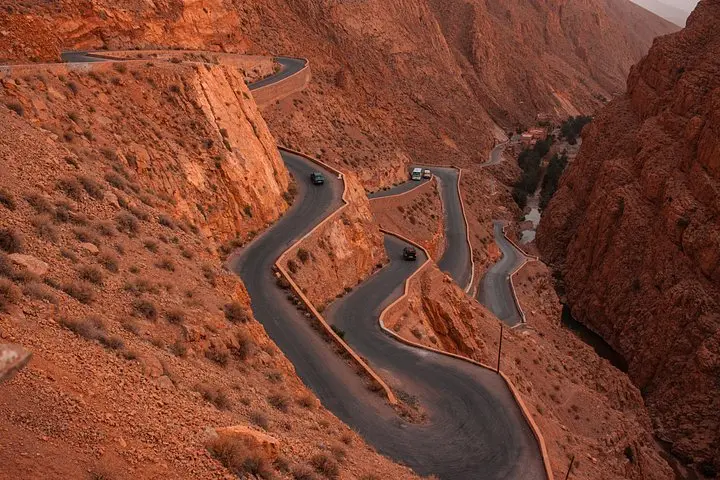
You step out of the minivan high on Tizi n'Tichka, wind tugging at your scarf as the Atlas foothills spill toward ochre valleys and the road drops into light. The pass at 2,260 meters gives one last alpine breath before the landscape thins and the desert begins to beckon.
You step out of the minivan high on Tizi n'Tichka, wind tugging at your scarf as the Atlas foothills spill toward ochre valleys and the road drops into light. The pass at 2,260 meters gives one last alpine breath before the landscape thins and the desert begins to beckon.
This short expedition threads cinematic Ouarzazate and the fortified adobe of Ait Benhaddou — a UNESCO ksar shaped in sun-baked clay — with the sculpted canyons of the Todra and the satin slopes of Erg Chebbi near Merzouga. Geology here is obvious: folded, uplifted mountains turn to alluvial fans and then to wind-worked sands; some dunes reach roughly 100–150 meters and shift nightly under hot sirocco gusts.
Culturally, the route follows old caravan corridors; Berber hospitality centers the trip — shared tagines, drum evenings under a wide, cold sky, and a camel caravan that moves at a deliberate, desert rhythm. Guides add local context: the Glaoui history at Telouet, the rose harvest around Kelaa M'Gouna, and film sets in Ouarzazate.
Practical edge: expect long drives—roughly 8–10 hours cumulative between Marrakech and Merzouga—short walks and gentle camel treks rather than technical hiking. Temperatures swing dramatically: strong sun by day, near-freezing nights in shoulder seasons. Bring layered clothing, sun protection, at least 2–3 liters of water per day on desert segments, and a reliable sunhat. Plan arrival and departure windows around daylight for photos and smoother driving. The desert dares you to slow down; prepare accordingly and it rewards with wide light and quiet you won’t forget.