THE ADVENTURE COLLECTIVE® · Independent discovery and booking for outdoor travel

Traverse the High Atlas to Erg Chebbi on a three‑day luxury circuit from Marrakech. Explore Ait Ben Haddou and Todra Gorge, ride camels at sunset, and sleep in a desert camp with Berber music under the stars.
Traverse the High Atlas to Erg Chebbi on a three‑day luxury circuit from Marrakech. Explore Ait Ben Haddou and Todra Gorge, ride camels at sunset, and sleep in a desert camp with Berber music under the stars.
You leave Marrakech before dawn, the city’s medina shrinking behind you as the road climbs into the High Atlas. The pass at Tizi n’Tichka opens a hard, clean sky; terraces and kasbahs tile the valley below. By late afternoon the Dades Gorge has turned to ochre and the “Monkey Fingers” rock spires throw long shadows. On day two the desert arrives like a quiet promise—Merzouga’s Erg Chebbi dunes swell orange at sunset as camels trace slow curves toward the camp.
Verified experiences and guided adventures in the surrounding area.
Operated by Brahim Bouarrouzn · Marrakech, Marrakech-Safi
You leave Marrakech before dawn, the city’s medina shrinking behind you as the road climbs into the High Atlas. The pass at Tizi n’Tichka opens a hard, clean sky; terraces and kasbahs tile the valley below. By late afternoon the Dades Gorge has turned to ochre and the “Monkey Fingers” rock spires throw long shadows. On day two the desert arrives like a quiet promise—Merzouga’s Erg Chebbi dunes swell orange at sunset as camels trace slow curves toward the camp.
This route threads history and geology: Ait Ben Haddou’s earthen ksar, a UNESCO site, shows centuries of mudbrick architecture and film sets; Todra Gorge exposes 300‑m limestone walls carved by ancient rivers; Erg Chebbi is a wind‑built erg of towering sand ridges. Culturally, the trip is as much about Berber hospitality—shared tagine, drums beneath stars—as it is about vistas. Expect simple desert camping the night you sleep under open sky, with dinners and breakfasts included.
Practical guidance: this is a three‑day loop with long driving stages—plan for multiple 3–6 hour stretches and at least one 8–10 hour day of transit. Pack sun protection, breathable layers for hot days and cool nights, sturdy shoes for canyon walks, and light luggage for the camel transfer. Hydrate frequently; carry local cash for small purchases and tips. If you have back or heart issues, opt out of the camel ride or request a 4x4 transfer to the camp. Arrive rested in Marrakech to make the most of the route and the mountain passes on the return leg.
Expect several long driving legs across three days—some stretches can be 4–8 hours, with one day approaching 8–10 hours including stops.
Yes; a 4x4 transfer to the desert camp is commonly available for travelers who prefer not to ride camels.
Accommodations are typically 3‑star hotels in towns and upgraded desert camps with mattresses and blankets; standards vary but include dinner and breakfast.
Not recommended for infants, pregnant travelers, or anyone with serious spinal or cardiovascular conditions due to camel riding and remote conditions.
Brahim Bouarrouzn operates guided outdoor trips and adventures with an emphasis on safety, stewardship, and memorable experiences.
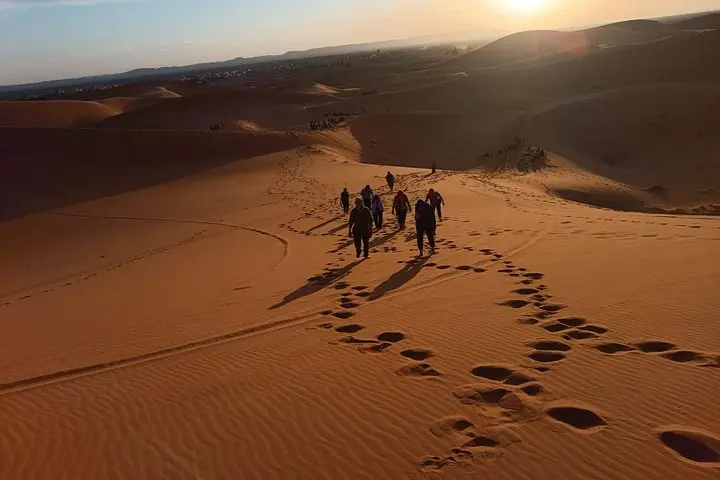
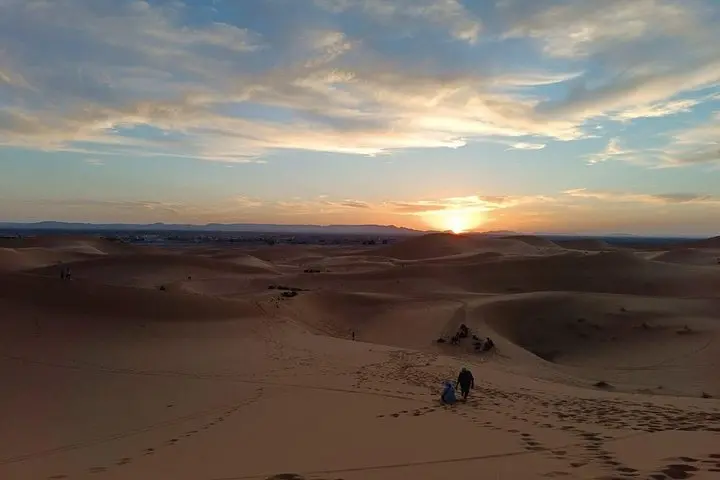
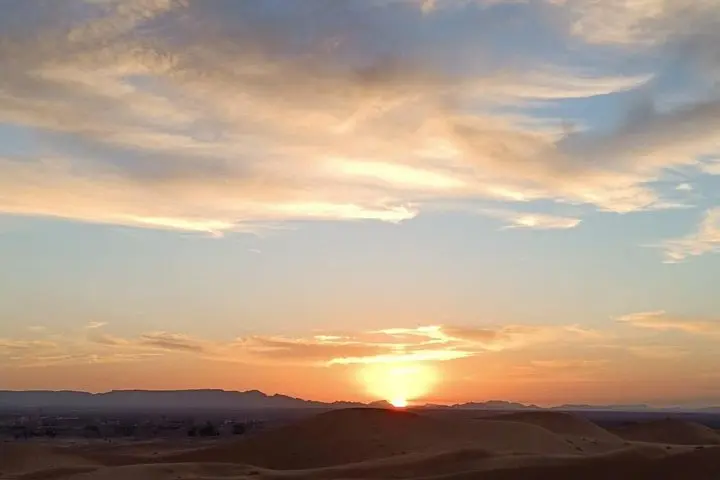
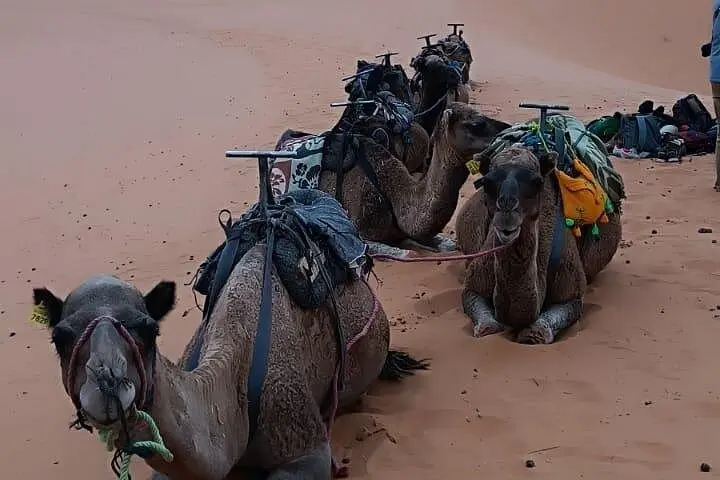
You leave Marrakech before dawn, the city’s medina shrinking behind you as the road climbs into the High Atlas. The pass at Tizi n’Tichka opens a hard, clean sky; terraces and kasbahs tile the valley below. By late afternoon the Dades Gorge has turned to ochre and the “Monkey Fingers” rock spires throw long shadows. On day two the desert arrives like a quiet promise—Merzouga’s Erg Chebbi dunes swell orange at sunset as camels trace slow curves toward the camp.
You leave Marrakech before dawn, the city’s medina shrinking behind you as the road climbs into the High Atlas. The pass at Tizi n’Tichka opens a hard, clean sky; terraces and kasbahs tile the valley below. By late afternoon the Dades Gorge has turned to ochre and the “Monkey Fingers” rock spires throw long shadows. On day two the desert arrives like a quiet promise—Merzouga’s Erg Chebbi dunes swell orange at sunset as camels trace slow curves toward the camp.
This route threads history and geology: Ait Ben Haddou’s earthen ksar, a UNESCO site, shows centuries of mudbrick architecture and film sets; Todra Gorge exposes 300‑m limestone walls carved by ancient rivers; Erg Chebbi is a wind‑built erg of towering sand ridges. Culturally, the trip is as much about Berber hospitality—shared tagine, drums beneath stars—as it is about vistas. Expect simple desert camping the night you sleep under open sky, with dinners and breakfasts included.
Practical guidance: this is a three‑day loop with long driving stages—plan for multiple 3–6 hour stretches and at least one 8–10 hour day of transit. Pack sun protection, breathable layers for hot days and cool nights, sturdy shoes for canyon walks, and light luggage for the camel transfer. Hydrate frequently; carry local cash for small purchases and tips. If you have back or heart issues, opt out of the camel ride or request a 4x4 transfer to the camp. Arrive rested in Marrakech to make the most of the route and the mountain passes on the return leg.