THE ADVENTURE COLLECTIVE® · Independent discovery and booking for outdoor travel

Cross the High Atlas, walk UNESCO-listed Ait Ben Haddou, ride camels to an Erg Chegaga camp and sleep beneath an enormous desert sky. This three-day tour blends road travel, short hikes on dunes, and cultural stops for a compact Saharan experience.
Cross the High Atlas, walk UNESCO-listed Ait Ben Haddou, ride camels to an Erg Chegaga camp and sleep beneath an enormous desert sky. This three-day tour blends road travel, short hikes on dunes, and cultural stops for a compact Saharan experience.
The road leaves Marrakech at dawn and the atlas slopes push the minibus upward; wind and quarry-strewn switchbacks lead you over the Tizi n'Tichka pass (about 2,260 m) and down into red-ochre gorges. By midday the air dries, palm-lined valleys appear, and the silhouette of Ait Ben Haddou—a compact cluster of earthen towers—signals the shift from High Atlas to Sahara.
Verified experiences and guided adventures in the surrounding area.
Operated by Sahara Differently · Marrakech, Marrakesh-Safi
The road leaves Marrakech at dawn and the atlas slopes push the minibus upward; wind and quarry-strewn switchbacks lead you over the Tizi n'Tichka pass (about 2,260 m) and down into red-ochre gorges. By midday the air dries, palm-lined valleys appear, and the silhouette of Ait Ben Haddou—a compact cluster of earthen towers—signals the shift from High Atlas to Sahara.
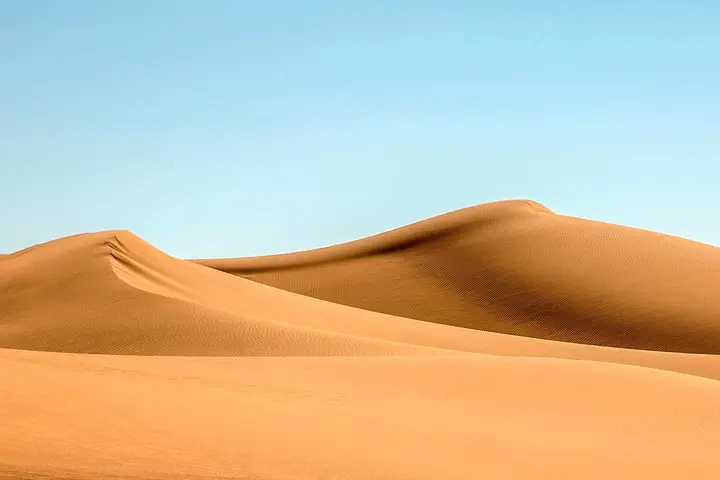
This three-day loop stitches together Morocco’s layered history: fortified ksars that controlled trans-Saharan trade, the film-era studios of Ouarzazate, and the age-old pottery workshops of Tamegroute. Geologically, the route moves from metamorphic Atlas ridges into alluvial plains and finally to the wind-sculpted quartz sand of Erg Chegaga, whose dunes can exceed 100–300 meters in places.
Culturally the trip is equally tactile: shared minibus travel, a short camel caravan to camp, and nights under a sky that makes stars feel close enough to touch. Expect sandboarding, short dune walks, and visits to village kasbahs and green-ceramic ateliers.
Practical guide: this is a road-heavy, multi-day experience—plan for several hours of driving each day and two basic desert camp nights (shared facilities). Bring layered clothing for hot days and cold nights, sturdy shoes for uneven dunes and kasbah rubble, and at least 2–3 liters of water per day. Charge devices and carry spare cash for small purchases. Motion-sick travelers should sit up front and bring remedies. Respect local customs—ask before photographing people—and follow guides’ instructions on dune safety. With straightforward packing and realistic expectations about long drives, the tour rewards you with desert light, remote villages, and a real sense of place.
This shared tour departs from Marrakech and returns to Marrakech on day three; your exact pickup point and time are confirmed at booking.
Camel rides are short (typically 30–90 minutes) and dune walks are optional—both are suitable for most people with average fitness.
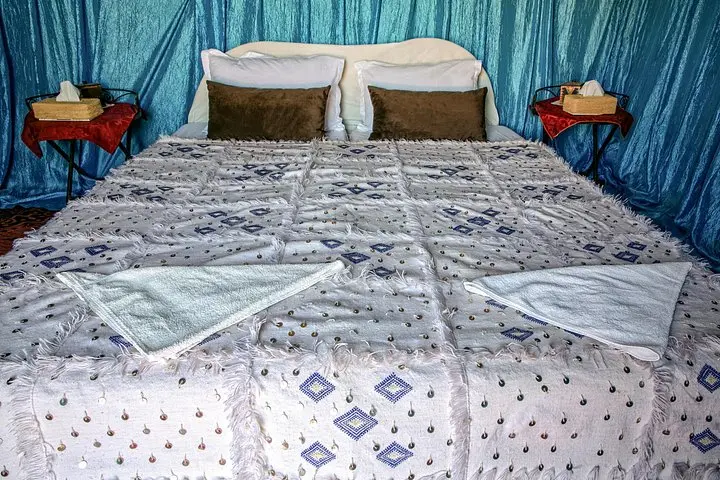
Most breakfasts, lunches and two dinners are included; desert camps offer basic shared facilities—bring toiletries and small change for extras.
You should carry a passport; check visa requirements for Morocco based on your nationality and have a copy of your booking for checkpoints.
Sahara Differently operates guided outdoor trips and adventures with an emphasis on safety, stewardship, and memorable experiences.
The road leaves Marrakech at dawn and the atlas slopes push the minibus upward; wind and quarry-strewn switchbacks lead you over the Tizi n'Tichka pass (about 2,260 m) and down into red-ochre gorges. By midday the air dries, palm-lined valleys appear, and the silhouette of Ait Ben Haddou—a compact cluster of earthen towers—signals the shift from High Atlas to Sahara.
The road leaves Marrakech at dawn and the atlas slopes push the minibus upward; wind and quarry-strewn switchbacks lead you over the Tizi n'Tichka pass (about 2,260 m) and down into red-ochre gorges. By midday the air dries, palm-lined valleys appear, and the silhouette of Ait Ben Haddou—a compact cluster of earthen towers—signals the shift from High Atlas to Sahara.
This three-day loop stitches together Morocco’s layered history: fortified ksars that controlled trans-Saharan trade, the film-era studios of Ouarzazate, and the age-old pottery workshops of Tamegroute. Geologically, the route moves from metamorphic Atlas ridges into alluvial plains and finally to the wind-sculpted quartz sand of Erg Chegaga, whose dunes can exceed 100–300 meters in places.
Culturally the trip is equally tactile: shared minibus travel, a short camel caravan to camp, and nights under a sky that makes stars feel close enough to touch. Expect sandboarding, short dune walks, and visits to village kasbahs and green-ceramic ateliers.
Practical guide: this is a road-heavy, multi-day experience—plan for several hours of driving each day and two basic desert camp nights (shared facilities). Bring layered clothing for hot days and cold nights, sturdy shoes for uneven dunes and kasbah rubble, and at least 2–3 liters of water per day. Charge devices and carry spare cash for small purchases. Motion-sick travelers should sit up front and bring remedies. Respect local customs—ask before photographing people—and follow guides’ instructions on dune safety. With straightforward packing and realistic expectations about long drives, the tour rewards you with desert light, remote villages, and a real sense of place.