THE ADVENTURE COLLECTIVE® · Independent discovery and booking for outdoor travel

Cross the High Atlas, walk Todra’s shaded streambeds and spend a night under the stars at a Merzouga luxury camp. This 3‑day Marrakech to Fes tour combines dramatic drives, camel treks and dune-side hospitality.
Cross the High Atlas, walk Todra’s shaded streambeds and spend a night under the stars at a Merzouga luxury camp. This 3‑day Marrakech to Fes tour combines dramatic drives, camel treks and dune-side hospitality.
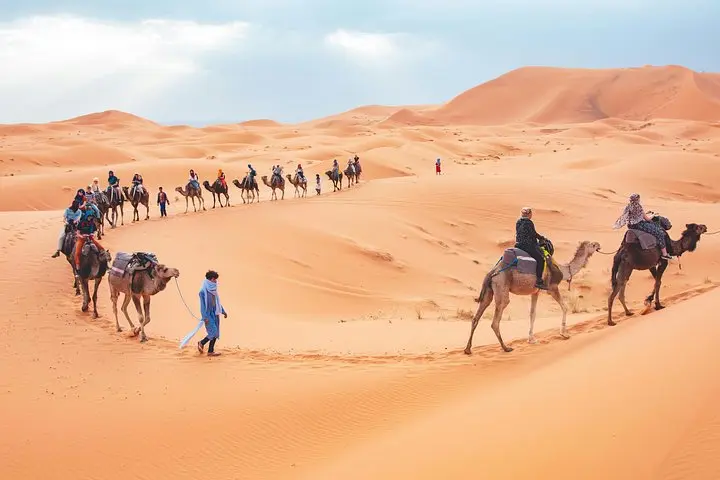
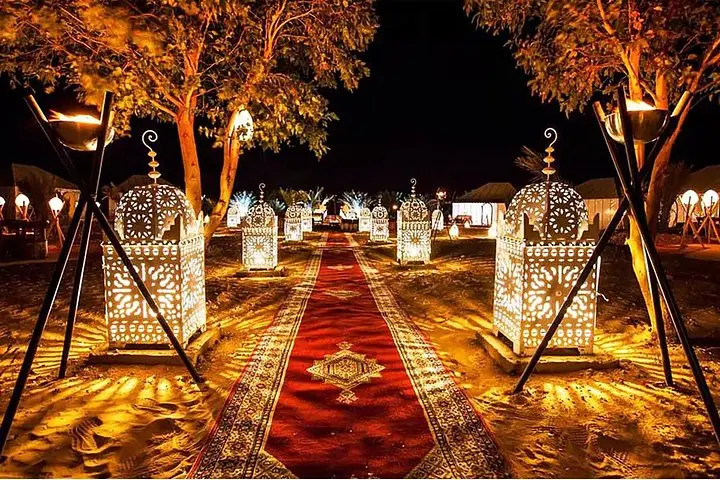
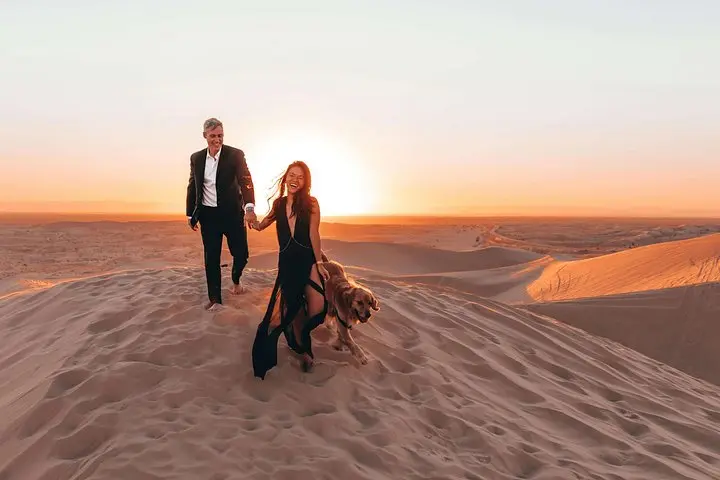
A single dune unfolds like a slow wave as your convoy crests the last rise and the Sahara lights up. Camels silhouette the skyline, a camp’s lanterns blink like low stars, and the air smells of tea and cedar smoke. This is Merzouga at dawn — the high point of a three-day crossing from Marrakech to Fes that stitches High Atlas passes, kasbah country and Erg Chebbi’s sand sea into one continuous horizon.
Verified experiences and guided adventures in the surrounding area.
Operated by Morocco Best Tour · Merzouga, Drâa-Tafilalet
A single dune unfolds like a slow wave as your convoy crests the last rise and the Sahara lights up. Camels silhouette the skyline, a camp’s lanterns blink like low stars, and the air smells of tea and cedar smoke. This is Merzouga at dawn — the high point of a three-day crossing from Marrakech to Fes that stitches High Atlas passes, kasbah country and Erg Chebbi’s sand sea into one continuous horizon.
The route follows ancient trade arteries: Tizi n’Tichka at 2,260 m gives way to Ait Ben Haddou’s mudbrick architecture, then the road loosens into the Dades and Todra gorges where rivers have carved narrow cliffs. Erg Chebbi’s dunes, pushed up by Saharan winds to roughly 100–150 m, are living geology — ever-shifting and shockingly quiet at sunrise. You’ll meet Berber hosts whose crafts and seasonal rhythms tie to date palms, rose distillation and trans-Saharan histories.
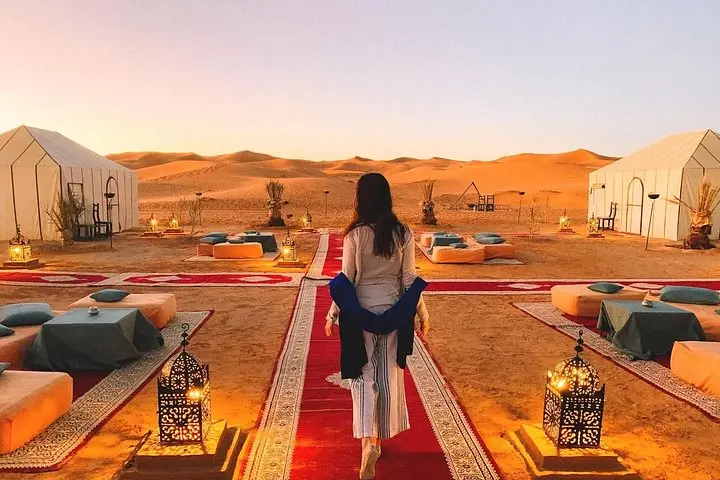
Expect long driving stages broken by short hikes, photo stops and a one-hour camel transfer into camp. Nights at a luxury desert camp bring warm blankets, shared solar lighting and communal meals; more rustic options are available. Practicalities matter: plan for high daytime heat, cold desert nights, limited ATMs in Merzouga and uneven surfaces in gorges. Bring layered clothing, sun protection, at least 2–3 liters of water per day, and a small daypack for canyon walks.
This itinerary balances cultural landmarks, geology and a true desert overnight — ideal for travelers who want immersive landscapes without technical trail skills. Time your trip for spring or fall for milder temperatures and clearer travel days.
Yes — most operators offer hotel or riad pickup in Marrakech; confirm your pickup point and exact time when booking.
Typical camel transfers are about 45–75 minutes, timed to reach camp for sunset; saddle discomfort is brief if you wear long pants and seated posture is steady.
Luxury camps usually provide private or semi-private tents with beds, shared or private toilets, hot water availability varies — check the camp grade when booking.
You can leave large luggage in the vehicle; bring a small duffel for the overnight as camel transfers and camp space are limited.
Morocco Best Tour operates guided outdoor trips and adventures with an emphasis on safety, stewardship, and memorable experiences.
A single dune unfolds like a slow wave as your convoy crests the last rise and the Sahara lights up. Camels silhouette the skyline, a camp’s lanterns blink like low stars, and the air smells of tea and cedar smoke. This is Merzouga at dawn — the high point of a three-day crossing from Marrakech to Fes that stitches High Atlas passes, kasbah country and Erg Chebbi’s sand sea into one continuous horizon.
A single dune unfolds like a slow wave as your convoy crests the last rise and the Sahara lights up. Camels silhouette the skyline, a camp’s lanterns blink like low stars, and the air smells of tea and cedar smoke. This is Merzouga at dawn — the high point of a three-day crossing from Marrakech to Fes that stitches High Atlas passes, kasbah country and Erg Chebbi’s sand sea into one continuous horizon.
The route follows ancient trade arteries: Tizi n’Tichka at 2,260 m gives way to Ait Ben Haddou’s mudbrick architecture, then the road loosens into the Dades and Todra gorges where rivers have carved narrow cliffs. Erg Chebbi’s dunes, pushed up by Saharan winds to roughly 100–150 m, are living geology — ever-shifting and shockingly quiet at sunrise. You’ll meet Berber hosts whose crafts and seasonal rhythms tie to date palms, rose distillation and trans-Saharan histories.
Expect long driving stages broken by short hikes, photo stops and a one-hour camel transfer into camp. Nights at a luxury desert camp bring warm blankets, shared solar lighting and communal meals; more rustic options are available. Practicalities matter: plan for high daytime heat, cold desert nights, limited ATMs in Merzouga and uneven surfaces in gorges. Bring layered clothing, sun protection, at least 2–3 liters of water per day, and a small daypack for canyon walks.
This itinerary balances cultural landmarks, geology and a true desert overnight — ideal for travelers who want immersive landscapes without technical trail skills. Time your trip for spring or fall for milder temperatures and clearer travel days.