THE ADVENTURE COLLECTIVE® · Independent discovery and booking for outdoor travel

A compact three-day route from Marrakech to Fez that stitches mountain passes, Aït Ben Haddou and the Erg Chebbi dunes into an accessible desert crossing. Expect long drives, short walks, a night in a Berber camp and sunrise over sand. Read on for logistics, seasonal tips and what to pack.
A compact three-day route from Marrakech to Fez that stitches mountain passes, Aït Ben Haddou and the Erg Chebbi dunes into an accessible desert crossing. Expect long drives, short walks, a night in a Berber camp and sunrise over sand. Read on for logistics, seasonal tips and what to pack.
You crest Tizi n’Tichka at first light and the High Atlas opens like a rough-hewn map: shale ridges, scattered argan trees and the long ribbon of the road that will carry you toward the kasbahs and the desert.
Verified experiences and guided adventures in the surrounding area.
Operated by abdou sahara · Merzouga, Drâa-Tafilalet
You crest Tizi n’Tichka at first light and the High Atlas opens like a rough-hewn map: shale ridges, scattered argan trees and the long ribbon of the road that will carry you toward the kasbahs and the desert.
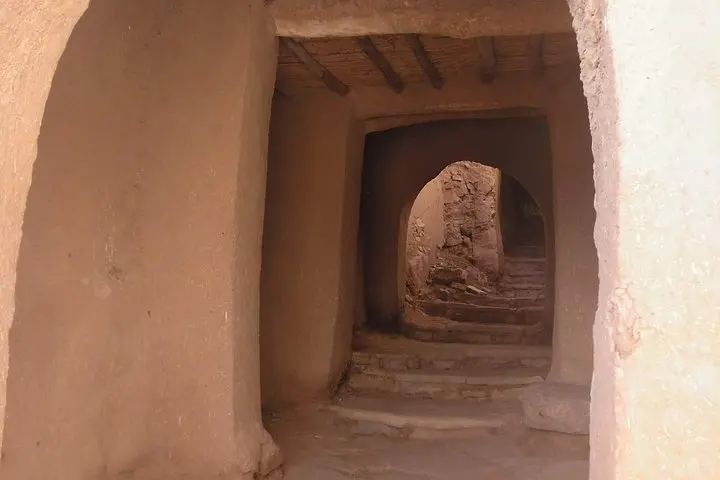
The route threads history and geology—ancient caravan roads, earthen kasbah architecture at Aït Ben Haddou (a UNESCO site used repeatedly as a film location), the braided palm oases of the Ziz Valley and the orange crescents of Erg Chebbi near Merzouga. Todra’s vertical limestone walls invite climbers and casual walkers alike, while Kelâat M'Gouna’s rose cooperatives show the region’s living craft economy.
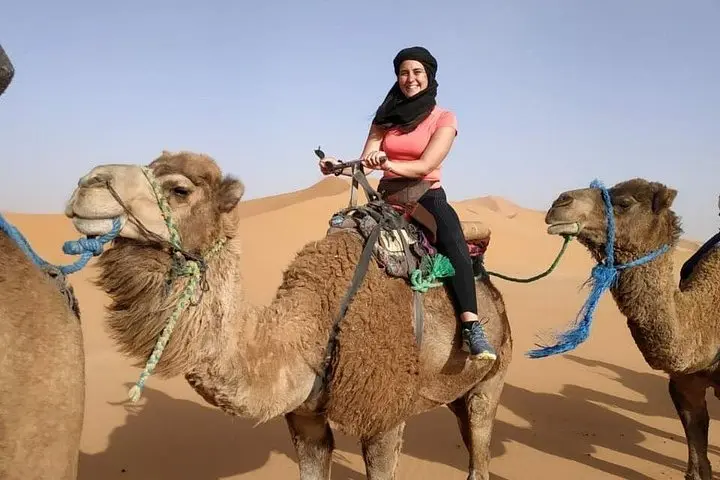
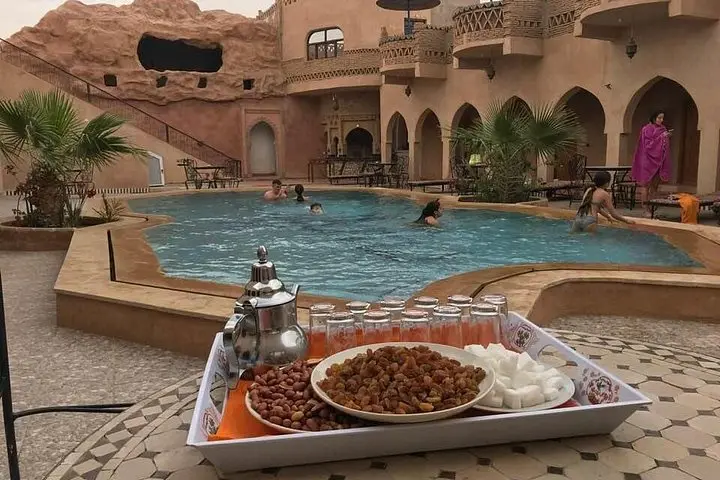
Expect a mix of driving and short walks: long morning transfers over mountain passes, guided visits at Aït Ben Haddou and Ouarzazate, a late-afternoon camel ride to a Berber camp, and a dawn walk on the dunes. Nights contrast: hotel comfort in Ouarzazate and a simple, wind-shaped tent under a wide Saharan sky in Merzouga.
Practical guidance: travel light for the desert night, plan layers for big diurnal swings, and carry a refillable water bottle and sun protection. If you want photos of the dunes, accept early starts—sunrise and sunset are when the sand shows shape. Respect local customs when visiting villages and camps: ask before photographing people and support local cooperatives when possible.
The camel ride is gentle and short—saddles are the traditional style; the camp stay is basic but insulated against wind; minimal exertion required.
Pass elevations reach about 2,260 m; most travelers experience only mild effects—stay hydrated and move at an easy pace through mountain sections.
Meals listed include breakfasts and some dinners; drinking water is sometimes provided but carrying a refillable bottle is recommended for long transfers.
The tour listing notes wheelchair and stroller accessibility and allows infants, but camel and tent experiences may be unsuitable for some mobility needs—check with the operator ahead of booking.
abdou sahara operates guided outdoor trips and adventures with an emphasis on safety, stewardship, and memorable experiences.
You crest Tizi n’Tichka at first light and the High Atlas opens like a rough-hewn map: shale ridges, scattered argan trees and the long ribbon of the road that will carry you toward the kasbahs and the desert.
You crest Tizi n’Tichka at first light and the High Atlas opens like a rough-hewn map: shale ridges, scattered argan trees and the long ribbon of the road that will carry you toward the kasbahs and the desert.
The route threads history and geology—ancient caravan roads, earthen kasbah architecture at Aït Ben Haddou (a UNESCO site used repeatedly as a film location), the braided palm oases of the Ziz Valley and the orange crescents of Erg Chebbi near Merzouga. Todra’s vertical limestone walls invite climbers and casual walkers alike, while Kelâat M'Gouna’s rose cooperatives show the region’s living craft economy.
Expect a mix of driving and short walks: long morning transfers over mountain passes, guided visits at Aït Ben Haddou and Ouarzazate, a late-afternoon camel ride to a Berber camp, and a dawn walk on the dunes. Nights contrast: hotel comfort in Ouarzazate and a simple, wind-shaped tent under a wide Saharan sky in Merzouga.
Practical guidance: travel light for the desert night, plan layers for big diurnal swings, and carry a refillable water bottle and sun protection. If you want photos of the dunes, accept early starts—sunrise and sunset are when the sand shows shape. Respect local customs when visiting villages and camps: ask before photographing people and support local cooperatives when possible.