THE ADVENTURE COLLECTIVE® · Independent discovery and booking for outdoor travel

A compact three-day circuit from Marrakech to Merzouga that combines High Atlas passes, Ait Ben Haddou, Todra Gorge and an overnight in an Erg Chebbi camp. Expect long drives, a sunset camel trek, and a starry desert dawn.
A compact three-day circuit from Marrakech to Merzouga that combines High Atlas passes, Ait Ben Haddou, Todra Gorge and an overnight in an Erg Chebbi camp. Expect long drives, a sunset camel trek, and a starry desert dawn.
You push away from the riad before dawn and the medina yields to miles of cracked road, black basalt ridgelines and the first white of the High Atlas.
Verified experiences and guided adventures in the surrounding area.
Operated by Asfani Travel · Merzouga, Drâa-Tafilalet
You push away from the riad before dawn and the medina yields to miles of cracked road, black basalt ridgelines and the first white of the High Atlas.
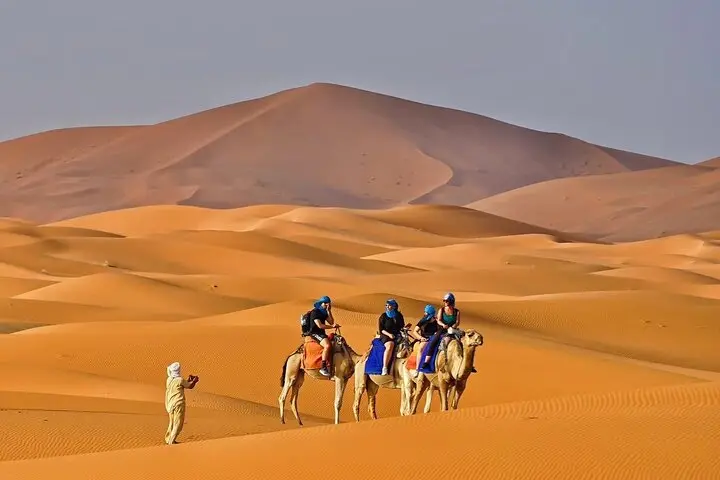
The drive over Tizi n'Tichka (about 2,260 m) winds through stony passes and Berber villages; later the ochre kasbahs of Ait Ben Haddou—an ancient caravan stronghold and UNESCO site—sit like a film set against the valley. Geologically the route moves from folded metamorphic ranges into the broad alluvial plains of the Dades and Todra, then into the wind-sculpted Erg Chebbi where dunes reach up to 150 m.
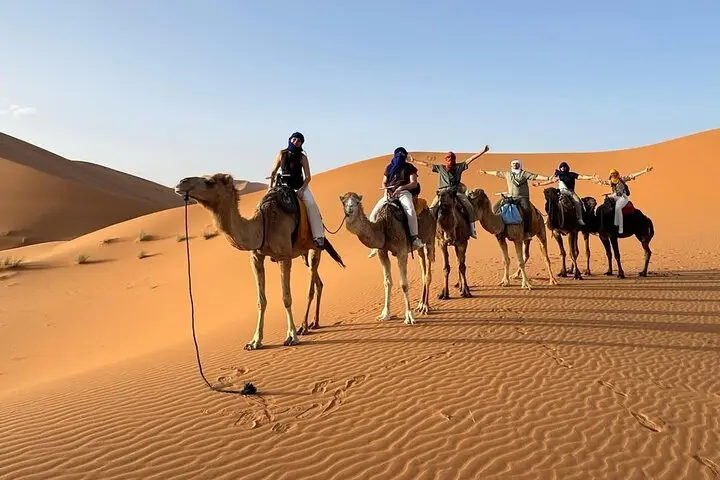
Culturally the trip traces Morocco’s trade arteries: kasbahs, rose-growing oases around Kelaat M'Gouna, and the market town of Rissani where camel caravans once converged. Expect traditional music around a campfire and shared tents with basic facilities; camel handlers are often local nomads with decades of desert knowledge.
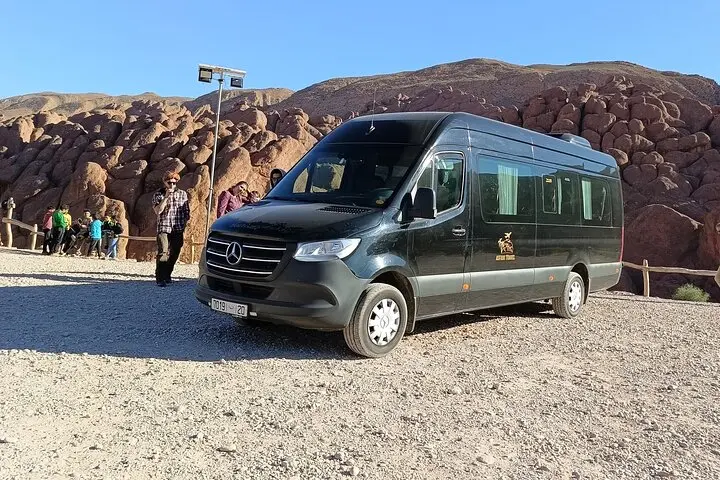
Practically, this is a long-drive, short-hike tour: roughly 9–10 hours of driving Marrakech→Merzouga split over two days (total ~560 km), plus a 1–2 hour camel trek at dusk and dawn. Wear sturdy shoes for rocky canyons and soft-soled footwear for dunes; layer warm clothes for night desert temperatures that can drop sharply. Carry at least 2–3 liters of water, sun protection and motion-sickness remedies for winding passes. Photography windows are Tizi n'Tichka overlooks, Todra Gorge walls (~300 m high) and the sunset/sunrise on Erg Chebbi. Book with an operator that provides licensed vehicles, clear pickup times and a plan for camp sanitation. The desert is patient — arrive prepared and it will reveal its best light.
The camel ride is gentle and guided—most people manage it; you should be able to mount/ dismount and walk short dune slopes for better viewpoints.
Standard desert camps have shared shower and toilet facilities and basic Berber-style tents; luxury upgrades with private facilities are sometimes available.
According to the itinerary, two dinners and two breakfasts are provided; lunches in towns are typically at your own expense.
Yes—operators usually accept families; infants may need to sit on laps for transfers and parents should consider camel comfort and night temperatures.
Asfani Travel operates guided outdoor trips and adventures with an emphasis on safety, stewardship, and memorable experiences.
You push away from the riad before dawn and the medina yields to miles of cracked road, black basalt ridgelines and the first white of the High Atlas.
You push away from the riad before dawn and the medina yields to miles of cracked road, black basalt ridgelines and the first white of the High Atlas.
The drive over Tizi n'Tichka (about 2,260 m) winds through stony passes and Berber villages; later the ochre kasbahs of Ait Ben Haddou—an ancient caravan stronghold and UNESCO site—sit like a film set against the valley. Geologically the route moves from folded metamorphic ranges into the broad alluvial plains of the Dades and Todra, then into the wind-sculpted Erg Chebbi where dunes reach up to 150 m.
Culturally the trip traces Morocco’s trade arteries: kasbahs, rose-growing oases around Kelaat M'Gouna, and the market town of Rissani where camel caravans once converged. Expect traditional music around a campfire and shared tents with basic facilities; camel handlers are often local nomads with decades of desert knowledge.
Practically, this is a long-drive, short-hike tour: roughly 9–10 hours of driving Marrakech→Merzouga split over two days (total ~560 km), plus a 1–2 hour camel trek at dusk and dawn. Wear sturdy shoes for rocky canyons and soft-soled footwear for dunes; layer warm clothes for night desert temperatures that can drop sharply. Carry at least 2–3 liters of water, sun protection and motion-sickness remedies for winding passes. Photography windows are Tizi n'Tichka overlooks, Todra Gorge walls (~300 m high) and the sunset/sunrise on Erg Chebbi. Book with an operator that provides licensed vehicles, clear pickup times and a plan for camp sanitation. The desert is patient — arrive prepared and it will reveal its best light.