THE ADVENTURE COLLECTIVE® · Independent discovery and booking for outdoor travel

Cross the High Atlas, explore Ait Ben Haddou and Todgha’s narrow canyons, then ride camels into Erg Chebbi for a night under the stars. This three-day loop pairs cultural sites with sunrise dunes and practical advice for desert travel.
Cross the High Atlas, explore Ait Ben Haddou and Todgha’s narrow canyons, then ride camels into Erg Chebbi for a night under the stars. This three-day loop pairs cultural sites with sunrise dunes and practical advice for desert travel.
Dust lifts off the road as the minivan climbs toward the High Atlas; wind scours the mountain faces and the pass—Tizi n’Tichka at about 2,260 m—cuts a clean line across the sky. By afternoon the ochre kasbahs of Ait Ben Haddou appear, clay walls catching the last sun. This is a three-day loop that trades Marrakech’s frenetic medina for vast sand and quiet star fields.
Verified experiences and guided adventures in the surrounding area.
Operated by Things To Do From Marrakech · Marrakech, Marrakech-Safi
Dust lifts off the road as the minivan climbs toward the High Atlas; wind scours the mountain faces and the pass—Tizi n’Tichka at about 2,260 m—cuts a clean line across the sky. By afternoon the ochre kasbahs of Ait Ben Haddou appear, clay walls catching the last sun. This is a three-day loop that trades Marrakech’s frenetic medina for vast sand and quiet star fields.
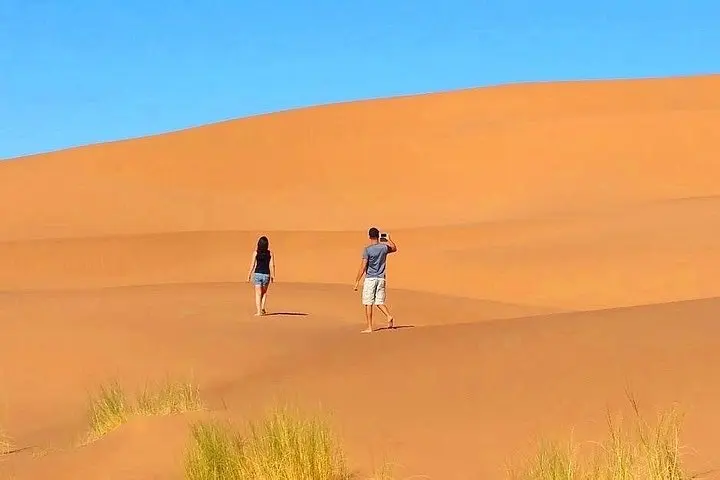
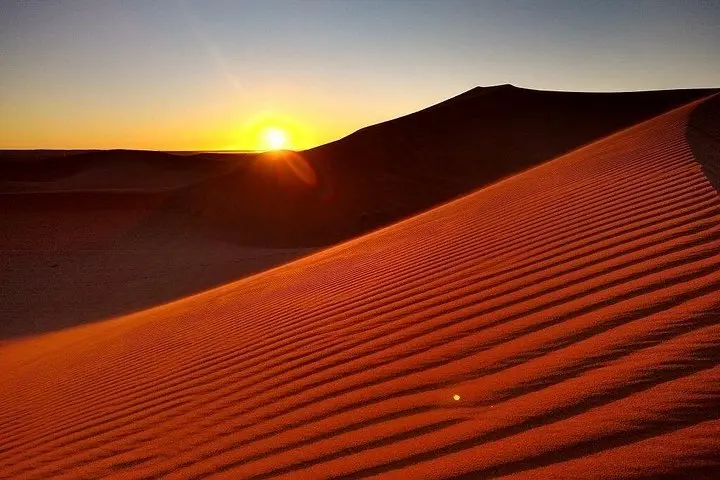
Geology and history meet on this route: ancient trade corridors over the Atlas, fortified ksars built from rammed earth, and the dramatic limestone throat of the Todgha Gorges where a river still chisels narrow canyons. Erg Chebbi’s dunes reach roughly 100–150 m high; sand here moves with wind and seems to have its own patience, sliding and reforming each season.
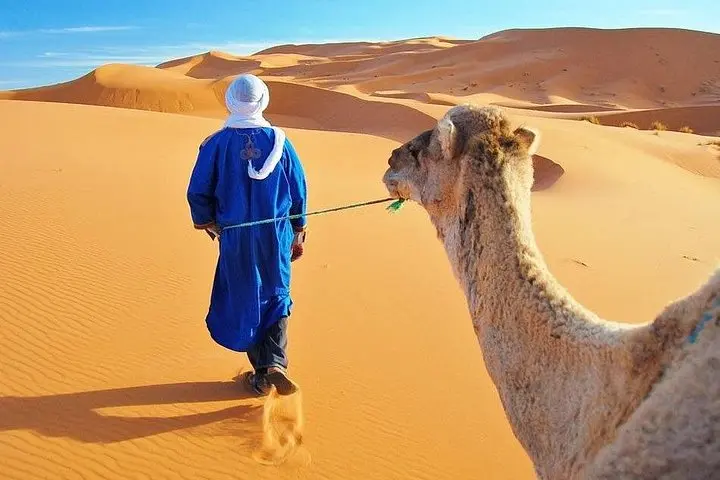
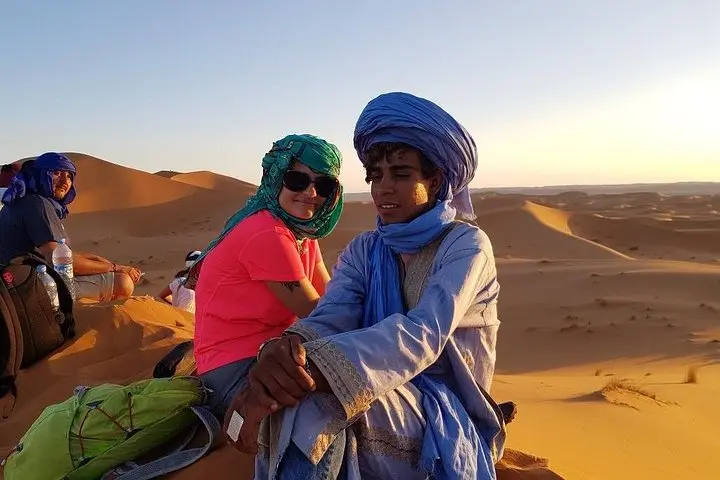
Culturally, expect Berber hospitality—simple meals, drum-led evenings at the camp, and a chance to learn local rhythms. The itinerary balances long drives (several hours between stops) with short hikes and a 1–2 hour camel ride across dunes at sunset and sunrise. Terrain varies from paved mountain pass to gravel valley roads and soft sand; elevation ranges from roughly 450 m in the Sahara up to mountain passes over 2,200 m.
Practical guidance: pack layers for cold desert nights, sun protection for daytime, and shoes that handle both rocky canyons and loose sand. Hydrate during long transfers and allow extra time for photo stops. If you want quieter dunes, ask for earlier or later camel shifts to avoid peak-group windows. The experience is straightforward but involves long travel—expect reward in sky and silence more than strenuous exertion.
The camel trek to the camp typically lasts 1–2 hours each way—long enough to reach dune tops for sunset or sunrise but not an extended expedition.
Camps are usually traditional tents with basic bedding and shared or private options depending on the operator; evenings include a cooked dinner and cultural entertainment.
You cross mountain passes up to around 2,200–2,300 m (Tizi n’Tichka); most travelers acclimate without issue, but anyone with serious cardiovascular conditions should consult a doctor first.
Yes—this itinerary is family-friendly, though long drives and desert conditions may be tiring for very young children; infant seats and accommodations can often be arranged.
Things To Do From Marrakech operates guided outdoor trips and adventures with an emphasis on safety, stewardship, and memorable experiences.
Dust lifts off the road as the minivan climbs toward the High Atlas; wind scours the mountain faces and the pass—Tizi n’Tichka at about 2,260 m—cuts a clean line across the sky. By afternoon the ochre kasbahs of Ait Ben Haddou appear, clay walls catching the last sun. This is a three-day loop that trades Marrakech’s frenetic medina for vast sand and quiet star fields.
Dust lifts off the road as the minivan climbs toward the High Atlas; wind scours the mountain faces and the pass—Tizi n’Tichka at about 2,260 m—cuts a clean line across the sky. By afternoon the ochre kasbahs of Ait Ben Haddou appear, clay walls catching the last sun. This is a three-day loop that trades Marrakech’s frenetic medina for vast sand and quiet star fields.
Geology and history meet on this route: ancient trade corridors over the Atlas, fortified ksars built from rammed earth, and the dramatic limestone throat of the Todgha Gorges where a river still chisels narrow canyons. Erg Chebbi’s dunes reach roughly 100–150 m high; sand here moves with wind and seems to have its own patience, sliding and reforming each season.
Culturally, expect Berber hospitality—simple meals, drum-led evenings at the camp, and a chance to learn local rhythms. The itinerary balances long drives (several hours between stops) with short hikes and a 1–2 hour camel ride across dunes at sunset and sunrise. Terrain varies from paved mountain pass to gravel valley roads and soft sand; elevation ranges from roughly 450 m in the Sahara up to mountain passes over 2,200 m.
Practical guidance: pack layers for cold desert nights, sun protection for daytime, and shoes that handle both rocky canyons and loose sand. Hydrate during long transfers and allow extra time for photo stops. If you want quieter dunes, ask for earlier or later camel shifts to avoid peak-group windows. The experience is straightforward but involves long travel—expect reward in sky and silence more than strenuous exertion.