THE ADVENTURE COLLECTIVE® · Independent discovery and booking for outdoor travel

Spend three days crossing the High Atlas to Ait Ben Haddou, Todra Gorge and the rolling Erg Chebbi dunes. Expect long drives, a sunset camel trek and a night in a nomad-style desert camp under the stars.
Spend three days crossing the High Atlas to Ait Ben Haddou, Todra Gorge and the rolling Erg Chebbi dunes. Expect long drives, a sunset camel trek and a night in a nomad-style desert camp under the stars.
The morning opens on Jamaa el Fna—orange juice stalls, a driver waiting, and the city receding as the road climbs Tizi n'Tichka. The pass breathes cold air at about 2,260 m and the landscape changes from ochre olive terraces to ochre rock. By the afternoon the fortified ksar of Ait Ben Haddou hovers like a film set, its mud-brick ramparts catching late light before the journey pushes on toward the deep red of Todra and the silent sea of Erg Chebbi.
Verified experiences and guided adventures in the surrounding area.
Operated by Morocco Daily Trip · Merzouga, Errachidia Province
The morning opens on Jamaa el Fna—orange juice stalls, a driver waiting, and the city receding as the road climbs Tizi n'Tichka. The pass breathes cold air at about 2,260 m and the landscape changes from ochre olive terraces to ochre rock. By the afternoon the fortified ksar of Ait Ben Haddou hovers like a film set, its mud-brick ramparts catching late light before the journey pushes on toward the deep red of Todra and the silent sea of Erg Chebbi.
This route threads history, geology and culture: High Atlas switchbacks that shaped trans-Saharan trade routes; Ait Ben Haddou, a UNESCO ksar that doubled for epic movies; Todra Gorge’s 300-m limestone walls that draw climbers; and Merzouga’s dunes—mobile dunes of windblown sand where nomadic culture still meets modern camping.
Expect long driving segments (most days include several hours on paved mountain and desert roads), short guided walks in gorges and an evening camel trek into the dunes to reach a desert camp. Dune heights can reach over 100–150 m; sunrise and sunset are sharp and cold-to-hot transitions, so layers are crucial.
Practical guide: bring a wide-brim hat, sunscreen and 2–3 liters of water per person per day; wear closed-toe shoes for rocky stops and sandals for the camp; plan to wake before dawn for the best light and quieter sand; keep small bills for local vendors and tipping. The trip is accessible for most fit travelers but includes long drives and uneven terrain at stops—pack patience and a sense of adventure.
Most operators include round-trip pickup from Marrakech accommodations—confirm your pickup point when booking.
Camel treks are typically 30–60 minutes across sand and are gentle; camp nights involve sleeping in shared nomad-style tents on mattresses—mobility to mount camels and manage uneven sand is helpful.
This tour commonly includes 2× breakfast and 2× dinner; bring snacks for long drives and specify dietary needs ahead of time.
Families often participate—check specific age limits with the provider and prepare for long drives and early mornings for younger children.
Morocco Daily Trip operates guided outdoor trips and adventures with an emphasis on safety, stewardship, and memorable experiences.


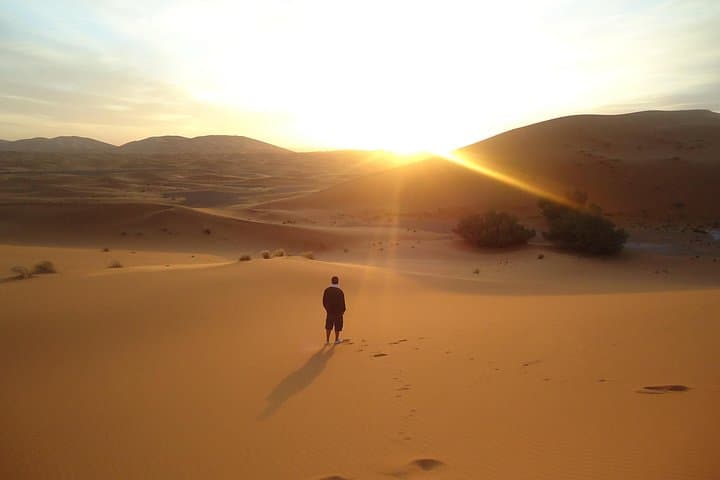

The morning opens on Jamaa el Fna—orange juice stalls, a driver waiting, and the city receding as the road climbs Tizi n'Tichka. The pass breathes cold air at about 2,260 m and the landscape changes from ochre olive terraces to ochre rock. By the afternoon the fortified ksar of Ait Ben Haddou hovers like a film set, its mud-brick ramparts catching late light before the journey pushes on toward the deep red of Todra and the silent sea of Erg Chebbi.
The morning opens on Jamaa el Fna—orange juice stalls, a driver waiting, and the city receding as the road climbs Tizi n'Tichka. The pass breathes cold air at about 2,260 m and the landscape changes from ochre olive terraces to ochre rock. By the afternoon the fortified ksar of Ait Ben Haddou hovers like a film set, its mud-brick ramparts catching late light before the journey pushes on toward the deep red of Todra and the silent sea of Erg Chebbi.
This route threads history, geology and culture: High Atlas switchbacks that shaped trans-Saharan trade routes; Ait Ben Haddou, a UNESCO ksar that doubled for epic movies; Todra Gorge’s 300-m limestone walls that draw climbers; and Merzouga’s dunes—mobile dunes of windblown sand where nomadic culture still meets modern camping.
Expect long driving segments (most days include several hours on paved mountain and desert roads), short guided walks in gorges and an evening camel trek into the dunes to reach a desert camp. Dune heights can reach over 100–150 m; sunrise and sunset are sharp and cold-to-hot transitions, so layers are crucial.
Practical guide: bring a wide-brim hat, sunscreen and 2–3 liters of water per person per day; wear closed-toe shoes for rocky stops and sandals for the camp; plan to wake before dawn for the best light and quieter sand; keep small bills for local vendors and tipping. The trip is accessible for most fit travelers but includes long drives and uneven terrain at stops—pack patience and a sense of adventure.