THE ADVENTURE COLLECTIVE® · Independent discovery and booking for outdoor travel

Cross the High Atlas, visit Ait Ben Haddou, then ride camels into the towering Erg Chebbi dunes for an overnight Berber camp. This three-day loop combines mountain passes, UNESCO kasbahs and a star-filled Sahara experience.
Cross the High Atlas, visit Ait Ben Haddou, then ride camels into the towering Erg Chebbi dunes for an overnight Berber camp. This three-day loop combines mountain passes, UNESCO kasbahs and a star-filled Sahara experience.
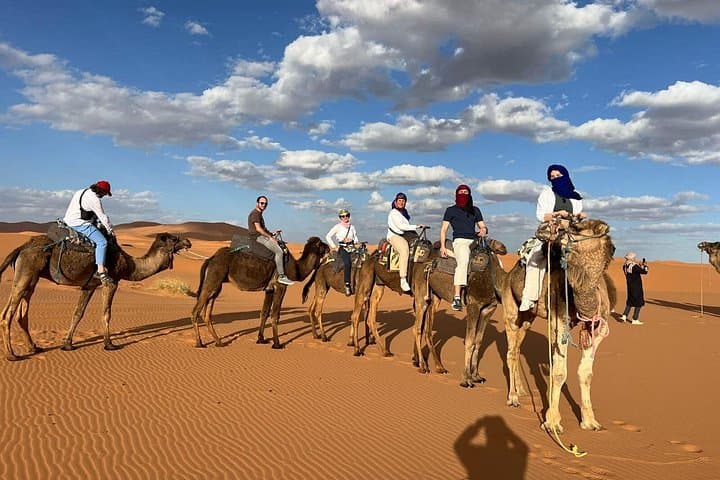
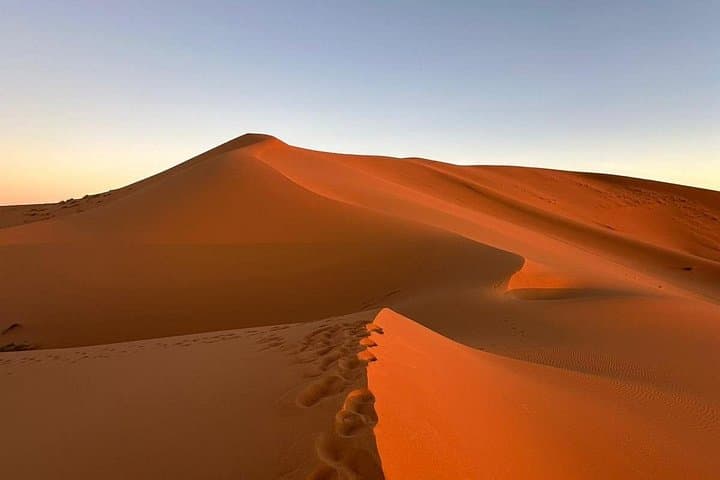
You arrive on the edge of Erg Chebbi as the sun tips the dunes into gold; camels sway, the wind writes new ridges in sand and a single lantern marks the camp where you'll sleep beneath an austere galaxy.
Verified experiences and guided adventures in the surrounding area.
Operated by Mgouna Travel Tours · Merzouga, Drâa-Tafilalet
You arrive on the edge of Erg Chebbi as the sun tips the dunes into gold; camels sway, the wind writes new ridges in sand and a single lantern marks the camp where you'll sleep beneath an austere galaxy.
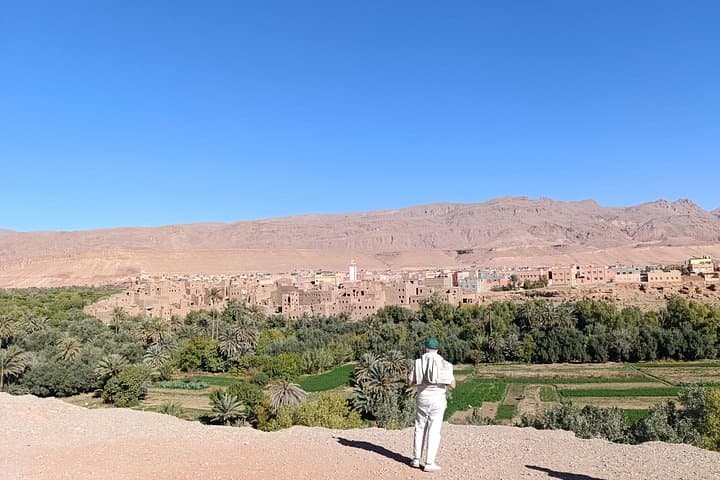
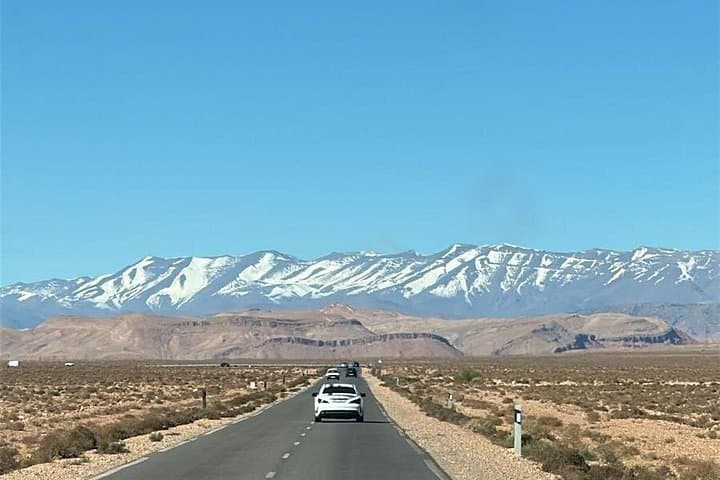
This three-day route stitches the High Atlas and Sahara into one trip: the Tizi n'Tichka pass (about 2,260 m) gives a mountain interlude before Ait Ben Haddou’s earthen kasbahs recall southern trade routes and Hollywood film crews. Geologically, the Erg Chebbi field is a sea of sand—dunes reach roughly 120–150 m—and sits near fossil-rich plateaus around Erfoud, evidence of an ancient seabed.
Culturally, expect Berber hospitality in kasbah guesthouses and a night of Gnawa rhythms at camp; Merzouga’s village life is small but centered on desert livelihoods—camel handling, fossil crafts and seasonal rose cultivation in the nearby Valley of the Roses.
Practical guidance: the tour is three days (roughly 72 hours) with long driving segments—Marrakech to Merzouga is commonly an 8–10 hour drive with stops. Camel transfers into camp typically cover 1–3 km across dunes; tents are usually shared in standard camps with upgrade options to private luxury tents. Sunrise and sunset are the best light and coolest windows for photography and sandboarding.
Pack sun protection, layers for cold desert nights, sturdy closed shoes for trekking dunes, and enough water; motion-sickness precautions help on twisty mountain passes. Respect fragile dune vegetation, avoid off-trail driving, and tip guides for cultural performances—small gestures sustain local livelihoods and preserve the experience for future visitors.
Camel rides into the dunes typically last 30–90 minutes depending on how far the camp is sited; most operators aim for sunset or sunrise transfers of 1–3 km.
Standard options are shared nomad-style tents with basic facilities; many tours offer upgrades to private luxury tents with en-suite amenities.
The itinerary is rated as suitable for most fitness levels, but long drives and camel transfers can be tiring—check mobility needs and discuss vehicle accessibility with the operator.
Visa and vaccination requirements vary by nationality—check official government guidance and consult a travel clinic for routine recommended vaccinations before travel.
Mgouna Travel Tours operates guided outdoor trips and adventures with an emphasis on safety, stewardship, and memorable experiences.
You arrive on the edge of Erg Chebbi as the sun tips the dunes into gold; camels sway, the wind writes new ridges in sand and a single lantern marks the camp where you'll sleep beneath an austere galaxy.
You arrive on the edge of Erg Chebbi as the sun tips the dunes into gold; camels sway, the wind writes new ridges in sand and a single lantern marks the camp where you'll sleep beneath an austere galaxy.
This three-day route stitches the High Atlas and Sahara into one trip: the Tizi n'Tichka pass (about 2,260 m) gives a mountain interlude before Ait Ben Haddou’s earthen kasbahs recall southern trade routes and Hollywood film crews. Geologically, the Erg Chebbi field is a sea of sand—dunes reach roughly 120–150 m—and sits near fossil-rich plateaus around Erfoud, evidence of an ancient seabed.
Culturally, expect Berber hospitality in kasbah guesthouses and a night of Gnawa rhythms at camp; Merzouga’s village life is small but centered on desert livelihoods—camel handling, fossil crafts and seasonal rose cultivation in the nearby Valley of the Roses.
Practical guidance: the tour is three days (roughly 72 hours) with long driving segments—Marrakech to Merzouga is commonly an 8–10 hour drive with stops. Camel transfers into camp typically cover 1–3 km across dunes; tents are usually shared in standard camps with upgrade options to private luxury tents. Sunrise and sunset are the best light and coolest windows for photography and sandboarding.
Pack sun protection, layers for cold desert nights, sturdy closed shoes for trekking dunes, and enough water; motion-sickness precautions help on twisty mountain passes. Respect fragile dune vegetation, avoid off-trail driving, and tip guides for cultural performances—small gestures sustain local livelihoods and preserve the experience for future visitors.