THE ADVENTURE COLLECTIVE® · Independent discovery and booking for outdoor travel

Cross the High Atlas, explore kasbahs and canyon walls, then sleep beneath star-studded desert skies on this concise three-day loop from Marrakech to Merzouga. Expect long drives, short hikes, and true Sahara silence.
Cross the High Atlas, explore kasbahs and canyon walls, then sleep beneath star-studded desert skies on this concise three-day loop from Marrakech to Merzouga. Expect long drives, short hikes, and true Sahara silence.
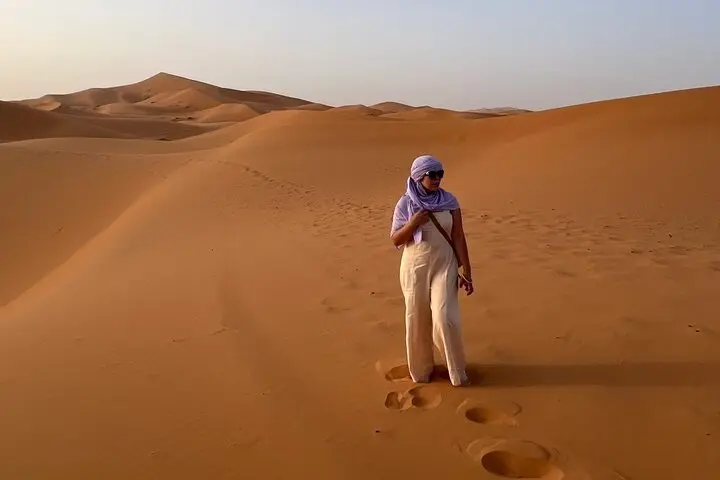
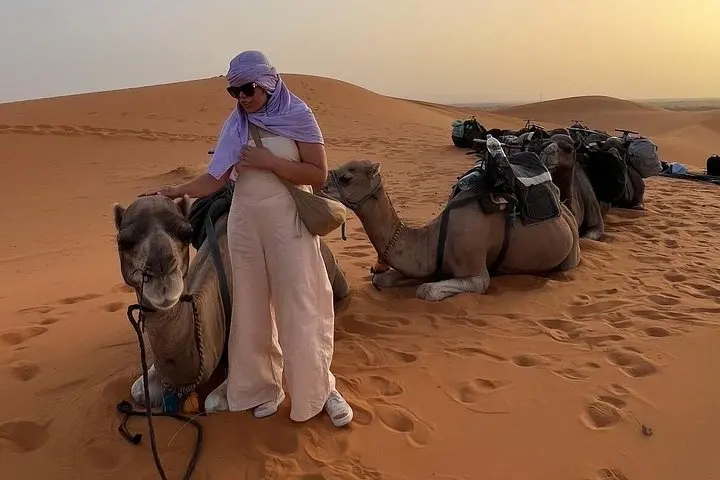
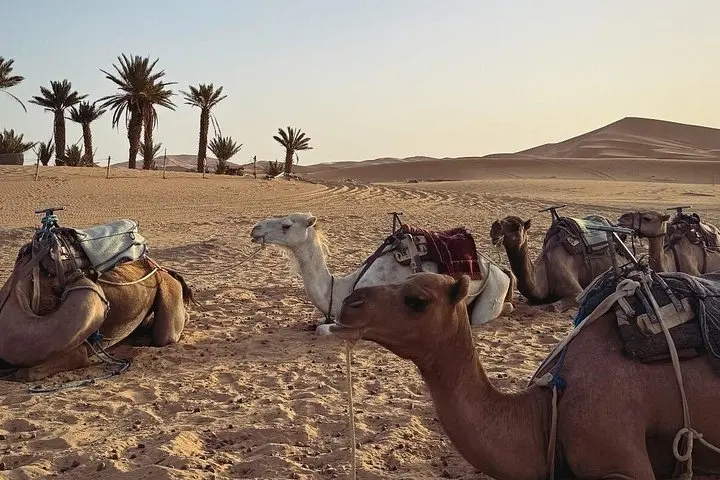
The sun drops low over a sea of orange sand as your camel’s slow rhythm marks the moment: you are crossing the horizon into the Sahara. This three-day loop from Marrakech moves from red city heat to snow-scratched Atlas passes and finally to the wide, wind-sculpted Erg Chebbi dunes, delivering a compact desert odyssey that balances long drives with concentrated time outdoors.
Verified experiences and guided adventures in the surrounding area.
Operated by Experimenta Marruecos · Merzouga, Drâa-Tafilalet
The sun drops low over a sea of orange sand as your camel’s slow rhythm marks the moment: you are crossing the horizon into the Sahara. This three-day loop from Marrakech moves from red city heat to snow-scratched Atlas passes and finally to the wide, wind-sculpted Erg Chebbi dunes, delivering a compact desert odyssey that balances long drives with concentrated time outdoors.
Geology and history are on constant display — the Tizi n’Tichka pass climbs to roughly 2,260 m, exposing folded Atlas ranges and ochre kasbahs. Aït Ben Haddou’s earthen ksar offers a living example of mud-brick architecture used for centuries and seen in countless films. Todra Gorge interrupts the route with vertical limestone walls that narrow to a canyon floor where palms and irrigation channels hint at ancient desert farming. Merzouga’s dunes rise in ridges up to ~150 m and shift with each wind, creating sunrise and sunset canvases unique to the Sahara.
Expect Berber hospitality in small villages, basic but comfortable desert camps, and nights under exceptional starfields. Practicalities matter: days include long highway portions punctuated by short walks and photo stops, so pack for temperature swings and dusty conditions. Bring layered clothing, reliable sun protection, closed-toe shoes for walking on hard desert surfaces, and at least 2–3 liters of water per day. Plan for early departures, limited cell reception across some stretches, and the sensory thrill of silence in the dunes — a reminder that this landscape shapes travelers as much as they visit it.
The trip is classified as moderate: most activity is sitting in the vehicle with brief, low-difficulty walks and a camel ride that requires basic balance but no technical skill.
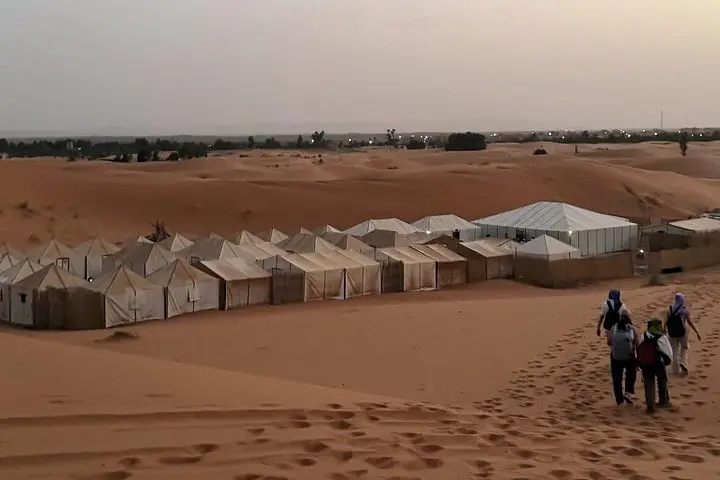
Camps are typically traditional-style tents with basic sleeping pads or beds, shared or private facilities depending on the operator; heating and amenities vary by camp level.
Families and older travelers can join, but those with spinal, heart, or pregnancy concerns should avoid the camel ride and long road sections; check with the operator for specific accessibility options.
Coverage is reliable in and near cities and larger towns, but becomes intermittent across the High Atlas and in remote desert stretches—plan accordingly for navigation and communication.
Experimenta Marruecos operates guided outdoor trips and adventures with an emphasis on safety, stewardship, and memorable experiences.
The sun drops low over a sea of orange sand as your camel’s slow rhythm marks the moment: you are crossing the horizon into the Sahara. This three-day loop from Marrakech moves from red city heat to snow-scratched Atlas passes and finally to the wide, wind-sculpted Erg Chebbi dunes, delivering a compact desert odyssey that balances long drives with concentrated time outdoors.
The sun drops low over a sea of orange sand as your camel’s slow rhythm marks the moment: you are crossing the horizon into the Sahara. This three-day loop from Marrakech moves from red city heat to snow-scratched Atlas passes and finally to the wide, wind-sculpted Erg Chebbi dunes, delivering a compact desert odyssey that balances long drives with concentrated time outdoors.
Geology and history are on constant display — the Tizi n’Tichka pass climbs to roughly 2,260 m, exposing folded Atlas ranges and ochre kasbahs. Aït Ben Haddou’s earthen ksar offers a living example of mud-brick architecture used for centuries and seen in countless films. Todra Gorge interrupts the route with vertical limestone walls that narrow to a canyon floor where palms and irrigation channels hint at ancient desert farming. Merzouga’s dunes rise in ridges up to ~150 m and shift with each wind, creating sunrise and sunset canvases unique to the Sahara.
Expect Berber hospitality in small villages, basic but comfortable desert camps, and nights under exceptional starfields. Practicalities matter: days include long highway portions punctuated by short walks and photo stops, so pack for temperature swings and dusty conditions. Bring layered clothing, reliable sun protection, closed-toe shoes for walking on hard desert surfaces, and at least 2–3 liters of water per day. Plan for early departures, limited cell reception across some stretches, and the sensory thrill of silence in the dunes — a reminder that this landscape shapes travelers as much as they visit it.