THE ADVENTURE COLLECTIVE® · Independent discovery and booking for outdoor travel

Cross the High Atlas, walk between Todra’s canyon walls and ride camels into Erg Chebbi for a night under the stars in a Berber camp. This three-day circuit blends geology, history and hands-on desert experience.
Cross the High Atlas, walk between Todra’s canyon walls and ride camels into Erg Chebbi for a night under the stars in a Berber camp. This three-day circuit blends geology, history and hands-on desert experience.
By mid-afternoon the road climbs out of Marrakech and the High Atlas begins to breathe: hairpin turns, olive terraces, and the air cooling as the pass approaches 2,260 m at Tizi n'Tichka. The minibus threads between red ochre villages, then spills onto the wide, sunlit plains beyond Ouarzazate.
Verified experiences and guided adventures in the surrounding area.
Operated by 3 days group tour from marrakech to merzouga · Merzouga, Drâa-Tafilalet
By mid-afternoon the road climbs out of Marrakech and the High Atlas begins to breathe: hairpin turns, olive terraces, and the air cooling as the pass approaches 2,260 m at Tizi n'Tichka. The minibus threads between red ochre villages, then spills onto the wide, sunlit plains beyond Ouarzazate.
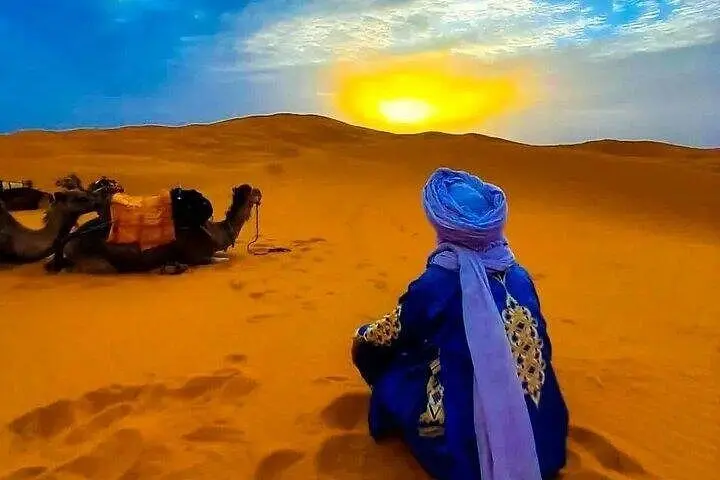
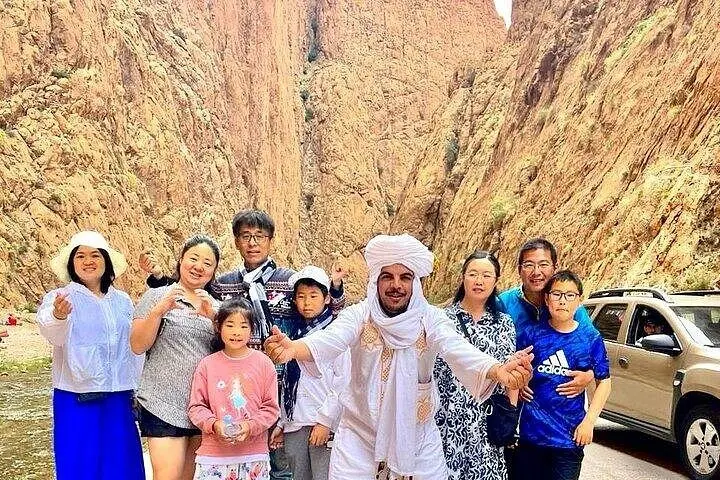
This three-day route stitches together Morocco’s geological story and human history: folded rock of the High Atlas from the African–Eurasian collision, the fortified ksar of Aït Ben Haddou (UNESCO) where caravan routes once paused, and the Todra Gorges — a river-carved cleft with canyon walls reaching roughly 300 m. The final shift is into sand: Erg Chebbi’s dunes rise 150–200 m, their ridgelines catching the light as the wind dares you to walk them.
Culturally the trip centers on Berber hospitality — night music, tagines, and tents pitched for a clear, cold desert sky. Expect basic but private tents at the standard camp and shared facilities; camel treks typically run 1–2 hours each way between village and camp.
Practical guidance: plan for long driving segments (four to eight hours on day one and three), paved mountain roads but sandy tracks near Merzouga, and wide temperature swings — hot afternoons, chilly nights. Bring 2–3 L water per day, layered clothing for pre-dawn rides, sturdy shoes for rocky walks, and cash for small purchases. Time your dune time for sunset or sunrise for the best light and calmer winds.
Yes — the tour includes two dinners and two breakfasts; tagine dinners are typical at the camp and valley accommodations.
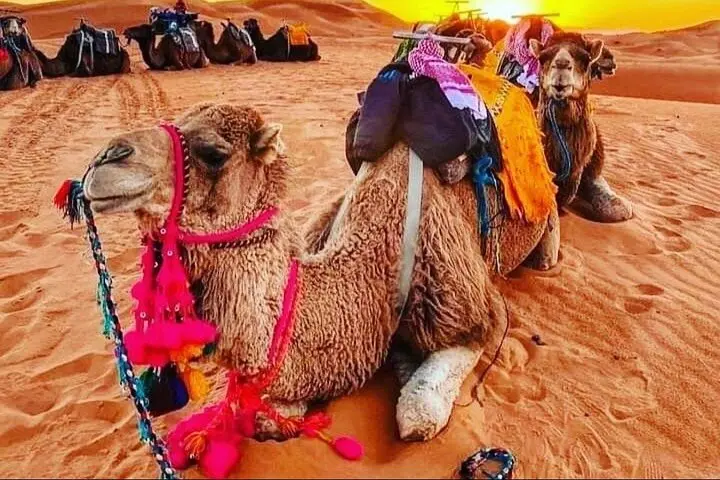
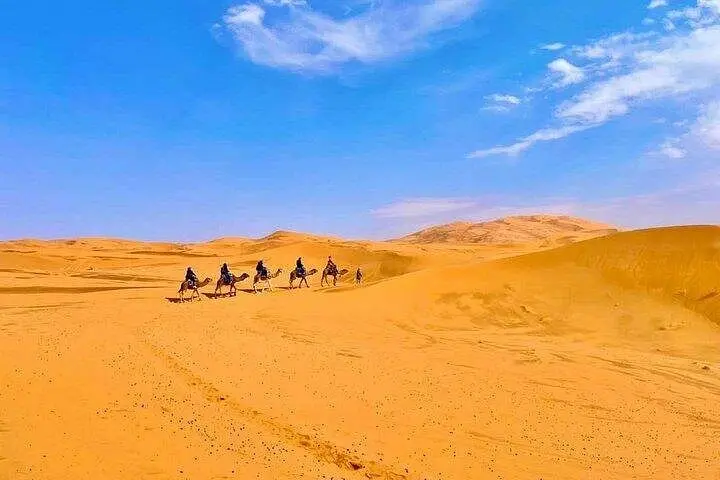
The camel trek into the dunes is usually 1–2 hours each way, timed for sunset and sunrise respectively.
No technical demands, but travelers should have moderate fitness to handle walks in Todra Gorge and mounting camels; expect long stretches in the vehicle.
Standard camps use private tents with shared bathroom facilities; tents are simple but insulated against night cold.
3 days group tour from marrakech to merzouga operates guided outdoor trips and adventures with an emphasis on safety, stewardship, and memorable experiences.
By mid-afternoon the road climbs out of Marrakech and the High Atlas begins to breathe: hairpin turns, olive terraces, and the air cooling as the pass approaches 2,260 m at Tizi n'Tichka. The minibus threads between red ochre villages, then spills onto the wide, sunlit plains beyond Ouarzazate.
By mid-afternoon the road climbs out of Marrakech and the High Atlas begins to breathe: hairpin turns, olive terraces, and the air cooling as the pass approaches 2,260 m at Tizi n'Tichka. The minibus threads between red ochre villages, then spills onto the wide, sunlit plains beyond Ouarzazate.
This three-day route stitches together Morocco’s geological story and human history: folded rock of the High Atlas from the African–Eurasian collision, the fortified ksar of Aït Ben Haddou (UNESCO) where caravan routes once paused, and the Todra Gorges — a river-carved cleft with canyon walls reaching roughly 300 m. The final shift is into sand: Erg Chebbi’s dunes rise 150–200 m, their ridgelines catching the light as the wind dares you to walk them.
Culturally the trip centers on Berber hospitality — night music, tagines, and tents pitched for a clear, cold desert sky. Expect basic but private tents at the standard camp and shared facilities; camel treks typically run 1–2 hours each way between village and camp.
Practical guidance: plan for long driving segments (four to eight hours on day one and three), paved mountain roads but sandy tracks near Merzouga, and wide temperature swings — hot afternoons, chilly nights. Bring 2–3 L water per day, layered clothing for pre-dawn rides, sturdy shoes for rocky walks, and cash for small purchases. Time your dune time for sunset or sunrise for the best light and calmer winds.