THE ADVENTURE COLLECTIVE® · Independent discovery and booking for outdoor travel

Cross the High Atlas to reach Erg Chebbi on this compact three-day loop from Marrakech. Ride camels at sunset, sleep in a Berber tent under the stars, and visit Ait Ben Haddou and Todra Gorge along the way.
Cross the High Atlas to reach Erg Chebbi on this compact three-day loop from Marrakech. Ride camels at sunset, sleep in a Berber tent under the stars, and visit Ait Ben Haddou and Todra Gorge along the way.
You step out of the van as the sun lowers and the dunes begin to breathe; wind sculpts ridgelines into liquid gold and the camels shift like slow, deliberate shadows. This three-day route threads Marrakech, the High Atlas, Ait Ben Haddou, the Todra Gorge, and finally the great sweep of Erg Chebbi at Merzouga — a compact cross-section of southern Morocco’s geography and culture.
Verified experiences and guided adventures in the surrounding area.
Operated by ALO MARRAKECH · Merzouga, Drâa-Tafilalet
You step out of the van as the sun lowers and the dunes begin to breathe; wind sculpts ridgelines into liquid gold and the camels shift like slow, deliberate shadows. This three-day route threads Marrakech, the High Atlas, Ait Ben Haddou, the Todra Gorge, and finally the great sweep of Erg Chebbi at Merzouga — a compact cross-section of southern Morocco’s geography and culture.
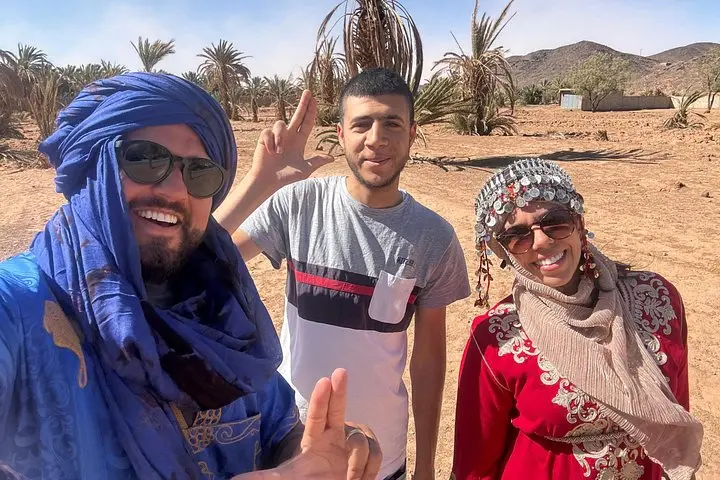
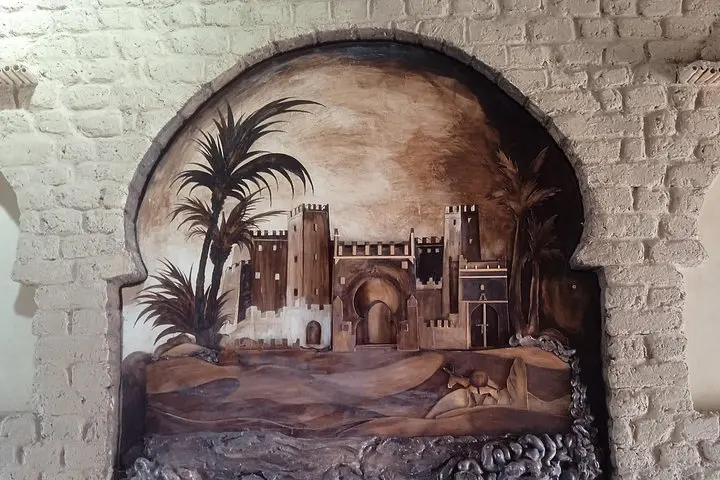
History sits in the walls here: Ait Ben Haddou marks ancient caravan routes between Sahara and Marrakech, built from sun-dried mudbrick that hardens into ochre fortifications. Geologically, the Atlas is a tectonic spine; erosion has fed the Tafilalet basin while wind and rare floods shape the dunes you’ll climb. Berber culture remains visible in villages, kasbahs, and music around the desert campfire.
Expect long paved and mountain-road drives punctuated by short walks: a canyon rim at Todra, a rooftop view at Ait Ben Haddou, and the slow, rhythmical pace of a camel trek (usually 60–90 minutes) to the camp. Nights are starkly bright — the desert clears city glare and the Milky Way feels close enough to touch. Be prepared for temperature swings and sand underfoot; light layers and closed shoes make moving up dunes easier.
Practically: main luggage stays at the hotel while a small overnight bag goes to camp; bring water, sun protection, and a headlamp. Sunrise and sunset on the dunes are the highlights — time your climbs for those windows. Guides handle navigation, camp setup, and local logistics; your role is to keep hydrated, respect local customs, and listen to the rhythm of the desert.
No special skill is required; camels are handled by local guides and the pace is slow — basic mounting instructions and support are provided.
Yes — tour operators typically keep main luggage at a hotel while you take a small overnight bag to the desert camp.
Camps use traditional Berber tents with sleeping pads or beds; amenities vary by operator but many provide blankets and communal dining with basic bathroom facilities.
Walking is limited to short village visits, a canyon walk at Todra, and dune climbs — nothing technical but expect uneven sand and rock underfoot.
ALO MARRAKECH operates guided outdoor trips and adventures with an emphasis on safety, stewardship, and memorable experiences.
You step out of the van as the sun lowers and the dunes begin to breathe; wind sculpts ridgelines into liquid gold and the camels shift like slow, deliberate shadows. This three-day route threads Marrakech, the High Atlas, Ait Ben Haddou, the Todra Gorge, and finally the great sweep of Erg Chebbi at Merzouga — a compact cross-section of southern Morocco’s geography and culture.
You step out of the van as the sun lowers and the dunes begin to breathe; wind sculpts ridgelines into liquid gold and the camels shift like slow, deliberate shadows. This three-day route threads Marrakech, the High Atlas, Ait Ben Haddou, the Todra Gorge, and finally the great sweep of Erg Chebbi at Merzouga — a compact cross-section of southern Morocco’s geography and culture.
History sits in the walls here: Ait Ben Haddou marks ancient caravan routes between Sahara and Marrakech, built from sun-dried mudbrick that hardens into ochre fortifications. Geologically, the Atlas is a tectonic spine; erosion has fed the Tafilalet basin while wind and rare floods shape the dunes you’ll climb. Berber culture remains visible in villages, kasbahs, and music around the desert campfire.
Expect long paved and mountain-road drives punctuated by short walks: a canyon rim at Todra, a rooftop view at Ait Ben Haddou, and the slow, rhythmical pace of a camel trek (usually 60–90 minutes) to the camp. Nights are starkly bright — the desert clears city glare and the Milky Way feels close enough to touch. Be prepared for temperature swings and sand underfoot; light layers and closed shoes make moving up dunes easier.
Practically: main luggage stays at the hotel while a small overnight bag goes to camp; bring water, sun protection, and a headlamp. Sunrise and sunset on the dunes are the highlights — time your climbs for those windows. Guides handle navigation, camp setup, and local logistics; your role is to keep hydrated, respect local customs, and listen to the rhythm of the desert.