THE ADVENTURE COLLECTIVE® · Independent discovery and booking for outdoor travel

Traverse the High Atlas, explore Ait Ben Haddou and Ouarzazate, then ride camels into Erg Chebbi for a night under the stars. This three-day circuit balances scenic drives with short hikes, cultural stops, and an authentic Berber desert camp.
Traverse the High Atlas, explore Ait Ben Haddou and Ouarzazate, then ride camels into Erg Chebbi for a night under the stars. This three-day circuit balances scenic drives with short hikes, cultural stops, and an authentic Berber desert camp.
You crest the Tizi n’Tichka pass and the atlas slopes give way to ochre plains; the road slides into palm groves and then the horizon reorganizes itself as sand. By late afternoon the Erg Chebbi dunes throw long shadows, and a caravan of camels outlines the ridge before the sun dips. The guide hands you a scarf; the wind rearranges the dunes like a restless painter.
Verified experiences and guided adventures in the surrounding area.
Operated by Visit Merzouga · Merzouga, Drâa-Tafilalet
You crest the Tizi n’Tichka pass and the atlas slopes give way to ochre plains; the road slides into palm groves and then the horizon reorganizes itself as sand. By late afternoon the Erg Chebbi dunes throw long shadows, and a caravan of camels outlines the ridge before the sun dips. The guide hands you a scarf; the wind rearranges the dunes like a restless painter.
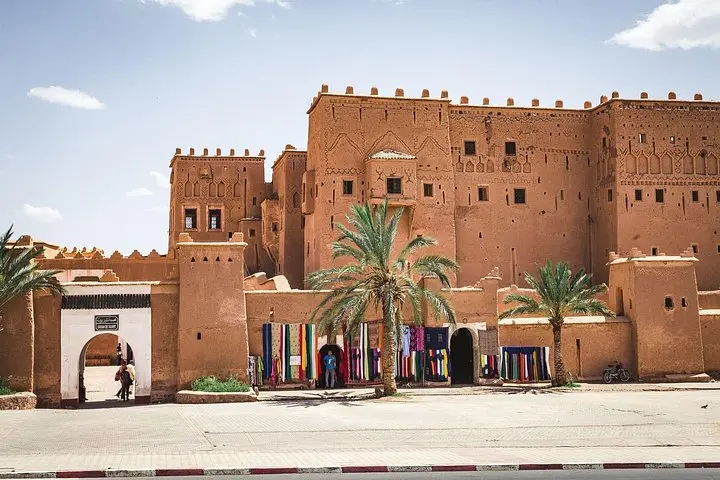
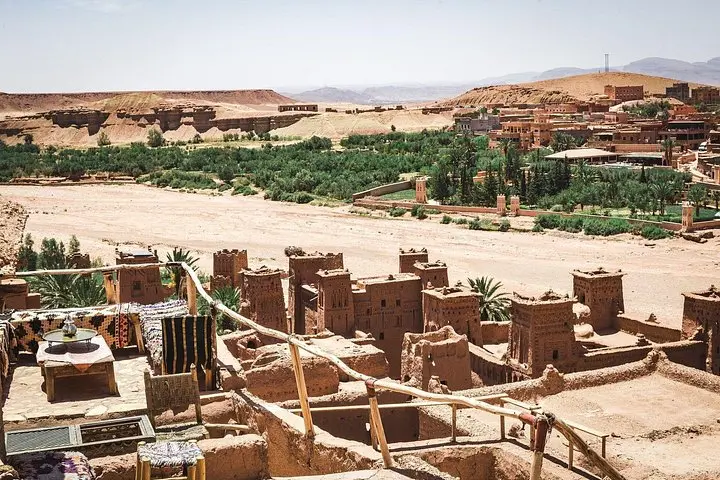
This three-day loop threads Marrakech, the High Atlas (Tizi n’Tichka, ~2,260 m), the UNESCO kasbah of Ait Ben Haddou, Ouarzazate’s studios, and the Tafilalet oasis before delivering you to Merzouga’s Erg Chebbi—dunes that reach roughly 100–150 m. The route follows ancient trans-Saharan corridors where Berber communities built kasbahs from rammed earth and palm trunks; caravan culture and film sets sit side-by-side in this rugged geography.
Expect long driving stretches (roughly 9–10 hours total one-way over mountainous roads and desert plains), short canyon walks in Dades and Todra, a one-hour camel trek at sunset, and an overnight in a traditional Berber tent under clear desert stars. Temperatures swing dramatically between day and night—sun beats down, nights can be cool—and wind can whip fine sand.
Practical notes: schedule sunrise or sunset for the best light on the dunes, bring layered clothing, carry at least 2 liters of water per person for day outings, and wear closed-toe shoes for sand and rocky stops. Be prepared for basic camp facilities and for long stretches in a vehicle; the trip rewards patience with wide, empty vistas and a raw, tactile sense of the Sahara.
Most operators offer about a one-hour camel trek to the camp—enough to reach a ridge for sunset but not for extensive exploration; hiking on foot is possible near camp.
No special fitness is required; camels are used for short, mostly seated rides. If you have serious back or mobility issues, discuss alternatives with the operator before booking.
Accommodation is typically in traditional Berber-style tents with mattresses and blankets; facilities vary from basic shared washrooms to more equipped private tents—confirm standards before travel.
Yes, but seasons differ—summer brings extreme heat, winter brings cold nights; spring and fall are the most comfortable for daytime activities and stargazing.
Visit Merzouga operates guided outdoor trips and adventures with an emphasis on safety, stewardship, and memorable experiences.
You crest the Tizi n’Tichka pass and the atlas slopes give way to ochre plains; the road slides into palm groves and then the horizon reorganizes itself as sand. By late afternoon the Erg Chebbi dunes throw long shadows, and a caravan of camels outlines the ridge before the sun dips. The guide hands you a scarf; the wind rearranges the dunes like a restless painter.
You crest the Tizi n’Tichka pass and the atlas slopes give way to ochre plains; the road slides into palm groves and then the horizon reorganizes itself as sand. By late afternoon the Erg Chebbi dunes throw long shadows, and a caravan of camels outlines the ridge before the sun dips. The guide hands you a scarf; the wind rearranges the dunes like a restless painter.
This three-day loop threads Marrakech, the High Atlas (Tizi n’Tichka, ~2,260 m), the UNESCO kasbah of Ait Ben Haddou, Ouarzazate’s studios, and the Tafilalet oasis before delivering you to Merzouga’s Erg Chebbi—dunes that reach roughly 100–150 m. The route follows ancient trans-Saharan corridors where Berber communities built kasbahs from rammed earth and palm trunks; caravan culture and film sets sit side-by-side in this rugged geography.
Expect long driving stretches (roughly 9–10 hours total one-way over mountainous roads and desert plains), short canyon walks in Dades and Todra, a one-hour camel trek at sunset, and an overnight in a traditional Berber tent under clear desert stars. Temperatures swing dramatically between day and night—sun beats down, nights can be cool—and wind can whip fine sand.
Practical notes: schedule sunrise or sunset for the best light on the dunes, bring layered clothing, carry at least 2 liters of water per person for day outings, and wear closed-toe shoes for sand and rocky stops. Be prepared for basic camp facilities and for long stretches in a vehicle; the trip rewards patience with wide, empty vistas and a raw, tactile sense of the Sahara.