THE ADVENTURE COLLECTIVE® · Independent discovery and booking for outdoor travel

Cross the High Atlas from Marrakech to Merzouga in three days, ride camels across Erg Chebbi, sleep in a Berber desert camp, and return via ancient kasbahs. This compact itinerary mixes geological spectacle with living Saharan culture.
Cross the High Atlas from Marrakech to Merzouga in three days, ride camels across Erg Chebbi, sleep in a Berber desert camp, and return via ancient kasbahs. This compact itinerary mixes geological spectacle with living Saharan culture.
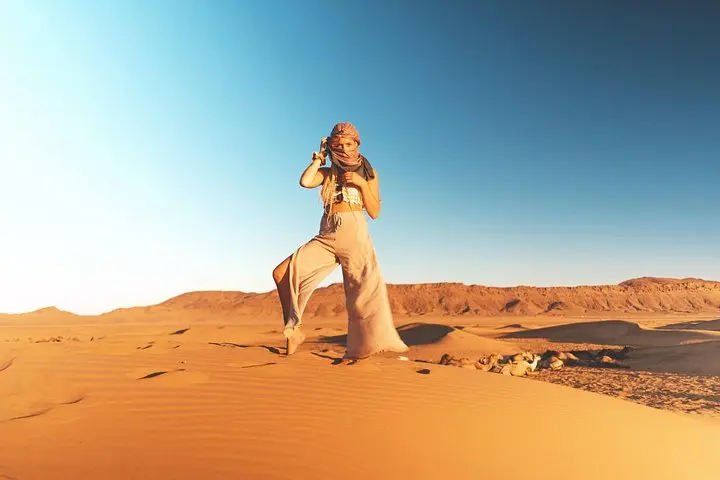
Before dawn the dunes breathe—gold rims the horizon, camels breathe slow and the wind redraws the crests. This three-day shared tour moves from Marrakech across the Tizi-n-Tichka pass, through ochre villages and the kasbahs of Ouarzazate, to Merzouga’s Erg Chebbi where you swap the car for camel steps and a night under Berber tents.
Verified experiences and guided adventures in the surrounding area.
Operated by Morocco Travel Desert · Merzouga, Drâa-Tafilalet
Before dawn the dunes breathe—gold rims the horizon, camels breathe slow and the wind redraws the crests. This three-day shared tour moves from Marrakech across the Tizi-n-Tichka pass, through ochre villages and the kasbahs of Ouarzazate, to Merzouga’s Erg Chebbi where you swap the car for camel steps and a night under Berber tents.
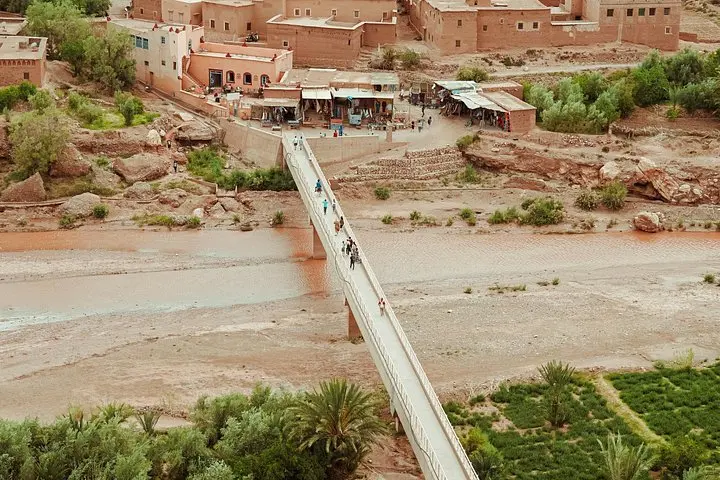
The route threads through centuries of trade and culture: Ait Ben Haddou (UNESCO) recalls caravan routes to Timbuktu, while Todra Gorge exposes layered limestone carved by water and time. Geologically, the High Atlas is young and rugged; farther east, Sahara sands are mobile, pushed by seasonal winds into the towering dunes that define Erg Chebbi.
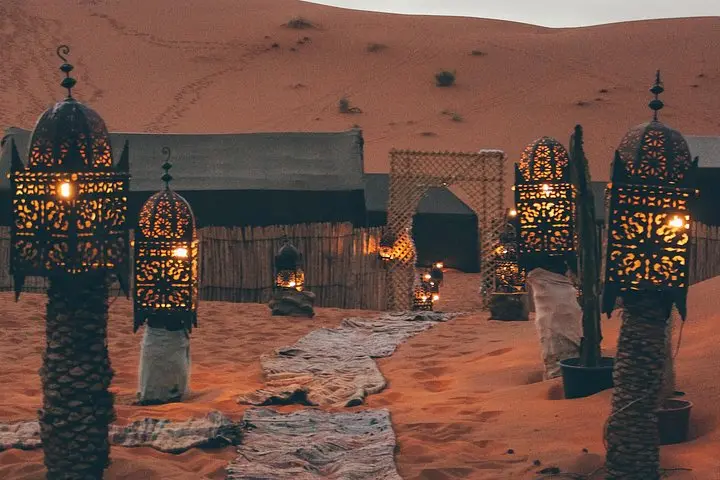
Locally, encounters are as much cultural as scenic—Berber music, tajine dinners, and small oasis towns where dates and caravan lore persist. Guides usually include a short dune hike and sand-boarding opportunity; camps are simple, with communal meals and drum gatherings.
Practical guidance: expect long driving days—plan for seated comfort and motion breaks. Pack sun protection, closed-toe shoes for walking dunes, a warm layer for desert nights, and a small overnight bag for the camp transfer. Hydrate frequently; desert air dries you faster than you think. Mobility needs are accommodated on request, but camel rides and uneven dune walks require basic mobility. Departure and return are typically to central Marrakech riads; confirm pickup and any dietary or accessibility requirements at booking.
This tour balances cultural stops and desert immersion—best for travelers wanting a compact, accessible Sahara experience without the logistics of self-driving.
Camel transfers typically cover 30–60 minutes between the hotel and camp; you’ll dismount to climb dune crests and return by camel the following morning.
The itinerary is offered as accessible for many ages, but camel rides and uneven dune walking may be difficult for those with limited mobility—confirm needs with the operator in advance.
Overnights include a hotel before/after the desert and a nomad-style tent camp with basic sleeping arrangements, communal meals, and simple facilities.
Breakfasts and dinners specified in the itinerary are included; bottled water is usually provided but bring extra if you prefer more between stops.
Morocco Travel Desert operates guided outdoor trips and adventures with an emphasis on safety, stewardship, and memorable experiences.
Before dawn the dunes breathe—gold rims the horizon, camels breathe slow and the wind redraws the crests. This three-day shared tour moves from Marrakech across the Tizi-n-Tichka pass, through ochre villages and the kasbahs of Ouarzazate, to Merzouga’s Erg Chebbi where you swap the car for camel steps and a night under Berber tents.
Before dawn the dunes breathe—gold rims the horizon, camels breathe slow and the wind redraws the crests. This three-day shared tour moves from Marrakech across the Tizi-n-Tichka pass, through ochre villages and the kasbahs of Ouarzazate, to Merzouga’s Erg Chebbi where you swap the car for camel steps and a night under Berber tents.
The route threads through centuries of trade and culture: Ait Ben Haddou (UNESCO) recalls caravan routes to Timbuktu, while Todra Gorge exposes layered limestone carved by water and time. Geologically, the High Atlas is young and rugged; farther east, Sahara sands are mobile, pushed by seasonal winds into the towering dunes that define Erg Chebbi.
Locally, encounters are as much cultural as scenic—Berber music, tajine dinners, and small oasis towns where dates and caravan lore persist. Guides usually include a short dune hike and sand-boarding opportunity; camps are simple, with communal meals and drum gatherings.
Practical guidance: expect long driving days—plan for seated comfort and motion breaks. Pack sun protection, closed-toe shoes for walking dunes, a warm layer for desert nights, and a small overnight bag for the camp transfer. Hydrate frequently; desert air dries you faster than you think. Mobility needs are accommodated on request, but camel rides and uneven dune walks require basic mobility. Departure and return are typically to central Marrakech riads; confirm pickup and any dietary or accessibility requirements at booking.
This tour balances cultural stops and desert immersion—best for travelers wanting a compact, accessible Sahara experience without the logistics of self-driving.