THE ADVENTURE COLLECTIVE® · Independent discovery and booking for outdoor travel

A three-day circuit from Marrakech across the High Atlas to Erg Chebbi, this trip pairs scenic road passages and UNESCO heritage at Ait Ben Haddou with an hour-long camel trek and an overnight in a Berber or luxury desert camp. Expect long drives, dramatic dunes, and a sunrise worth the early wake-up.
A three-day circuit from Marrakech across the High Atlas to Erg Chebbi, this trip pairs scenic road passages and UNESCO heritage at Ait Ben Haddou with an hour-long camel trek and an overnight in a Berber or luxury desert camp. Expect long drives, dramatic dunes, and a sunrise worth the early wake-up.
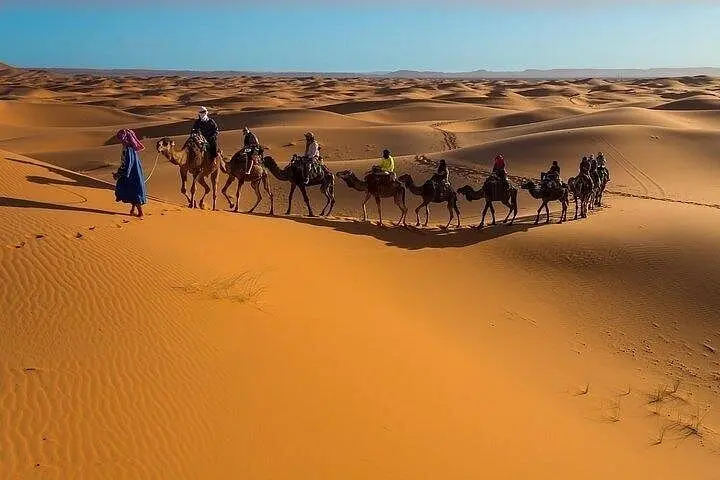
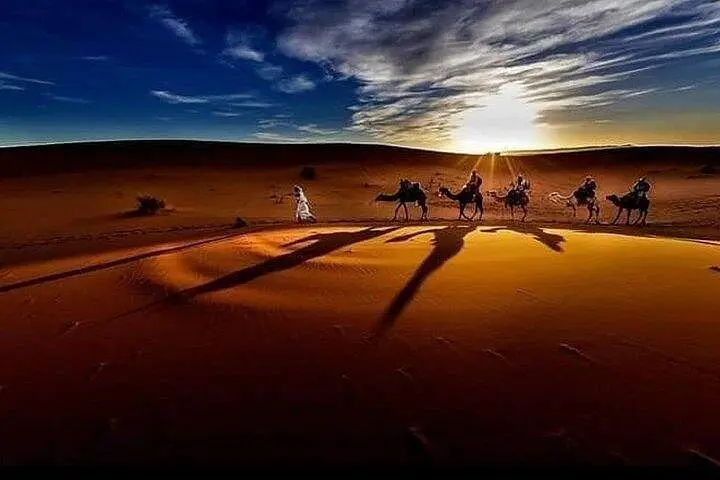
A curve of asphalt releases Marrakech behind you and the world opens into ochre: High Atlas slopes give way to a long, sun-bleached route that pushes toward Erg Chebbi’s tallest dunes. By late afternoon the wind writes ripples across the sand and camels wait at the edge of the desert, their silhouettes steady against a spreading sunset.
Verified experiences and guided adventures in the surrounding area.
Operated by Desertbrise Travel · Merzouga, Drâa-Tafilalet
A curve of asphalt releases Marrakech behind you and the world opens into ochre: High Atlas slopes give way to a long, sun-bleached route that pushes toward Erg Chebbi’s tallest dunes. By late afternoon the wind writes ripples across the sand and camels wait at the edge of the desert, their silhouettes steady against a spreading sunset.
This three-day tour moves through layered landscapes and layered history — crossing Tizi n’Tichka (about 2,260 m) into the old caravan corridors that linked sub-Saharan trade routes to Moroccan cities. Ait Ben Haddou, a UNESCO ksar of earthen kasbahs, shows how local adobe and river valleys shaped settlement patterns, while the Dades and Todra gorges reveal the Atlas’s folded geology and dramatic canyon walls carved by seasonal rivers.
Culture here is hands-on: Berber hospitality, shared mint tea, and campfire gnawa music after dinner. Geologically the Erg Chebbi dunes are mobile sand seas, some ridges standing over 100 meters high; the desert’s starkness forces focus and slow movement, whether on foot or camel.
Practical guide: expect long driving days (Marrakech–Merzouga is roughly a 9–10 hour drive), a camel trek of about an hour to camp, and both hot daytime heat and cold desert nights. Pack sun protection, layered clothing, sturdy shoes, and 2–3 liters of water per person for daytime excursions. Aim to arrive at dunes for sunset and rise early for sunrise — both are the most revealing hours for light and temperature. Respect local rules about photography, and follow Leave No Trace practices around camps and dunes.
The camel trek to the camp is typically around 45–60 minutes, timed to reach the camp near sunset; luggage is transported separately by 4x4.
Options range from basic Berber tents with mattresses to upgraded ‘luxury’ camps with private facilities — confirm the chosen camp level when booking.
Yes — pickup is usually arranged from your riad or accommodation in Marrakech at the scheduled start time (often around 08:00).
The itinerary notes accessibility for varying fitness levels, but mounting a camel and walking on sand require some mobility; discuss special needs with the operator before booking.
Desertbrise Travel operates guided outdoor trips and adventures with an emphasis on safety, stewardship, and memorable experiences.
A curve of asphalt releases Marrakech behind you and the world opens into ochre: High Atlas slopes give way to a long, sun-bleached route that pushes toward Erg Chebbi’s tallest dunes. By late afternoon the wind writes ripples across the sand and camels wait at the edge of the desert, their silhouettes steady against a spreading sunset.
A curve of asphalt releases Marrakech behind you and the world opens into ochre: High Atlas slopes give way to a long, sun-bleached route that pushes toward Erg Chebbi’s tallest dunes. By late afternoon the wind writes ripples across the sand and camels wait at the edge of the desert, their silhouettes steady against a spreading sunset.
This three-day tour moves through layered landscapes and layered history — crossing Tizi n’Tichka (about 2,260 m) into the old caravan corridors that linked sub-Saharan trade routes to Moroccan cities. Ait Ben Haddou, a UNESCO ksar of earthen kasbahs, shows how local adobe and river valleys shaped settlement patterns, while the Dades and Todra gorges reveal the Atlas’s folded geology and dramatic canyon walls carved by seasonal rivers.
Culture here is hands-on: Berber hospitality, shared mint tea, and campfire gnawa music after dinner. Geologically the Erg Chebbi dunes are mobile sand seas, some ridges standing over 100 meters high; the desert’s starkness forces focus and slow movement, whether on foot or camel.
Practical guide: expect long driving days (Marrakech–Merzouga is roughly a 9–10 hour drive), a camel trek of about an hour to camp, and both hot daytime heat and cold desert nights. Pack sun protection, layered clothing, sturdy shoes, and 2–3 liters of water per person for daytime excursions. Aim to arrive at dunes for sunset and rise early for sunrise — both are the most revealing hours for light and temperature. Respect local rules about photography, and follow Leave No Trace practices around camps and dunes.