THE ADVENTURE COLLECTIVE® · Independent discovery and booking for outdoor travel

Travel from Marrakech over the High Atlas to Erg Chebbi for a compact, three-day immersion into Sahara landscapes, Berber culture, and desert nights under vivid stars. Expect kasbah-studded valleys, camel treks at sunset, and a luxury desert-camp stay.
Travel from Marrakech over the High Atlas to Erg Chebbi for a compact, three-day immersion into Sahara landscapes, Berber culture, and desert nights under vivid stars. Expect kasbah-studded valleys, camel treks at sunset, and a luxury desert-camp stay.
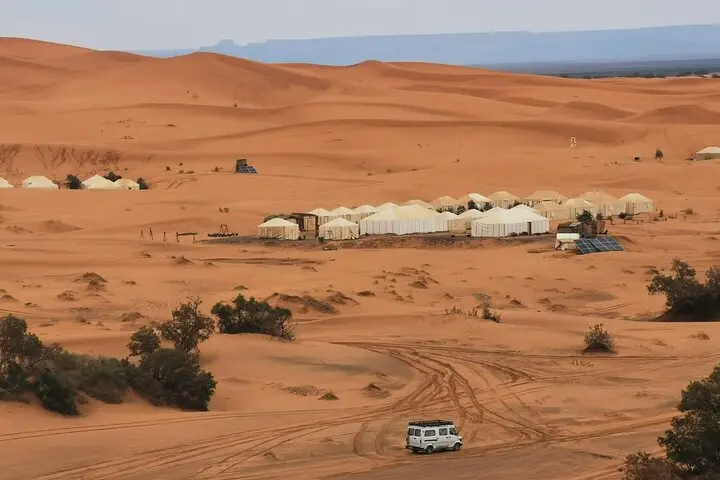
A low, warm light slides across the crests of Erg Chebbi as your camel pads through powder-gold sand — the dunes tilt and breathe around you, urging you forward. The first day begins on asphalt climbs above the High Atlas, where red-earth kasbahs perch like old libraries watching the road. By evening you'll exchange mountain vistas for vast desert sky, with campfire smells and the steady cadence of camel steps setting a slower pace.
Verified experiences and guided adventures in the surrounding area.
Operated by Morocco Expedition · Merzouga, Errachidia Province
A low, warm light slides across the crests of Erg Chebbi as your camel pads through powder-gold sand — the dunes tilt and breathe around you, urging you forward. The first day begins on asphalt climbs above the High Atlas, where red-earth kasbahs perch like old libraries watching the road. By evening you'll exchange mountain vistas for vast desert sky, with campfire smells and the steady cadence of camel steps setting a slower pace.
This route follows ancient caravan corridors: Aït Ben Haddou’s mudbrick citadel and Ouarzazate’s film studios recall trade, film crews, and centuries of cultural exchange. Geologically, you move from folded atlas schist to saharan dune fields formed by wind harvesting sand from dried riverbeds; the Draa Valley below shows the green ribbon left by seasonal rivers.
Local life is tangible — Berber hospitality, shared tagines, and fossil workshops in Erfoud that expose the region’s deep marine past. Conservation here matters: dunes are fragile, water is scarce, and camps often run on limited resources.
Practical guidance: pack layered clothing for sharp diurnal swings, a brimmed hat for relentless sun, and a small daypack for camera, water (min 1.5 L/day), and wind protection for evening rides. Camel treks are gentle but expect sandy footing and basic tent accommodations in quality desert camps. Timing matters: sunrise and sunset over Erg Chebbi are the real highlights and are best seen from dune ridges; plan early starts for photography and cooler walking. With a mix of comfort and rough-edged landscape, this three-day loop is more than a transfer — it’s a compact immersion into Sahara life and geology.
No — camel treks included are usually short and guided; handlers lead animals and brief you on mounting and dismounting.
Most tours stop in well-maintained desert camps offering private or shared tents, mattresses, blankets, and basic wash facilities; confirm luxury vs standard when booking.
Large luggage is transported by 4x4 to the camp; only a light daypack or small bag is recommended for the camel ride itself.
Expect several hours of scenic driving between stops (High Atlas passes, kasbahs, and desert edges) broken by short guided visits and meals; total travel is spread across three days.
Morocco Expedition operates guided outdoor trips and adventures with an emphasis on safety, stewardship, and memorable experiences.
A low, warm light slides across the crests of Erg Chebbi as your camel pads through powder-gold sand — the dunes tilt and breathe around you, urging you forward. The first day begins on asphalt climbs above the High Atlas, where red-earth kasbahs perch like old libraries watching the road. By evening you'll exchange mountain vistas for vast desert sky, with campfire smells and the steady cadence of camel steps setting a slower pace.
A low, warm light slides across the crests of Erg Chebbi as your camel pads through powder-gold sand — the dunes tilt and breathe around you, urging you forward. The first day begins on asphalt climbs above the High Atlas, where red-earth kasbahs perch like old libraries watching the road. By evening you'll exchange mountain vistas for vast desert sky, with campfire smells and the steady cadence of camel steps setting a slower pace.
This route follows ancient caravan corridors: Aït Ben Haddou’s mudbrick citadel and Ouarzazate’s film studios recall trade, film crews, and centuries of cultural exchange. Geologically, you move from folded atlas schist to saharan dune fields formed by wind harvesting sand from dried riverbeds; the Draa Valley below shows the green ribbon left by seasonal rivers.
Local life is tangible — Berber hospitality, shared tagines, and fossil workshops in Erfoud that expose the region’s deep marine past. Conservation here matters: dunes are fragile, water is scarce, and camps often run on limited resources.
Practical guidance: pack layered clothing for sharp diurnal swings, a brimmed hat for relentless sun, and a small daypack for camera, water (min 1.5 L/day), and wind protection for evening rides. Camel treks are gentle but expect sandy footing and basic tent accommodations in quality desert camps. Timing matters: sunrise and sunset over Erg Chebbi are the real highlights and are best seen from dune ridges; plan early starts for photography and cooler walking. With a mix of comfort and rough-edged landscape, this three-day loop is more than a transfer — it’s a compact immersion into Sahara life and geology.