THE ADVENTURE COLLECTIVE® · Independent discovery and booking for outdoor travel

Drive the High Atlas, walk ancient kasbahs, and sleep beneath stars on the Erg Chebbi dunes. This three-day Marrakech to Merzouga itinerary pairs cinematic landscapes with practical advice for first-time Sahara travelers.
Drive the High Atlas, walk ancient kasbahs, and sleep beneath stars on the Erg Chebbi dunes. This three-day Marrakech to Merzouga itinerary pairs cinematic landscapes with practical advice for first-time Sahara travelers.
You step out of the minibus as the High Atlas exhales—you can feel the pass open and the road drop toward palm-lined valleys. Tizi n'Tichka looms at roughly 2,260 m; its switchbacks give way to ochre kasbahs, then to the ribbon of the Draa valley and finally to the wind-sculpted ridges of Erg Chebbi. The dunes don't wait; they dare you up their faces at sunset and offer a quiet that makes phones blur into white noise.
Verified experiences and guided adventures in the surrounding area.
Operated by Star Morocco Tours · Merzouga, Drâa-Tafilalet
You step out of the minibus as the High Atlas exhales—you can feel the pass open and the road drop toward palm-lined valleys. Tizi n'Tichka looms at roughly 2,260 m; its switchbacks give way to ochre kasbahs, then to the ribbon of the Draa valley and finally to the wind-sculpted ridges of Erg Chebbi. The dunes don't wait; they dare you up their faces at sunset and offer a quiet that makes phones blur into white noise.
This route stitches together caravan history and geology: mud-brick ksars like Ait Benhaddou mark old trans-Saharan trade routes, Todra Gorge cuts narrow and towering—cliffs near 300 m—through limestone, and Merzouga's dunes (up to ~150 m high) are living sand seas formed by Atlas winds. Local culture is Berber-rooted; camps and small towns trade rose-water, dates, and tales of nomadic life.
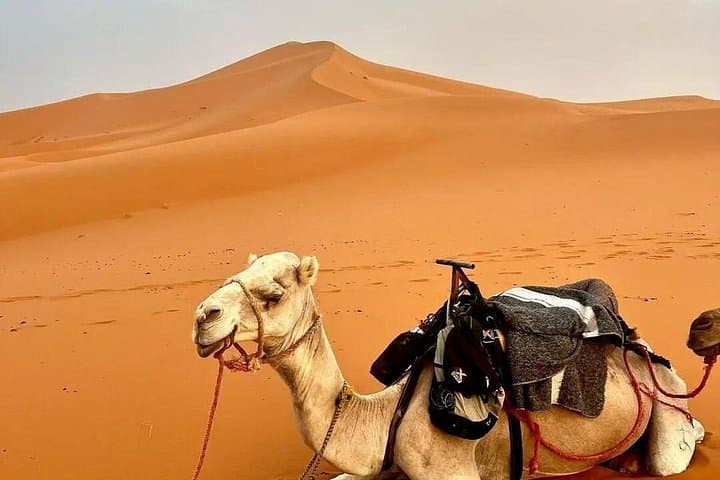
Practical guidance: expect long driving legs—Marrakech to Merzouga is roughly 560 km with several 4–8 hour stretches across days—so plan for motion comfort, early starts, and frequent stops. Wear sturdy walking shoes for canyon walks and sand-appropriate footwear for dunes. Hydrate aggressively: daytime desert temps can spike, while nights in the camp are cool. Camel treks typically last 45–90 minutes at sunrise or sunset; sandboarding is optional and weather dependent. Carry cash for small purchases and tips, and bring a lightweight layer for chilly desert mornings.
This three-day arc balances scenic drives, short hikes, cultural stops, and overnight desert camping—an accessible introduction to Morocco's dramatic south.
Expect multi-hour drives: day 1 and day 3 include long transfers through the High Atlas (4–8 hours with stops), while day 2 has shorter scenic drives with time for gorges and the desert approach.
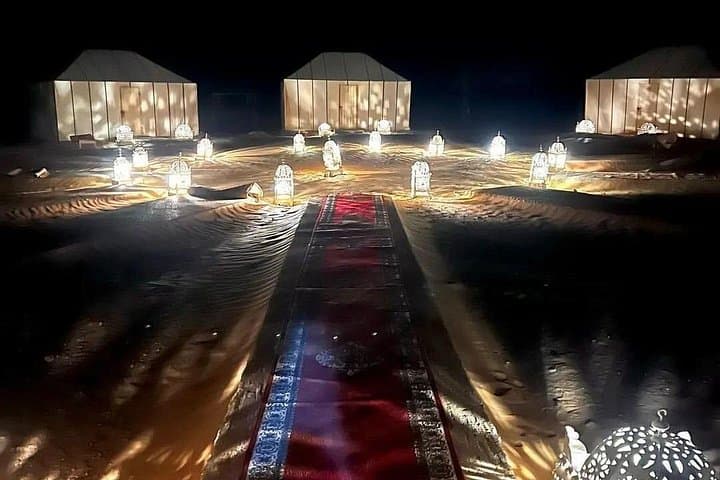
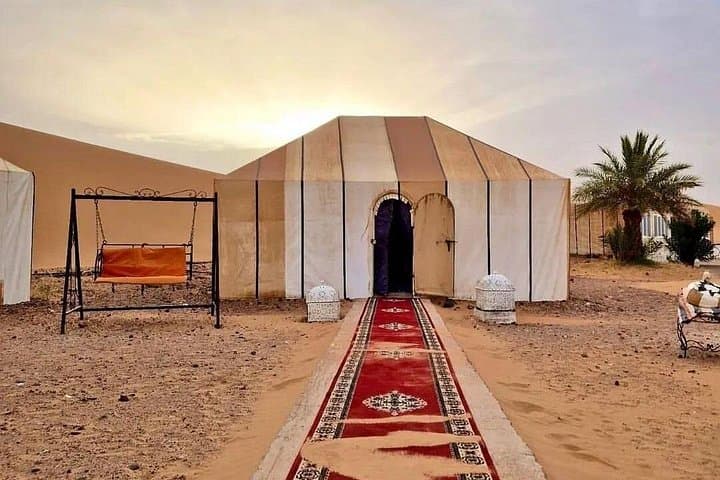
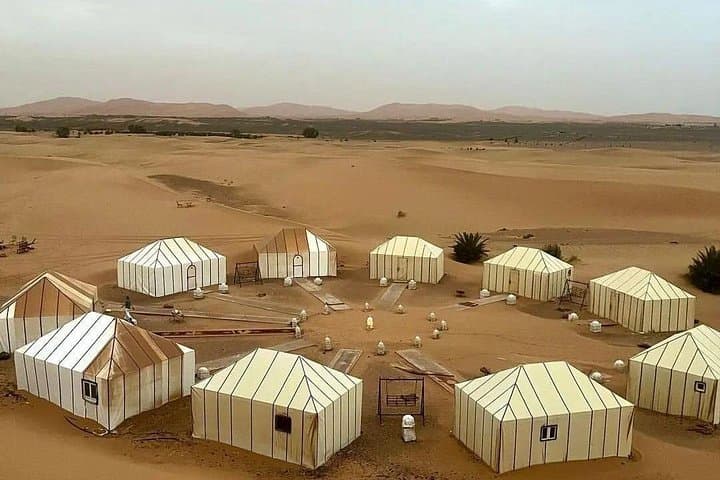
Camps typically offer basic private tents, mattresses, communal dining, and shared wash facilities; some camps have hot-water options and simple showers after the sunrise return.
No technical skill is required—camel rides are guided, usually 45–90 minutes; however, mount/dismount can be sudden, so mobility is helpful.
Operators usually accept dietary requests if notified in advance; the tour notes wheelchair-accessible transport but terrain at camps and gorges may limit full accessibility—ask ahead for specifics.
Star Morocco Tours operates guided outdoor trips and adventures with an emphasis on safety, stewardship, and memorable experiences.
You step out of the minibus as the High Atlas exhales—you can feel the pass open and the road drop toward palm-lined valleys. Tizi n'Tichka looms at roughly 2,260 m; its switchbacks give way to ochre kasbahs, then to the ribbon of the Draa valley and finally to the wind-sculpted ridges of Erg Chebbi. The dunes don't wait; they dare you up their faces at sunset and offer a quiet that makes phones blur into white noise.
You step out of the minibus as the High Atlas exhales—you can feel the pass open and the road drop toward palm-lined valleys. Tizi n'Tichka looms at roughly 2,260 m; its switchbacks give way to ochre kasbahs, then to the ribbon of the Draa valley and finally to the wind-sculpted ridges of Erg Chebbi. The dunes don't wait; they dare you up their faces at sunset and offer a quiet that makes phones blur into white noise.
This route stitches together caravan history and geology: mud-brick ksars like Ait Benhaddou mark old trans-Saharan trade routes, Todra Gorge cuts narrow and towering—cliffs near 300 m—through limestone, and Merzouga's dunes (up to ~150 m high) are living sand seas formed by Atlas winds. Local culture is Berber-rooted; camps and small towns trade rose-water, dates, and tales of nomadic life.
Practical guidance: expect long driving legs—Marrakech to Merzouga is roughly 560 km with several 4–8 hour stretches across days—so plan for motion comfort, early starts, and frequent stops. Wear sturdy walking shoes for canyon walks and sand-appropriate footwear for dunes. Hydrate aggressively: daytime desert temps can spike, while nights in the camp are cool. Camel treks typically last 45–90 minutes at sunrise or sunset; sandboarding is optional and weather dependent. Carry cash for small purchases and tips, and bring a lightweight layer for chilly desert mornings.
This three-day arc balances scenic drives, short hikes, cultural stops, and overnight desert camping—an accessible introduction to Morocco's dramatic south.