THE ADVENTURE COLLECTIVE® · Independent discovery and booking for outdoor travel

Cross the High Atlas and sleep beneath a sky of unfamiliar stars on this three-day journey from Marrakech to Erg Chebbi. Expect winding mountain passes, Todra’s canyon hikes, and a dusk camel ride to a luxury Berber camp for dinner and sunrise over the dunes.
Cross the High Atlas and sleep beneath a sky of unfamiliar stars on this three-day journey from Marrakech to Erg Chebbi. Expect winding mountain passes, Todra’s canyon hikes, and a dusk camel ride to a luxury Berber camp for dinner and sunrise over the dunes.
The sun slides up behind a wall of sand and the silhouettes of camels carve slow lines across Erg Chebbi—an early moment every traveler remembers on the road from Marrakech. This three-day loop climbs over the Tizi n’Tichka pass, threads through High Atlas villages, and trades red clay kasbahs for the soft, shifting slopes of the Sahara.
Verified experiences and guided adventures in the surrounding area.
Operated by Omar Adventures · Merzouga, Marrakesh-Safi
The sun slides up behind a wall of sand and the silhouettes of camels carve slow lines across Erg Chebbi—an early moment every traveler remembers on the road from Marrakech. This three-day loop climbs over the Tizi n’Tichka pass, threads through High Atlas villages, and trades red clay kasbahs for the soft, shifting slopes of the Sahara.
Geology and history anchor the route: the High Atlas lifts to 2,200 m at Tizi n’Tichka, while the limestone gorge walls of Todra have been cut by water over millennia. Ait Ben Haddou, a UNESCO ksar on the caravan trail, shows the mud-brick architecture and trade history that shaped southern Morocco. Local Berber communities still tend terraces and rose fields in the Dades Valley; fossil-rich towns like Erfoud speak to an ancient seabed now home to dunes that reach roughly 100–150 m high.
Expect long, scenic drives (Marrakech–Merzouga is roughly 8–10 hours with stops), short hikes in oases and gorges, and a one-hour-plus camel ride across Erg Chebbi at dusk. Nights range from comfortable riad rooms to a luxury Berber camp with dinner and a bonfire under truly dark skies; mornings deliver dramatic sunrises over the dunes.
Practical guidance: bring layered clothing (hot days, cold nights), reliable sun protection, and a reusable water bottle. Footwear should handle sand and rocky gorges—light hikers or trail shoes work best. Travel with a small group (up to about 12) and an English/French driver-guide; physical demands are moderate but manageable for most travelers who can walk short dune slopes and climb stairs in kasbahs. Time your camera for golden hour and let the desert’s quiet pull the pace slow.
The typical camel ride is more than one hour to reach the Berber camp, timed to arrive before sunset; handlers assist mounting and dismounting.
The tour normally starts and ends in Marrakech with hotel or riad pickup and drop-off; exact pickup points are confirmed after booking.
The tour is marketed as suitable for all fitness levels, but camel rides and dune walking require basic mobility; pregnant travelers are not recommended to participate.
Accommodation includes a luxury-style Berber camp with private or shared tents, dinner and breakfast provided, but expect simple desert amenities and colder nights.
Omar Adventures operates guided outdoor trips and adventures with an emphasis on safety, stewardship, and memorable experiences.
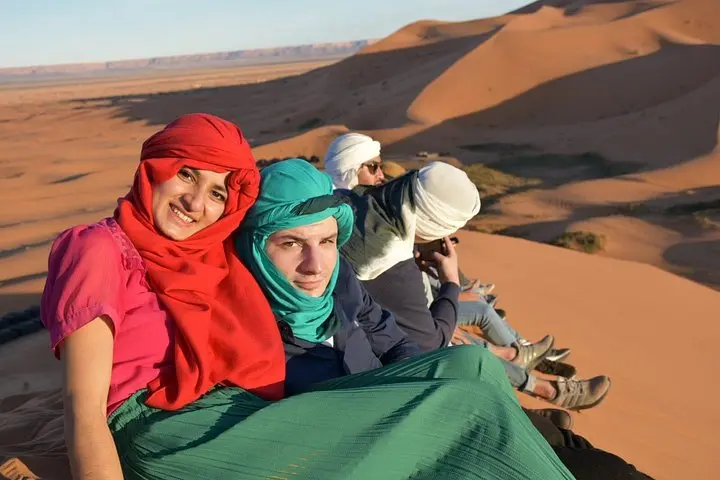
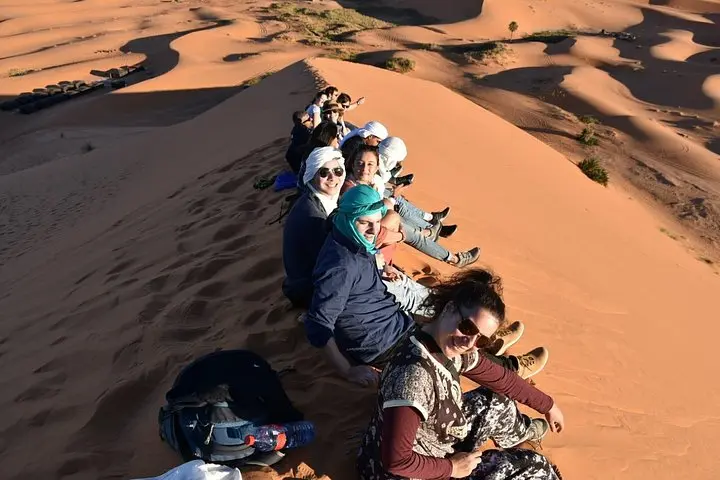
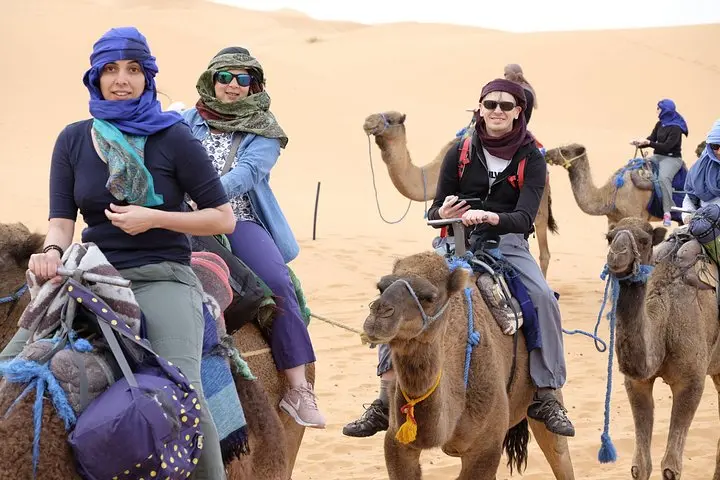
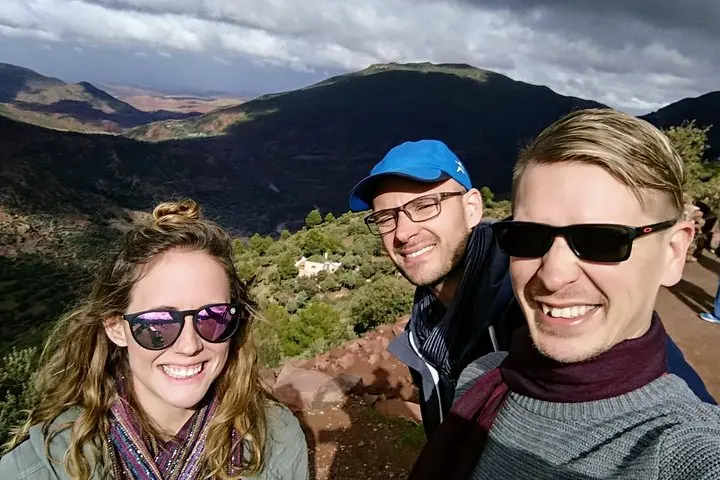
The sun slides up behind a wall of sand and the silhouettes of camels carve slow lines across Erg Chebbi—an early moment every traveler remembers on the road from Marrakech. This three-day loop climbs over the Tizi n’Tichka pass, threads through High Atlas villages, and trades red clay kasbahs for the soft, shifting slopes of the Sahara.
The sun slides up behind a wall of sand and the silhouettes of camels carve slow lines across Erg Chebbi—an early moment every traveler remembers on the road from Marrakech. This three-day loop climbs over the Tizi n’Tichka pass, threads through High Atlas villages, and trades red clay kasbahs for the soft, shifting slopes of the Sahara.
Geology and history anchor the route: the High Atlas lifts to 2,200 m at Tizi n’Tichka, while the limestone gorge walls of Todra have been cut by water over millennia. Ait Ben Haddou, a UNESCO ksar on the caravan trail, shows the mud-brick architecture and trade history that shaped southern Morocco. Local Berber communities still tend terraces and rose fields in the Dades Valley; fossil-rich towns like Erfoud speak to an ancient seabed now home to dunes that reach roughly 100–150 m high.
Expect long, scenic drives (Marrakech–Merzouga is roughly 8–10 hours with stops), short hikes in oases and gorges, and a one-hour-plus camel ride across Erg Chebbi at dusk. Nights range from comfortable riad rooms to a luxury Berber camp with dinner and a bonfire under truly dark skies; mornings deliver dramatic sunrises over the dunes.
Practical guidance: bring layered clothing (hot days, cold nights), reliable sun protection, and a reusable water bottle. Footwear should handle sand and rocky gorges—light hikers or trail shoes work best. Travel with a small group (up to about 12) and an English/French driver-guide; physical demands are moderate but manageable for most travelers who can walk short dune slopes and climb stairs in kasbahs. Time your camera for golden hour and let the desert’s quiet pull the pace slow.