THE ADVENTURE COLLECTIVE® · Independent discovery and booking for outdoor travel

A compact, three-day circuit from Marrakech to the Erg Chebbi dunes that pairs High Atlas passes and UNESCO-listed kasbahs with camel treks and an overnight Sahara camp. Expect long drives, dramatic geological transitions, and immersive Berber culture.
A compact, three-day circuit from Marrakech to the Erg Chebbi dunes that pairs High Atlas passes and UNESCO-listed kasbahs with camel treks and an overnight Sahara camp. Expect long drives, dramatic geological transitions, and immersive Berber culture.
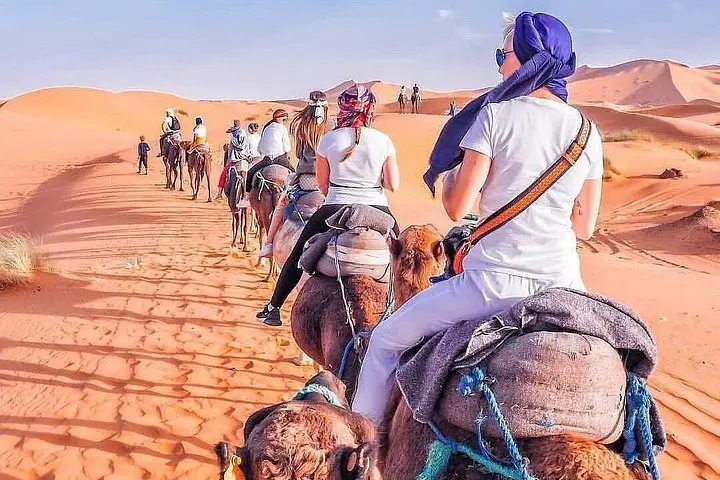
You crest the Tizi n’Tichka at sunrise, the road curling down from the High Atlas and the air thinning into a brittle light that makes adobe kasbahs glow. Over three days the landscape changes from terraced mountain hamlets to carved gorges and finally to the orange ripples of Erg Chebbi, where you trade asphalt for camelback as the dunes push you forward.
Verified experiences and guided adventures in the surrounding area.
Operated by Morocco Tours · Merzouga, Drâa-Tafilalet
You crest the Tizi n’Tichka at sunrise, the road curling down from the High Atlas and the air thinning into a brittle light that makes adobe kasbahs glow. Over three days the landscape changes from terraced mountain hamlets to carved gorges and finally to the orange ripples of Erg Chebbi, where you trade asphalt for camelback as the dunes push you forward.
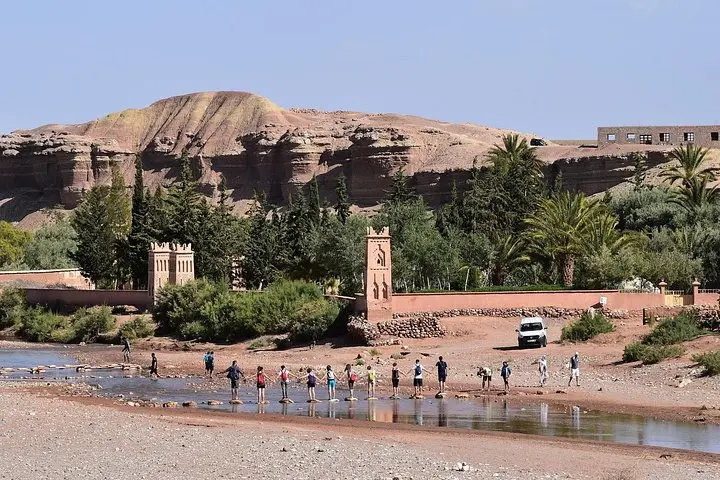
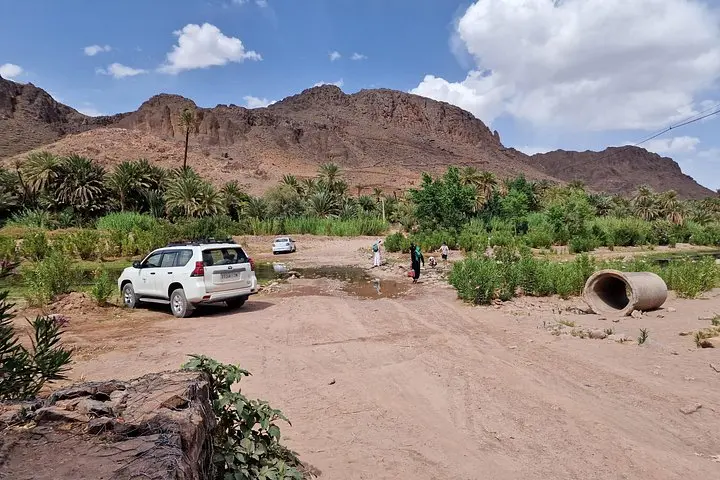
This itinerary threads together human and geological history: Aït Ben Haddou’s fortressed clay homes recall caravan wealth and served as film sets; the Road of 1001 Kasbahs follows river lines that once sustained oasis agriculture; Erfoud’s fossil-rich limestone speaks to an ancient seabed; and Todgha and Dades gorges reveal tectonic forces cutting narrow canyons into the plateau.
Cultural notes: small Berber villages and markets in Rissani still practice traditional crafts and date trading, and a night in a desert camp offers local music around the fire. Environmentally, the region is arid and fragile—stick to paths and minimize water use.
Practical guidance: expect long drives (multiple 4–6 hour stretches), an early departure from Marrakech, short hikes in gorges, and a camel trek at dusk and dawn. Camps provide dinner and a mattressed tent; carry layered clothing for hot days and cold desert nights, sun protection, refillable water, sturdy boots for rocky sections, and light luggage for camel transfer. Timing trips for shoulder seasons (spring/fall) reduces heat stress and delivers clearer skies for dune-watching.
The tour includes several long transfers—expect multiple 4–6 hour drives between Marrakech, Ouarzazate, Dades, and Merzouga—broken by stops at key sites.
Yes—camel treks are gentle and guided; however, mounting can be jarring and riders should be able to sit upright for an hour at a time.
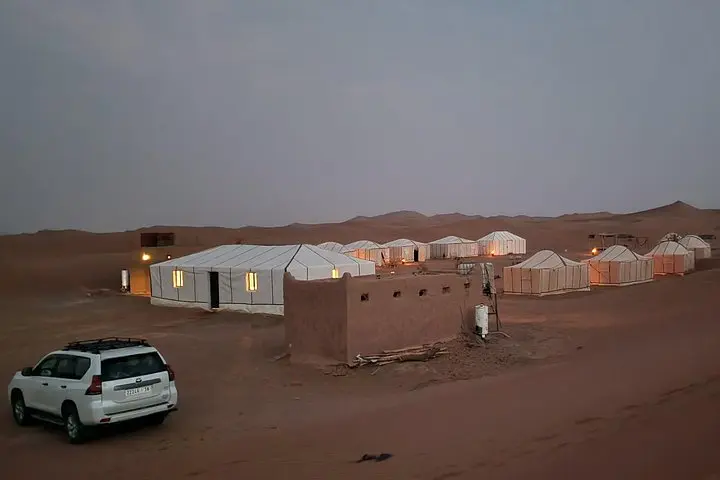
Overnight is in a nomad-style Sahara camp with mattress-equipped tents, shared facilities, and dinner; some camps offer basic showers at the lodge before/after the camp stay.
The itinerary notes it’s physically easy and infants can join, but camel mounts and uneven terrain in gorges make it less suitable for people with significant mobility limits.
Morocco Tours operates guided outdoor trips and adventures with an emphasis on safety, stewardship, and memorable experiences.
You crest the Tizi n’Tichka at sunrise, the road curling down from the High Atlas and the air thinning into a brittle light that makes adobe kasbahs glow. Over three days the landscape changes from terraced mountain hamlets to carved gorges and finally to the orange ripples of Erg Chebbi, where you trade asphalt for camelback as the dunes push you forward.
You crest the Tizi n’Tichka at sunrise, the road curling down from the High Atlas and the air thinning into a brittle light that makes adobe kasbahs glow. Over three days the landscape changes from terraced mountain hamlets to carved gorges and finally to the orange ripples of Erg Chebbi, where you trade asphalt for camelback as the dunes push you forward.
This itinerary threads together human and geological history: Aït Ben Haddou’s fortressed clay homes recall caravan wealth and served as film sets; the Road of 1001 Kasbahs follows river lines that once sustained oasis agriculture; Erfoud’s fossil-rich limestone speaks to an ancient seabed; and Todgha and Dades gorges reveal tectonic forces cutting narrow canyons into the plateau.
Cultural notes: small Berber villages and markets in Rissani still practice traditional crafts and date trading, and a night in a desert camp offers local music around the fire. Environmentally, the region is arid and fragile—stick to paths and minimize water use.
Practical guidance: expect long drives (multiple 4–6 hour stretches), an early departure from Marrakech, short hikes in gorges, and a camel trek at dusk and dawn. Camps provide dinner and a mattressed tent; carry layered clothing for hot days and cold desert nights, sun protection, refillable water, sturdy boots for rocky sections, and light luggage for camel transfer. Timing trips for shoulder seasons (spring/fall) reduces heat stress and delivers clearer skies for dune-watching.