THE ADVENTURE COLLECTIVE® · Independent discovery and booking for outdoor travel

Drive the High Atlas, explore UNESCO’s Ait Ben Haddou, wander Tamegroute’s green pottery workshops, then camel-trek into Zagora’s dunes for a night beneath the stars. This three-day loop blends geology, culture, and desert solitude.
Drive the High Atlas, explore UNESCO’s Ait Ben Haddou, wander Tamegroute’s green pottery workshops, then camel-trek into Zagora’s dunes for a night beneath the stars. This three-day loop blends geology, culture, and desert solitude.
You step out of the minibus while the Atlas slopes fold behind you and the air shifts—drier, cooler, charged with sand and light. The road toward Zagora cuts through passes where Berber villages cling to the cliffs, then opens into the palm-lined Draa Valley before the dunes take over. By late afternoon you’ll be at Ait Ben Haddou, moving through narrow alleys of sun-baked mudbrick that have framed films and trade routes for centuries.
Verified experiences and guided adventures in the surrounding area.
Operated by Ando Travel SARL · Zagora, Drâa-Tafilalet
You step out of the minibus while the Atlas slopes fold behind you and the air shifts—drier, cooler, charged with sand and light. The road toward Zagora cuts through passes where Berber villages cling to the cliffs, then opens into the palm-lined Draa Valley before the dunes take over. By late afternoon you’ll be at Ait Ben Haddou, moving through narrow alleys of sun-baked mudbrick that have framed films and trade routes for centuries.
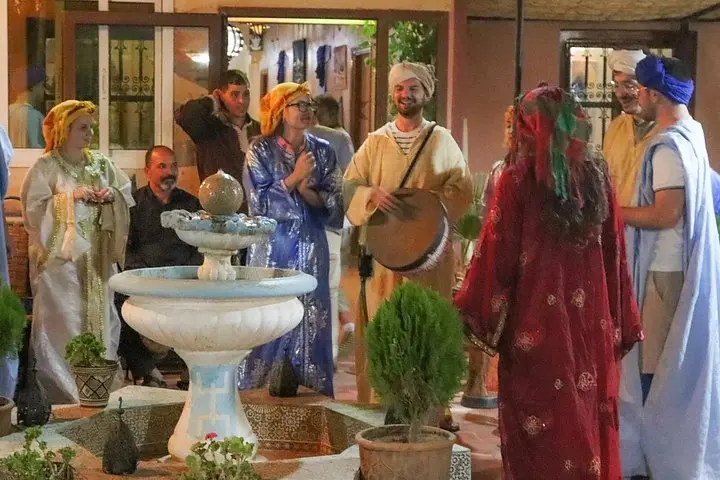
Geology here is blunt and honest: folded Atlas ranges of metamorphic rock give way to alluvial fans and wind-sculpted dunes. The human history is layered—trans-Saharan caravans, kasbah architecture designed for climate control, and religious and scholarly centers such as the Tamegroute library with its centuries-old manuscripts. Local culture is present in pottery glazes, spoken Amazigh, and evening gatherings around tagine and campfire music.
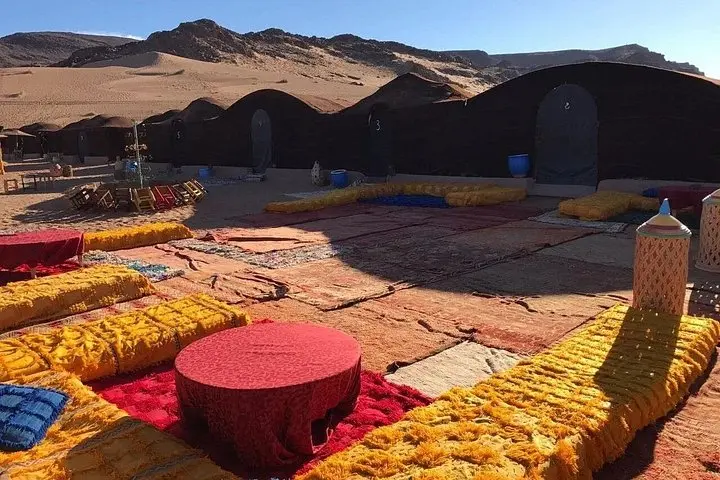
Practical guidance: expect long drives (Marrakech to Zagora is roughly 350–400 km), uneven walking in kasbahs, and short camel rides into dune fields at sunset and sunrise. Camp nights range from basic berber tents to upgradeable luxury options; bring a warm layer for pre-dawn hours when temperatures can drop sharply. Hydration, sunscreen, and comfortable walking shoes matter more than peak fitness—the itinerary is accessible but remote.
This is a travel sequence of contrasts: mountain switchbacks, irrigated palm oases, and the deliberate pace of camel travel. Plan for early departures, modest accommodations, and moments of wide-open desert sky that reward the effort.
The route covers roughly 350–400 km depending on stops, with total driving time over the three days including the return; expect long days on the road with scenic breaks.
Yes—camel treks on this tour are short and guided; however, they can be uncomfortable initially, so wear long pants and follow the handlers' instructions.
Standard desert camps offer shared or private canvas tents with basic bedding and communal dining; upgrades to luxury camps with private facilities are often available.
Meals listed (dinner and breakfast) are included; bottled water is typically provided but bringing an insulated bottle for refills is recommended.
Ando Travel SARL operates guided outdoor trips and adventures with an emphasis on safety, stewardship, and memorable experiences.
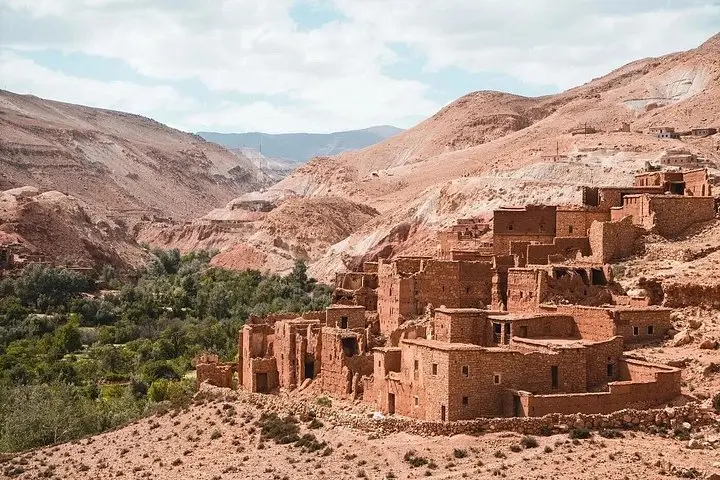
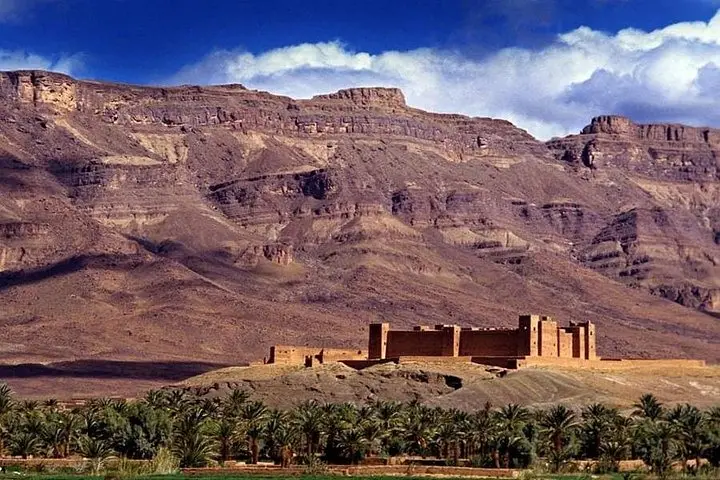
You step out of the minibus while the Atlas slopes fold behind you and the air shifts—drier, cooler, charged with sand and light. The road toward Zagora cuts through passes where Berber villages cling to the cliffs, then opens into the palm-lined Draa Valley before the dunes take over. By late afternoon you’ll be at Ait Ben Haddou, moving through narrow alleys of sun-baked mudbrick that have framed films and trade routes for centuries.
You step out of the minibus while the Atlas slopes fold behind you and the air shifts—drier, cooler, charged with sand and light. The road toward Zagora cuts through passes where Berber villages cling to the cliffs, then opens into the palm-lined Draa Valley before the dunes take over. By late afternoon you’ll be at Ait Ben Haddou, moving through narrow alleys of sun-baked mudbrick that have framed films and trade routes for centuries.
Geology here is blunt and honest: folded Atlas ranges of metamorphic rock give way to alluvial fans and wind-sculpted dunes. The human history is layered—trans-Saharan caravans, kasbah architecture designed for climate control, and religious and scholarly centers such as the Tamegroute library with its centuries-old manuscripts. Local culture is present in pottery glazes, spoken Amazigh, and evening gatherings around tagine and campfire music.
Practical guidance: expect long drives (Marrakech to Zagora is roughly 350–400 km), uneven walking in kasbahs, and short camel rides into dune fields at sunset and sunrise. Camp nights range from basic berber tents to upgradeable luxury options; bring a warm layer for pre-dawn hours when temperatures can drop sharply. Hydration, sunscreen, and comfortable walking shoes matter more than peak fitness—the itinerary is accessible but remote.
This is a travel sequence of contrasts: mountain switchbacks, irrigated palm oases, and the deliberate pace of camel travel. Plan for early departures, modest accommodations, and moments of wide-open desert sky that reward the effort.