THE ADVENTURE COLLECTIVE® · Independent discovery and booking for outdoor travel

Cross the High Atlas and trade city bustle for wind-carved dunes on a three-day journey from Marrakech to Merzouga. Expect long drives, sunset camel treks, a night in a desert camp with Berber music, and close-up encounters with Saharan landscapes.
Cross the High Atlas and trade city bustle for wind-carved dunes on a three-day journey from Marrakech to Merzouga. Expect long drives, sunset camel treks, a night in a desert camp with Berber music, and close-up encounters with Saharan landscapes.
The sun lowers behind a ridge of wind-sculpted sand and the last light paints the dunes in hard orange and shadow. You arrive at Erg Chebbi after a long ribbon of highway through the High Atlas, dismount a camel, and step onto sand that moves underfoot as if the desert itself is testing your balance.
Verified experiences and guided adventures in the surrounding area.
The sun lowers behind a ridge of wind-sculpted sand and the last light paints the dunes in hard orange and shadow. You arrive at Erg Chebbi after a long ribbon of highway through the High Atlas, dismount a camel, and step onto sand that moves underfoot as if the desert itself is testing your balance.
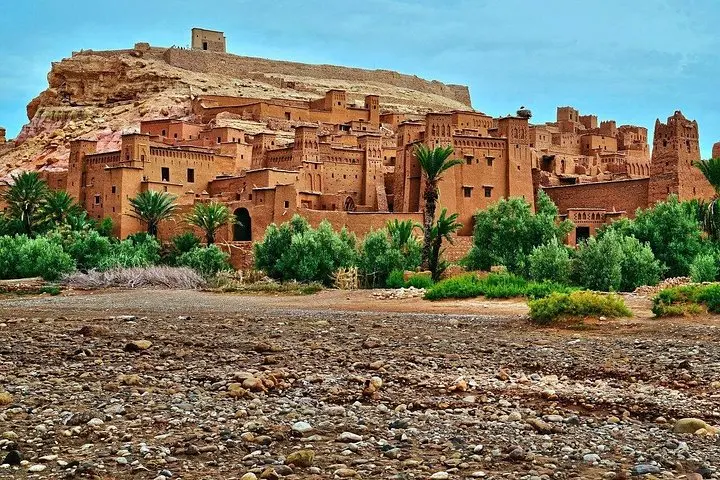
This three-day route follows a classic southern Morocco corridor: Marrakech over the Tizi n’Tichka pass (≈2,260 m), past kasbah towns and the UNESCO clay ksar of Ait Benhaddou, then down to the wide, rolling dunes of Merzouga. Geologically, Erg Chebbi is a mobile dune system of golden quartz and mica built by Sahara winds; individual dunes can reach ~150 m in height. Culturally the area is Berber country—expect evenings with mint tea, slow-cooked tagine, and traditional gnawa or Berber music beneath an unfiltered sky.
Practically, the trip mixes long driving days with light trekking and a camel transfer into camp. Roads can be winding; allow 8–10 hours total transit time from Marrakech with stops. Nights in the desert are cold compared to daytime heat—layers matter. Bring plenty of water, sun protection, and footwear suitable for sand and short rocky walks. Guides handle navigation, camp setup, and local logistics, but personal preparedness makes the experience smoother.
If you want expansive dunes, early morning and late afternoon are best for light and cooler sand; midday is ideal for village visits or museum stops. Expect straightforward logistics, strong cultural encounters, and a tactile, elemental landscape that insists on attention.
Driving distance is roughly 560–580 km; expect 8–10 hours of total driving time with stops depending on route and traffic.
Camel treks are a central part of the experience but many operators offer alternatives such as 4x4 transfers for those who prefer not to ride.
Camps range from basic berber-style tents with shared facilities to upgraded private tents with beds; confirm amenities when booking.
Guided camps are secure and staffed; main concerns are cold and wind—follow guide advice and keep valuables secure.
The sun lowers behind a ridge of wind-sculpted sand and the last light paints the dunes in hard orange and shadow. You arrive at Erg Chebbi after a long ribbon of highway through the High Atlas, dismount a camel, and step onto sand that moves underfoot as if the desert itself is testing your balance.
The sun lowers behind a ridge of wind-sculpted sand and the last light paints the dunes in hard orange and shadow. You arrive at Erg Chebbi after a long ribbon of highway through the High Atlas, dismount a camel, and step onto sand that moves underfoot as if the desert itself is testing your balance.
This three-day route follows a classic southern Morocco corridor: Marrakech over the Tizi n’Tichka pass (≈2,260 m), past kasbah towns and the UNESCO clay ksar of Ait Benhaddou, then down to the wide, rolling dunes of Merzouga. Geologically, Erg Chebbi is a mobile dune system of golden quartz and mica built by Sahara winds; individual dunes can reach ~150 m in height. Culturally the area is Berber country—expect evenings with mint tea, slow-cooked tagine, and traditional gnawa or Berber music beneath an unfiltered sky.
Practically, the trip mixes long driving days with light trekking and a camel transfer into camp. Roads can be winding; allow 8–10 hours total transit time from Marrakech with stops. Nights in the desert are cold compared to daytime heat—layers matter. Bring plenty of water, sun protection, and footwear suitable for sand and short rocky walks. Guides handle navigation, camp setup, and local logistics, but personal preparedness makes the experience smoother.
If you want expansive dunes, early morning and late afternoon are best for light and cooler sand; midday is ideal for village visits or museum stops. Expect straightforward logistics, strong cultural encounters, and a tactile, elemental landscape that insists on attention.