THE ADVENTURE COLLECTIVE® · Independent discovery and booking for outdoor travel

A compact 3-day loop from Marrakech to the Erg Chebbi dunes, this tour balances Aït Ben Haddou’s kasbahs, Todra Gorge’s rock walls, and overnight camping in the Sahara with sunset and sunrise camel treks.
A compact 3-day loop from Marrakech to the Erg Chebbi dunes, this tour balances Aït Ben Haddou’s kasbahs, Todra Gorge’s rock walls, and overnight camping in the Sahara with sunset and sunrise camel treks.
You step from the minibus as the light thins and the dunes around Merzouga sharpen into long, soft ridges. The air is dry and cool; a caravan of camels shifts, rousing the scent of leather and mint tea. Over three days you move from the winding roads of the High Atlas into a landscape defined by wind—sand that shifts and sculpts itself into Erg Chebbi’s towering dunes.
Verified experiences and guided adventures in the surrounding area.
Operated by Hind ounaser · Merzouga, Errachidia Province
You step from the minibus as the light thins and the dunes around Merzouga sharpen into long, soft ridges. The air is dry and cool; a caravan of camels shifts, rousing the scent of leather and mint tea. Over three days you move from the winding roads of the High Atlas into a landscape defined by wind—sand that shifts and sculpts itself into Erg Chebbi’s towering dunes.
The route threads through Aït Ben Haddou, an 11th-century ksar that marks historical trans-Saharan trade routes, and past the layered red and ochre of the Dades and Todra gorges—geology written in steep canyon walls and river-cut terraces. Local culture is visible at every stop: kasbah architecture, Berber hospitality, and evenings at camp where drumming and stories keep watch beneath an unpolluted sky.
Expect long drives punctuated by guided walks, sunset and sunrise camel rides, and an overnight in a private desert tent with shared camp facilities. The dunes are active terrain—sand shifts underfoot and temperatures swing dramatically between day and night. Guides explain safe camel handling, practical navigation cues, and the importance of conserving scarce water resources in this fragile ecosystem.
Practical guidance: time driving to and from Marrakech takes most of two days—pack layers for cold nights, sun protection for daytime, and a small daypack for camera gear and water. Hydrate before dune walks, allow extra time for photos at Todra and Aït Ben Haddou, and bring warm sleepwear for desert nights. This trip pairs cultural stops and landscape immersion with straightforward logistics—ideal for travelers seeking an accessible but authentic Sahara experience.
Camel rides are mostly seated and low-impact, but mounts and dismounts can be awkward; short dune walks are optional and can be adjusted to fitness level.
Camps offer private tents with bedding; comfort ranges from basic to luxury depending on provider—expect simple facilities and communal dining in traditional tents.
Mobile coverage is limited around the dunes; some hotels and camps offer intermittent Wi‑Fi, but plan for minimal connectivity in the Sahara.
Tipping is customary—consider small notes for drivers and guides (roughly equivalent to a few euros/dollars per day), and extra for exceptional service.
Hind ounaser operates guided outdoor trips and adventures with an emphasis on safety, stewardship, and memorable experiences.
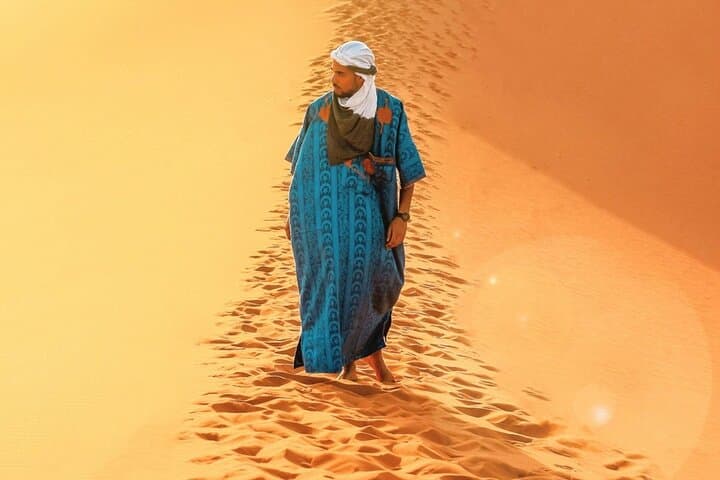
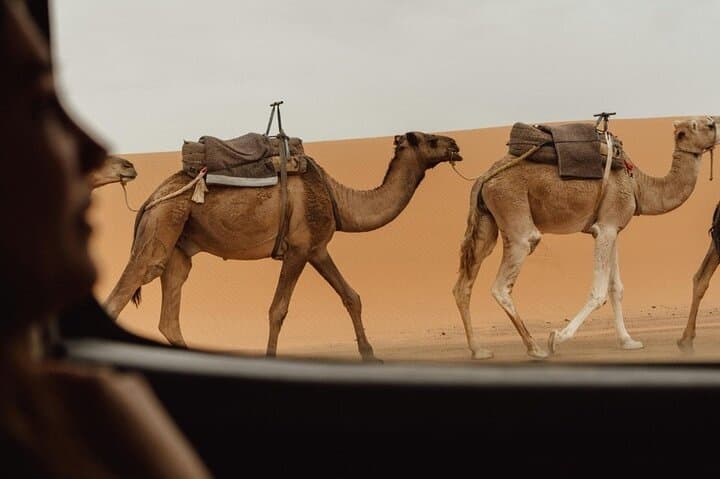
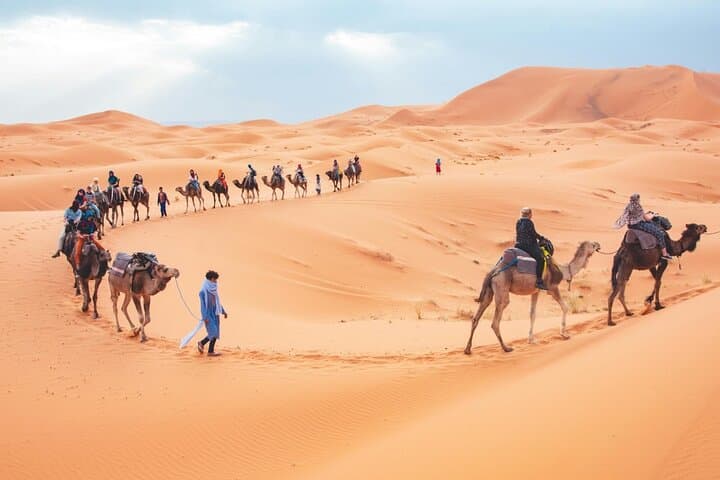

You step from the minibus as the light thins and the dunes around Merzouga sharpen into long, soft ridges. The air is dry and cool; a caravan of camels shifts, rousing the scent of leather and mint tea. Over three days you move from the winding roads of the High Atlas into a landscape defined by wind—sand that shifts and sculpts itself into Erg Chebbi’s towering dunes.
You step from the minibus as the light thins and the dunes around Merzouga sharpen into long, soft ridges. The air is dry and cool; a caravan of camels shifts, rousing the scent of leather and mint tea. Over three days you move from the winding roads of the High Atlas into a landscape defined by wind—sand that shifts and sculpts itself into Erg Chebbi’s towering dunes.
The route threads through Aït Ben Haddou, an 11th-century ksar that marks historical trans-Saharan trade routes, and past the layered red and ochre of the Dades and Todra gorges—geology written in steep canyon walls and river-cut terraces. Local culture is visible at every stop: kasbah architecture, Berber hospitality, and evenings at camp where drumming and stories keep watch beneath an unpolluted sky.
Expect long drives punctuated by guided walks, sunset and sunrise camel rides, and an overnight in a private desert tent with shared camp facilities. The dunes are active terrain—sand shifts underfoot and temperatures swing dramatically between day and night. Guides explain safe camel handling, practical navigation cues, and the importance of conserving scarce water resources in this fragile ecosystem.
Practical guidance: time driving to and from Marrakech takes most of two days—pack layers for cold nights, sun protection for daytime, and a small daypack for camera gear and water. Hydrate before dune walks, allow extra time for photos at Todra and Aït Ben Haddou, and bring warm sleepwear for desert nights. This trip pairs cultural stops and landscape immersion with straightforward logistics—ideal for travelers seeking an accessible but authentic Sahara experience.