THE ADVENTURE COLLECTIVE® · Independent discovery and booking for outdoor travel

Three days from Marrakech take you over the High Atlas and down into Erg Chebbi for camel rides, nights in Berber tents and narrow river-carved gorges. This private tour pairs dramatic desert scenery with cultural stops in ksars and palm oases.
Three days from Marrakech take you over the High Atlas and down into Erg Chebbi for camel rides, nights in Berber tents and narrow river-carved gorges. This private tour pairs dramatic desert scenery with cultural stops in ksars and palm oases.
You step out of the minivan where wind-polished ridges of sand meet a sky the color of old brass. Camels cluster like slow-moving shadows against the base of Erg Chebbi while the last light paints the dunes in hard, visible ridges that demand to be climbed. Overnight in a Berber bivouac, the air cools quickly and the tam-tam rhythms gather people around a shared fire.
Verified experiences and guided adventures in the surrounding area.
Operated by red city travel · Merzouga, Drâa-Tafilalet
You step out of the minivan where wind-polished ridges of sand meet a sky the color of old brass. Camels cluster like slow-moving shadows against the base of Erg Chebbi while the last light paints the dunes in hard, visible ridges that demand to be climbed. Overnight in a Berber bivouac, the air cools quickly and the tam-tam rhythms gather people around a shared fire.
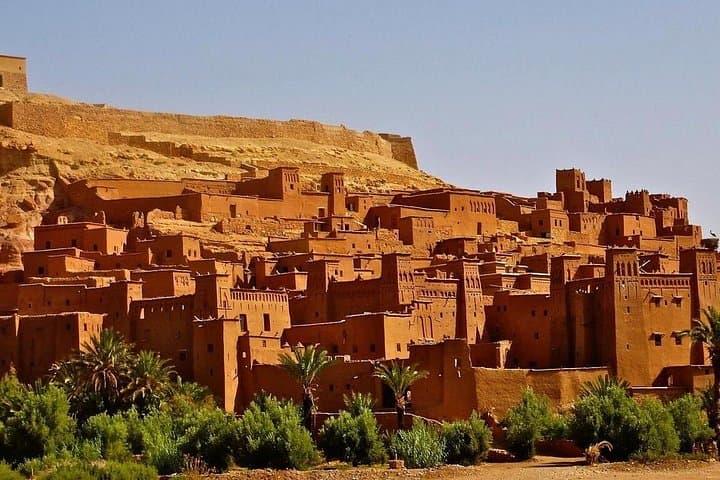
This route threads history and geology: cross the Tizi n’Tichka pass (2,260 m) through the High Atlas, pass the fortified ksar of Ait Ben Haddou — a clay-architecture stop on caravan routes — then drop into the palm oases of Skoura and the sculpted canyons of the Dades and Todgha gorges carved from limestone and red sandstone by millennia of river flow. In Merzouga and the Tafilalt basin you encounter Sahara ecology, fossil-rich plateaus near Erfoud and living desert culture, from nomadic herders to Gnawa musicians.
Practical guidance: expect long driving days (Marrakech–Merzouga ~9–10 hours of road time with stops). Pack layered clothing for hot days and cold nights, sturdy shoes for shale and dune sand, and a small overnight bag for camel transport. Bring sun protection, refillable water, and cash for local purchases and tips. Timing: sunrise and sunset on the dunes provide the best light and cooler temperatures; winter nights are cold. The private format gives flexibility for pace and language preferences, but be prepared for basic desert accommodation and unpaved tracks on some stretches.
Expect long road sections: the transfer from Marrakech to Merzouga is about 8–10 hours with stops; internal legs between gorges and towns range from 1–4 hours depending on the itinerary.
Camps are traditional tents with sleeping mats or basic beds; many operators provide blankets, dinners and simple facilities — standards vary so check for heating or private tent options.
Camel rides are slow and low-slung; mounting and dismounting can feel awkward but guides assist — opt for a short ride or a 4x4 transfer if needed.
Children are welcome but must be supervised; camel travel and long drives can be tiring and drivers/guides set limits for safety.
red city travel operates guided outdoor trips and adventures with an emphasis on safety, stewardship, and memorable experiences.

You step out of the minivan where wind-polished ridges of sand meet a sky the color of old brass. Camels cluster like slow-moving shadows against the base of Erg Chebbi while the last light paints the dunes in hard, visible ridges that demand to be climbed. Overnight in a Berber bivouac, the air cools quickly and the tam-tam rhythms gather people around a shared fire.
You step out of the minivan where wind-polished ridges of sand meet a sky the color of old brass. Camels cluster like slow-moving shadows against the base of Erg Chebbi while the last light paints the dunes in hard, visible ridges that demand to be climbed. Overnight in a Berber bivouac, the air cools quickly and the tam-tam rhythms gather people around a shared fire.
This route threads history and geology: cross the Tizi n’Tichka pass (2,260 m) through the High Atlas, pass the fortified ksar of Ait Ben Haddou — a clay-architecture stop on caravan routes — then drop into the palm oases of Skoura and the sculpted canyons of the Dades and Todgha gorges carved from limestone and red sandstone by millennia of river flow. In Merzouga and the Tafilalt basin you encounter Sahara ecology, fossil-rich plateaus near Erfoud and living desert culture, from nomadic herders to Gnawa musicians.
Practical guidance: expect long driving days (Marrakech–Merzouga ~9–10 hours of road time with stops). Pack layered clothing for hot days and cold nights, sturdy shoes for shale and dune sand, and a small overnight bag for camel transport. Bring sun protection, refillable water, and cash for local purchases and tips. Timing: sunrise and sunset on the dunes provide the best light and cooler temperatures; winter nights are cold. The private format gives flexibility for pace and language preferences, but be prepared for basic desert accommodation and unpaved tracks on some stretches.